
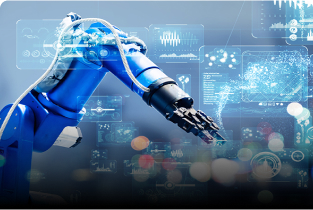
In a world driven by rapid technological advancements, two transformative technologies—the Internet of Things (IoT) and robotics—are coming together to create smarter, more autonomous, and deeply connected systems. This fusion is unlocking new possibilities across industries, from manufacturing and healthcare to agriculture and smart homes.
IoT provides the connectivity, while robotics provides the action. Combined, they form the backbone of the next generation of intelligent automation.
Understanding the Power of IoT in Robotics
At its core, IoT connects devices over the internet to collect, share, and analyze data. When applied to robotics, IoT enables:
- Real-time communication between robots and cloud platforms
- Remote monitoring and control
- Predictive maintenance to reduce downtime
- Enhanced situational awareness through sensors
Essentially, IoT transforms traditional robots into smart, autonomous robots capable of learning, adapting, and making data-driven decisions.
How Robotics Enhances IoT Systems
If IoT gives machines the ability to communicate, robotics gives them the ability to act.
Robots equipped with IoT capabilities can:
- Perform tasks based on sensor-driven data
- Make real-time adjustments
- Collaborate with other connected devices
- Interact with physical environments efficiently
This synergy makes IoT-enabled robots ideal for dynamic and unpredictable environments.
Real-World Applications of IoT + Robotics
1. Smart Manufacturing (Industry 4.0)
Factories now use connected robotic arms, AGVs (Automated Guided Vehicles), and assembly robots that communicate with sensors and control systems.
This leads to:
- Higher precision
- Lower error rates
- Fully automated production lines
2. Healthcare Robotics
Robots connected through IoT networks assist in:
- Remote surgeries
- Patient monitoring
- Medicine delivery
- Disinfection using smart navigation
3. Agriculture Automation
IoT-powered agricultural robots perform:
- Crop monitoring
- Soil analysis
- Precision spraying
- Autonomous harvesting
This improves yields while reducing labor pressure.
4. Smart Homes & Service Robots
Robots like smart vacuum cleaners, lawnmowers, and delivery bots use IoT data to navigate efficiently and perform tasks with minimal human involvement.
5. Logistics & Warehousing
Connected robots automate inventory checks, packaging, and movement of goods, optimizing supply chains.
Benefits of Combining IoT with Robotics
✔ Greater Efficiency
Robots make informed decisions faster with real-time IoT data.
✔ Higher Accuracy
Sensors reduce errors and improve precision.
✔ Predictive Maintenance
IoT detects mechanical issues before they impact performance.
✔ Improved Safety
Robots can handle hazardous environments while humans monitor remotely.
✔ Scalability
Cloud-connected robots can learn, update, and scale across global operations.
Future Possibilities: Where This Innovation Is Heading
The next decade will see even deeper integration with technologies such as:
- AI & Machine Learning
Robots will learn from IoT-collected data and continuously improve. - 5G Connectivity
Ultra-low latency communication will allow real-time robotic operations at scale. - Digital Twins
Virtual robot replicas will help predict performance and prevent failures. - Swarm Robotics
Groups of robots communicating via IoT will collaborate like intelligent colonies.
These advancements will push industries towards full autonomy, where machines operate seamlessly with minimal human intervention.
Conclusion
IoT and robotics are no longer separate fields—they are merging to create a new era of intelligent, connected, and autonomous systems. This powerful combination is driving innovation across industries and setting the stage for the future of automation.


