
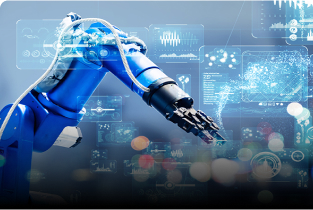
The rapid advancement of technology has brought together two of the most transformative innovations of the modern era: the Internet of Things (IoT) and robotics. While robots have long been used to automate repetitive tasks, the integration of IoT has significantly enhanced their capabilities, making them smarter, more connected, and more efficient than ever before.
Today, IoT-powered robots are revolutionizing industries ranging from manufacturing and healthcare to agriculture and logistics. By enabling robots to collect, share, and analyze data in real time, IoT is helping create intelligent systems that can adapt, learn, and make informed decisions.
Understanding IoT and Robotics
The Internet of Things refers to a network of connected devices equipped with sensors, software, and communication technologies that allow them to exchange data over the internet. Robotics, on the other hand, involves designing and developing machines capable of performing tasks autonomously or semi-autonomously.
When combined, IoT and robotics create smart systems where robots can communicate with other devices, cloud platforms, and even other robots. This connectivity enables greater efficiency, improved decision-making, and enhanced operational performance.
How IoT Enhances Robotics
1. Real-Time Data Collection and Analysis
IoT-enabled robots continuously gather data from their environment through sensors and connected devices. This information can include temperature, humidity, location, movement, equipment status, and more.
By analyzing this data in real time, robots can make intelligent decisions, adjust their actions, and respond to changing conditions without human intervention.
2. Remote Monitoring and Control
One of the most significant advantages of IoT in robotics is the ability to monitor and control robots remotely. Operators can access robot performance data from anywhere through cloud-based platforms.
This capability is particularly useful in hazardous environments such as mining, oil and gas facilities, disaster zones, and deep-sea exploration where direct human involvement may be risky.
3. Predictive Maintenance
Traditional maintenance schedules often lead to unnecessary downtime or unexpected equipment failures. IoT sensors continuously monitor the health of robotic systems and detect early signs of wear and malfunction.
By identifying potential issues before they become critical, organizations can perform maintenance proactively, reducing costs and improving productivity.
4. Enhanced Collaboration
IoT allows multiple robots and devices to communicate and coordinate their actions. In smart factories, collaborative robots (cobots) can work together to optimize production processes, share information, and avoid operational conflicts.
This interconnected approach improves efficiency and enables more flexible manufacturing environments.
5. Improved Automation
IoT-powered robots can automate complex tasks that require constant monitoring and decision-making. Through machine learning and artificial intelligence, these robots can continuously improve their performance based on collected data.
As a result, businesses can achieve higher levels of automation while reducing human error and operational costs.
Applications of IoT in Robotics
Manufacturing
Smart factories utilize IoT-connected robots for assembly, quality inspection, material handling, and predictive maintenance. These robots help manufacturers increase productivity and reduce downtime.
Healthcare
In healthcare settings, IoT-enabled robots assist with patient monitoring, surgical procedures, medication delivery, and hospital logistics. They enhance precision while improving patient care.
Agriculture
Agricultural robots use IoT sensors to monitor soil conditions, crop health, weather patterns, and irrigation needs. Farmers can make data-driven decisions that improve yields and resource efficiency.
Logistics and Warehousing
IoT-connected robots streamline inventory management, package sorting, and warehouse operations. They can navigate autonomously while communicating with central management systems.
Smart Cities
Robotic systems integrated with IoT technologies support public services such as waste management, traffic monitoring, infrastructure inspection, and environmental monitoring.
Benefits of IoT-Driven Robotics
The integration of IoT and robotics offers numerous advantages:
- Increased operational efficiency
- Better decision-making through real-time data
- Reduced maintenance costs
- Enhanced workplace safety
- Improved productivity and accuracy
- Greater flexibility and scalability
- Faster response to changing conditions
These benefits make IoT-powered robotics a valuable investment for organizations seeking to remain competitive in an increasingly digital world.
Challenges and Considerations
Despite its advantages, integrating IoT with robotics presents several challenges:
Security Risks
Connected robots can become targets for cyberattacks if proper security measures are not implemented. Protecting data and communication networks is essential.
Data Management
IoT devices generate massive amounts of data. Organizations must develop efficient systems for storing, processing, and analyzing this information.
Connectivity Requirements
Reliable internet connectivity is critical for IoT-enabled robotic systems. Network disruptions can affect performance and operational continuity.
Implementation Costs
Deploying advanced IoT and robotic solutions often requires significant upfront investment in hardware, software, and infrastructure.
The Future of IoT and Robotics
The future of robotics is closely tied to advancements in IoT, artificial intelligence, cloud computing, and edge computing. As technologies continue to evolve, robots will become increasingly autonomous, intelligent, and capable of performing complex tasks with minimal human intervention.
Future smart robots may collaborate seamlessly across networks, learn from shared experiences, and adapt instantly to new environments. Industries will benefit from more efficient operations, improved safety, and innovative solutions to complex challenges.
Conclusion
The combination of IoT and robotics is transforming the way machines interact with the world. By enabling real-time communication, intelligent decision-making, and advanced automation, IoT is helping create smarter robots and smarter systems. As businesses continue to embrace digital transformation, the integration of IoT and robotics will play a crucial role in shaping the future of industry, healthcare, agriculture, and countless other sectors.


