
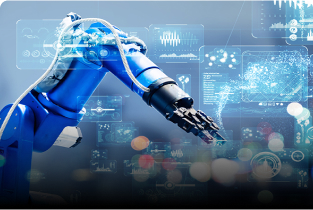
The integration of the Internet of Things (IoT) and robotics is reshaping the way businesses operate. IoT connects devices, machines, and systems through the internet, enabling them to collect and exchange real-time data. Robotics, on the other hand, automates physical tasks with precision and consistency. Together, these technologies create intelligent, connected systems that improve efficiency, reduce costs, and drive innovation.
Businesses across industries—including manufacturing, healthcare, logistics, agriculture, retail, and construction—are adopting IoT-enabled robotic solutions to stay competitive in an increasingly digital world. These technologies not only automate repetitive tasks but also provide valuable insights that help organizations make informed decisions and respond quickly to changing market conditions.
In this article, we’ll explore the key business benefits of integrating IoT and robotics and why this combination is becoming a cornerstone of modern digital transformation.
Understanding IoT and Robotics
IoT refers to a network of connected devices equipped with sensors, software, and communication technologies that collect and share data. Robotics involves the design, development, and use of machines capable of performing tasks autonomously or with minimal human intervention.
When integrated, IoT provides robots with real-time information from sensors, cloud platforms, and connected equipment. Robots can use this data to adapt to changing conditions, optimize their actions, and communicate with other systems, creating a smarter and more efficient work environment.
Key Business Benefits of Integrating IoT and Robotics
1. Increased Productivity
One of the most significant advantages of combining IoT and robotics is improved productivity. Robots can perform repetitive tasks continuously without fatigue, while IoT sensors provide real-time information that helps optimize operations.
Businesses can benefit from:
- Faster production cycles
- Reduced downtime
- Higher output
- Improved workflow efficiency
- Better resource utilization
This enables organizations to meet growing customer demands while maintaining consistent quality.
2. Improved Operational Efficiency
IoT-enabled robots can monitor their environment, identify bottlenecks, and adjust operations automatically. This reduces manual intervention and streamlines business processes.
Examples include:
- Automated warehouse management
- Smart assembly lines
- Intelligent inventory tracking
- Autonomous material handling
These capabilities allow businesses to optimize operations and reduce unnecessary delays.
3. Cost Reduction
Automation helps businesses lower operational expenses by reducing labor-intensive tasks, minimizing waste, and improving energy efficiency.
Cost-saving benefits include:
- Lower labor costs
- Reduced equipment failures
- Less material waste
- Improved energy management
- Decreased maintenance expenses
Over time, these savings can provide a strong return on investment.
4. Predictive Maintenance
Traditional maintenance schedules often rely on fixed intervals, which may result in unnecessary servicing or unexpected equipment failures.
IoT sensors continuously monitor equipment conditions, collecting data such as:
- Temperature
- Vibration
- Pressure
- Energy consumption
- Machine performance
This information allows businesses to predict potential failures before they occur, enabling maintenance teams to address issues proactively and avoid costly downtime.
5. Enhanced Workplace Safety
Industrial environments can expose workers to hazardous conditions. Robotics can take over dangerous tasks, while IoT sensors monitor environmental conditions in real time.
Safety improvements include:
- Reduced workplace accidents
- Hazard detection
- Remote equipment monitoring
- Emergency alerts
- Safe handling of hazardous materials
Creating a safer work environment also improves employee confidence and productivity.
6. Better Decision-Making Through Data
IoT devices generate vast amounts of operational data that businesses can analyze to improve performance.
Managers can use real-time insights to:
- Monitor production efficiency
- Track equipment utilization
- Analyze customer demand
- Optimize inventory levels
- Improve quality control
Data-driven decision-making helps organizations respond quickly to market changes and improve business outcomes.
7. Higher Product Quality
Robotic systems perform tasks with exceptional accuracy and consistency, reducing the risk of human error.
IoT sensors continuously monitor production processes to detect quality issues early.
Benefits include:
- Consistent product quality
- Reduced defects
- Better compliance with industry standards
- Improved customer satisfaction
High-quality products strengthen brand reputation and customer loyalty.
8. Smarter Supply Chain Management
IoT and robotics are transforming supply chain operations by providing end-to-end visibility and automation.
Applications include:
- Automated warehouses
- Smart inventory management
- Real-time shipment tracking
- Autonomous delivery systems
- Demand forecasting
These improvements help businesses reduce delays and improve customer service.
9. Greater Scalability
As businesses grow, IoT-enabled robotic systems can scale to meet increasing production demands without requiring proportional increases in workforce size.
Scalable automation allows organizations to:
- Expand production capacity
- Handle seasonal demand
- Enter new markets
- Support business growth efficiently
This flexibility is particularly valuable for rapidly growing companies.
10. Competitive Advantage
Organizations that adopt advanced automation technologies often gain an edge over competitors by improving speed, quality, and customer satisfaction.
Competitive benefits include:
- Faster product delivery
- Reduced operating costs
- Increased innovation
- Better customer experiences
- Improved market responsiveness
Investing in IoT and robotics positions businesses for long-term success in a technology-driven economy.
Industry Applications
Manufacturing
Manufacturers use IoT-connected robots for assembly, welding, packaging, inspection, and predictive maintenance, leading to improved efficiency and reduced production costs.
Healthcare
Hospitals use robotic systems for surgery, medication delivery, rehabilitation, and patient assistance, while IoT devices enable remote patient monitoring and equipment management.
Logistics and Warehousing
Automated guided vehicles (AGVs), robotic picking systems, and IoT-based inventory tracking improve warehouse productivity and order accuracy.
Agriculture
Farmers use smart robots and IoT sensors for crop monitoring, precision irrigation, harvesting, and livestock management, increasing yields while reducing resource consumption.
Retail
Retail businesses use robotics for inventory management, automated checkout systems, and warehouse operations, while IoT provides insights into customer behavior and product demand.
Challenges of Integration
Although the benefits are substantial, businesses should also consider potential challenges:
- High initial investment
- Cybersecurity risks
- Integration with legacy systems
- Workforce training requirements
- Data privacy concerns
- Ongoing maintenance costs
Proper planning, employee training, and strong cybersecurity measures can help organizations overcome these challenges.
Best Practices for Successful Implementation
To maximize the value of IoT and robotics, businesses should:
- Define clear business objectives.
- Start with pilot projects before scaling.
- Invest in secure IoT infrastructure.
- Train employees to work alongside automated systems.
- Monitor performance using key metrics.
- Regularly update software and security protocols.
- Continuously evaluate and optimize processes.
A strategic implementation plan helps organizations achieve sustainable results.
Future Trends
The future of IoT and robotics is expected to include:
- Increased use of artificial intelligence for autonomous decision-making
- Expansion of collaborative robots (cobots)
- Growth in edge computing for faster data processing
- Wider adoption of digital twins for system simulation
- Enhanced predictive analytics and automation
- Greater use of 5G networks for real-time connectivity
These innovations will continue to improve efficiency, flexibility, and business resilience across industries.
Conclusion
Integrating IoT and robotics offers businesses a powerful way to improve productivity, reduce costs, enhance safety, and make smarter decisions. By combining connected devices with intelligent automation, organizations can streamline operations, optimize resources, and deliver higher-quality products and services.


