
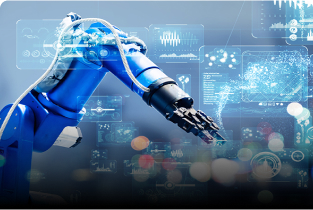
The Internet of Things (IoT) and robotics are two of the most transformative technologies of the digital era. Individually, they have revolutionized industries by improving efficiency, automation, and decision-making. Together, IoT and robotics are creating intelligent systems capable of sensing, analyzing, and acting with minimal human intervention.
From autonomous warehouse robots and smart manufacturing plants to robotic surgery and precision agriculture, IoT-enabled robotics is redefining how businesses operate and how people interact with technology. As artificial intelligence (AI), 5G connectivity, cloud computing, and edge computing continue to evolve, IoT and robotics will play an even greater role in building smarter industries and cities.
In this article, we’ll explore the applications, benefits, challenges, and future of IoT and robotics.
What Is IoT?
The Internet of Things (IoT) refers to a network of physical devices connected to the internet that collect, exchange, and analyze data. These devices include sensors, smart appliances, industrial machines, wearable devices, vehicles, and more.
IoT systems typically consist of:
- Smart sensors
- Internet connectivity
- Cloud platforms
- Data analytics
- Artificial intelligence
- Automation software
IoT enables real-time monitoring, predictive maintenance, and data-driven decision-making across various industries.
What Is Robotics?
Robotics is the branch of engineering and technology focused on designing, building, programming, and operating robots. Robots perform tasks that are repetitive, dangerous, or require high precision.
Modern robots combine:
- Mechanical engineering
- Electronics
- Artificial intelligence
- Computer vision
- Machine learning
- Sensors and actuators
When integrated with IoT, robots become connected devices capable of sharing data and responding intelligently to changing environments.
How IoT and Robotics Work Together
IoT provides robots with continuous access to real-time data from sensors, cloud platforms, and connected devices.
A typical workflow includes:
- Sensors collect environmental data.
- IoT devices transmit the information.
- Cloud or edge systems analyze the data.
- AI algorithms make decisions.
- Robots perform the required actions.
- Performance data is sent back for continuous optimization.
This creates intelligent automation systems that improve over time.
Applications of IoT & Robotics
1. Smart Manufacturing
Modern factories use IoT-connected robots for:
- Assembly lines
- Quality inspection
- Welding
- Packaging
- Inventory management
- Predictive equipment maintenance
These smart factories reduce downtime while increasing productivity.
2. Healthcare
IoT-powered robots support healthcare by:
- Assisting in surgeries
- Delivering medicines
- Monitoring patients remotely
- Disinfecting hospital rooms
- Supporting elderly care
Connected medical devices also allow doctors to monitor patients from anywhere.
3. Agriculture
Smart farming uses IoT robots for:
- Crop monitoring
- Soil analysis
- Automated irrigation
- Harvesting
- Weed detection
- Livestock monitoring
Farmers can improve yields while conserving water and reducing labor costs.
4. Logistics and Warehousing
Warehouses increasingly rely on autonomous robots to:
- Pick products
- Move inventory
- Sort packages
- Track shipments
- Optimize storage
IoT enables real-time inventory visibility and faster order fulfillment.
5. Smart Homes
Home automation systems combine IoT with robotics through:
- Robot vacuum cleaners
- Smart security robots
- Automated lawn mowers
- Voice-controlled assistants
- Smart appliances
These devices make homes safer, more convenient, and energy-efficient.
6. Transportation
IoT-enabled robotics is transforming transportation through:
- Autonomous vehicles
- Delivery robots
- Smart traffic systems
- Fleet management
- Connected public transport
Real-time data improves navigation and operational efficiency.
7. Defense and Security
Military and security organizations use connected robots for:
- Bomb disposal
- Surveillance
- Border monitoring
- Search and rescue
- Disaster response
These applications reduce risks to human personnel.
8. Construction
Construction companies use robotic systems for:
- Bricklaying
- Concrete printing
- Site inspection
- Equipment monitoring
- Safety inspections
IoT sensors improve project management and worker safety.
Benefits of IoT & Robotics
Increased Automation
Robots perform repetitive tasks with minimal human intervention, increasing productivity and consistency.
Higher Efficiency
Connected robots work continuously, reducing production time and improving workflow efficiency.
Improved Accuracy
Automation minimizes human error, resulting in higher-quality products and services.
Enhanced Safety
Robots handle dangerous tasks such as chemical handling, mining, firefighting, and hazardous inspections.
Predictive Maintenance
IoT sensors detect equipment issues before failures occur, reducing downtime and maintenance costs.
Cost Savings
Businesses save money through lower labor costs, reduced waste, and optimized resource utilization.
Better Decision-Making
Real-time data helps organizations make informed operational and strategic decisions.
Scalability
Cloud-based IoT platforms make it easier to expand robotic systems across multiple locations.
Future Challenges of IoT & Robotics
Cybersecurity Risks
Connected robots can become targets for cyberattacks if not properly secured.
Organizations must implement:
- Encryption
- Secure authentication
- Network monitoring
- Regular software updates
Data Privacy
IoT devices collect large volumes of sensitive data, raising concerns about privacy and regulatory compliance.
High Initial Investment
Deploying robotic automation often requires significant upfront costs for hardware, software, infrastructure, and employee training.
Integration Complexity
Connecting robots with existing systems can be technically challenging, especially in older industrial environments.
Workforce Adaptation
Automation changes job roles, making continuous learning and upskilling essential for employees.
Ethical Considerations
As robots become more autonomous, questions arise regarding accountability, transparency, fairness, and responsible AI use.
Connectivity Requirements
Reliable internet and low-latency networks are essential for real-time robotic operations, particularly in remote or mission-critical environments.
Future Trends in IoT & Robotics
Several emerging technologies will shape the next generation of connected robotics.
Artificial Intelligence Integration
AI will enable robots to learn from experience, recognize patterns, and make increasingly intelligent decisions.
Edge Computing
Processing data closer to devices will reduce latency and improve response times.
5G Networks
Ultra-fast, low-latency connectivity will support real-time communication between robots and IoT devices.
Digital Twins
Virtual replicas of physical systems will allow organizations to simulate, monitor, and optimize robotic operations before deployment.
Collaborative Robots (Cobots)
Cobots are designed to safely work alongside humans, improving productivity in manufacturing, healthcare, and logistics.
Swarm Robotics
Groups of connected robots will collaborate to perform complex tasks efficiently, inspired by the behavior of ants and bees.
Sustainable Robotics
Future robots will focus on energy efficiency, recyclable materials, and environmentally friendly operations.
Skills Needed for a Career in IoT & Robotics
Professionals entering this field should develop expertise in:
- Programming (Python, C++, Java)
- Embedded systems
- Robotics engineering
- Electronics
- IoT architecture
- Artificial intelligence
- Machine learning
- Cloud computing
- Edge computing
- Networking
- Sensor technologies
- Cybersecurity
- Data analytics
- Automation systems
- ROS (Robot Operating System)
Continuous learning is essential, as technologies evolve rapidly.
Conclusion
IoT and robotics are transforming industries by enabling intelligent, connected, and autonomous systems that improve efficiency, productivity, and safety. From healthcare and manufacturing to agriculture and transportation, their impact continues to expand across every sector of the global economy.
.


