
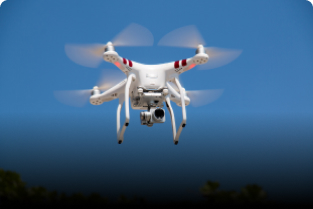
Drone engineering is rapidly transforming the way businesses, governments, and industries approach aerial technology. From agriculture and construction to defense, logistics, filmmaking, and disaster management, drones have become powerful tools for collecting data, monitoring environments, and completing tasks more efficiently.
Behind every capable drone is a combination of mechanical engineering, electronics, software development, aerodynamics, sensors, and artificial intelligence. Understanding how drones are designed and developed provides valuable insight into one of the fastest-growing areas of modern engineering.
What Is Drone Engineering?
Drone engineering involves the design, development, testing, and maintenance of unmanned aerial vehicles (UAVs). Engineers work on various components, including the drone’s structure, motors, batteries, flight controllers, communication systems, navigation technologies, cameras, and sensors.
Drone engineering brings together multiple disciplines such as:
- Mechanical engineering
- Electronics and electrical engineering
- Robotics
- Embedded systems
- Computer programming
- Artificial intelligence and machine learning
- Aerodynamics
- Control systems
The integration of these technologies allows drones to fly autonomously, capture information, navigate complex environments, and perform specialized tasks.
Drone Design and Development
The development of a drone begins with identifying its intended purpose. A drone designed for aerial photography will have different requirements from one used for agricultural monitoring or industrial inspection.
1. Concept and Requirements
Engineers first determine factors such as flight time, payload capacity, operating range, speed, size, and environmental conditions. These requirements guide the selection of materials, motors, batteries, sensors, and other components.
2. Aerodynamic and Structural Design
The drone’s frame must be lightweight while remaining strong enough to support its components. Engineers analyze factors such as weight distribution, stability, air resistance, and lift to create an efficient design.
3. Propulsion System
Motors and propellers provide the thrust required for flight. Engineers select propulsion components based on the drone’s weight, desired speed, flight duration, and payload requirements.
4. Flight Control Systems
Flight controllers act as the brain of a drone. They process information from sensors such as gyroscopes, accelerometers, GPS modules, and altitude sensors to maintain stability and control movement.
5. Software and Autonomous Navigation
Modern drones increasingly rely on software for navigation and automation. Programming enables drones to follow predefined routes, avoid obstacles, process sensor information, and perform autonomous operations.
6. Testing and Optimization
Before deployment, drones undergo extensive testing. Engineers evaluate flight stability, battery performance, communication range, payload capacity, navigation accuracy, and safety. Testing helps identify problems and improve overall performance.
Real-World Applications of Drone Engineering
Drone engineering has applications across a wide range of industries.
Agriculture
Farmers can use drones to monitor crops, identify areas affected by pests or disease, assess irrigation, and analyze field conditions. Agricultural drones can help collect valuable information while reducing the time required for manual inspections.
Construction
Construction companies use drones for surveying, mapping, progress monitoring, and site inspections. Aerial imagery can provide project managers with a detailed view of large or difficult-to-access areas.
Infrastructure Inspection
Drones can inspect bridges, towers, power lines, pipelines, solar panels, and other infrastructure. They can capture high-resolution images and sensor data while reducing the need to send workers into potentially dangerous locations.
Logistics and Delivery
Drone delivery is an emerging application of UAV technology. Engineers are developing systems capable of transporting packages efficiently while managing navigation, battery limitations, weather conditions, and safety requirements.
Disaster Management
Drones can support emergency teams during floods, earthquakes, fires, and other disasters. They can quickly survey affected areas, locate people, assess damage, and provide aerial information to rescue teams.
Film and Photography
Camera-equipped drones have changed aerial photography and filmmaking. They can capture perspectives that were previously difficult or expensive to achieve using traditional aircraft.
Environmental Monitoring
Drones can be used to monitor forests, wildlife, coastlines, water bodies, and other ecosystems. Their ability to collect aerial data makes them useful for environmental research and conservation activities.
Skills Required for a Career in Drone Engineering
Students interested in drone engineering can develop a combination of technical and practical skills. Important areas include:
- CAD and 3D design
- Electronics and circuit design
- Embedded systems
- Programming languages such as Python and C/C++
- Robotics and automation
- Control systems
- Sensors and communication technologies
- Aerodynamics
- Artificial intelligence and computer vision
- Drone flight and testing
Hands-on projects are particularly valuable because they allow students to understand how different engineering systems work together.
The Future of Drone Engineering
The future of drone engineering is closely connected with artificial intelligence, robotics, computer vision, advanced sensors, and autonomous systems. Future drones are expected to become more intelligent, efficient, and capable of operating with less human intervention.
Innovations such as autonomous navigation, obstacle avoidance, swarm robotics, improved battery technology, and AI-powered image analysis could expand the use of drones across industries.
As businesses increasingly adopt automation and aerial data collection, the demand for professionals who understand drone technology and engineering is likely to grow.
Conclusion
Drone engineering combines several areas of modern technology to create sophisticated unmanned aerial systems. From the initial design and development process to applications in agriculture, construction, infrastructure, logistics, disaster management, and environmental monitoring, drones are becoming increasingly important across industries.


