
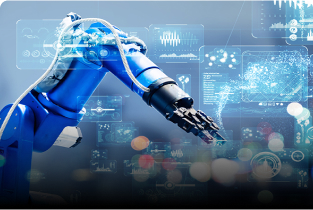
The combination of Internet of Things (IoT) and robotics is changing how machines, devices, and people interact. From smart factories and autonomous robots to connected healthcare devices and intelligent homes, these technologies are creating new possibilities across industries.
As businesses increasingly adopt automation and connected systems, the demand for professionals with IoT and robotics skills is growing. A career in this field can be an excellent choice for students, engineers, developers, and technology enthusiasts interested in hardware, software, automation, and artificial intelligence.
What Are IoT and Robotics?
Internet of Things (IoT) refers to a network of physical devices that collect, exchange, and process data using sensors, software, and communication technologies.
Robotics focuses on designing, building, programming, and operating machines capable of performing tasks automatically or semi-autonomously.
When combined, IoT can provide robots with connectivity and real-time data, while robotics can use that information to perform intelligent actions. This combination plays an important role in smart automation and modern industrial systems.
Why Choose a Career in IoT and Robotics?
IoT and robotics are being adopted across a wide range of industries. Organizations are using connected devices and automated machines to improve productivity, reduce operational costs, increase safety, and make better decisions.
Career opportunities can be found in areas such as:
- Manufacturing
- Automotive
- Healthcare
- Agriculture
- Logistics
- Retail
- Aerospace
- Smart homes
- Energy
- Defense
- Research and development
The field also provides opportunities to specialize in hardware, software, artificial intelligence, automation, embedded systems, or data analytics.
Essential Skills for an IoT and Robotics Career
Building a successful career requires a combination of technical, analytical, and practical skills.
1. Programming
Programming is essential for developing IoT applications and controlling robotic systems.
Popular languages include:
- Python
- C
- C++
- JavaScript
- Java
Python is particularly useful for data processing, artificial intelligence, automation, and robotics applications, while C and C++ are widely used in embedded systems and robotics.
2. Electronics and Embedded Systems
A strong understanding of electronics helps professionals work with sensors, actuators, microcontrollers, and hardware components.
Important topics include:
- Digital electronics
- Analog electronics
- Microcontrollers
- Sensors
- Actuators
- Communication protocols
- Embedded programming
- Circuit fundamentals
Platforms such as Arduino, Raspberry Pi, and other microcontroller development boards can provide valuable hands-on experience.
3. IoT Communication Technologies
IoT devices need reliable ways to communicate and exchange data. Professionals should understand common networking and communication technologies.
These may include:
- Wi-Fi
- Bluetooth
- Zigbee
- MQTT
- HTTP
- LoRaWAN
- Cellular connectivity
Understanding how devices communicate with cloud platforms and other systems is an important IoT skill.
4. Robotics Fundamentals
Aspiring robotics professionals should understand how robots sense their environment, make decisions, and perform physical actions.
Important concepts include:
- Robot mechanics
- Sensors
- Motors
- Actuators
- Robot control
- Kinematics
- Motion planning
- Automation
Practical experience with robotic kits and development platforms can help strengthen these concepts.
5. Artificial Intelligence and Machine Learning
AI and machine learning are increasingly integrated into robotics and IoT systems.
AI can help robots recognize objects, understand environments, make decisions, and adapt to changing conditions. Machine learning can also be used to analyze data collected by connected IoT devices.
Useful areas to explore include:
- Machine learning
- Computer vision
- Deep learning
- Natural language processing
- Predictive analytics
- Reinforcement learning
Popular IoT and Robotics Career Roles
The field offers several career paths depending on your interests and technical background.
IoT Developer
IoT developers create applications and systems that connect physical devices to software platforms and networks. They may work with sensors, APIs, cloud platforms, databases, and communication protocols.
IoT Engineer
IoT engineers design and develop connected systems involving hardware, software, networking, and cloud technologies. They may also focus on security, data processing, and system integration.
Robotics Engineer
Robotics engineers design, build, program, test, and maintain robotic systems. They may work on industrial robots, autonomous machines, medical robots, or specialized robotic applications.
Robotics Software Engineer
Robotics software engineers develop the software that controls and coordinates robotic systems. Their work can involve programming, computer vision, navigation, simulation, and robot operating systems.
Embedded Systems Engineer
Embedded systems engineers develop software and firmware for devices such as sensors, controllers, appliances, vehicles, and robots.
Automation Engineer
Automation engineers design systems that reduce manual processes and improve operational efficiency. They are particularly important in manufacturing and industrial environments.
IoT Data Analyst
IoT data analysts examine the large amounts of information generated by connected devices. They identify patterns and trends that can help organizations improve performance and decision-making.
AI and Robotics Specialist
Professionals in this area combine artificial intelligence with robotics to develop intelligent and autonomous machines.
Industries Hiring IoT and Robotics Professionals
IoT and robotics have applications across numerous industries.
Manufacturing
Smart factories use connected sensors, industrial robots, and automated systems to monitor production, identify problems, and improve efficiency.
Healthcare
Robotics and IoT are being used in areas such as remote monitoring, medical equipment, rehabilitation, and robotic-assisted procedures.
Automotive
Connected vehicles, autonomous driving technologies, advanced manufacturing systems, and vehicle monitoring are creating opportunities for IoT and robotics professionals.
Agriculture
Smart agriculture uses sensors, connected equipment, drones, and automated systems to monitor crops, soil conditions, irrigation, and farm operations.
Logistics
Warehouses and distribution centers increasingly use robots and connected systems for inventory management, sorting, transportation, and order fulfillment.
How to Start a Career in IoT and Robotics
If you are a beginner, follow a step-by-step learning approach.
Step 1: Learn Programming
Start with Python and learn the basics of C or C++ if you are interested in embedded systems and robotics.
Step 2: Understand Electronics
Learn about circuits, microcontrollers, sensors, motors, and basic electronics.
Step 3: Explore IoT Platforms
Build simple projects using development boards and sensors. Learn how devices collect and transmit data.
Step 4: Learn Robotics
Explore robot components, motion control, sensors, kinematics, and programming.
Step 5: Study AI and Machine Learning
Learn how artificial intelligence can make IoT systems and robots more intelligent and autonomous.
Step 6: Build Projects
Hands-on projects are extremely valuable. Some beginner-friendly ideas include:
- Smart home automation system
- Temperature and humidity monitoring system
- Smart irrigation system
- Obstacle-avoiding robot
- Line-following robot
- IoT-based security system
- Autonomous mobile robot
- Smart energy monitoring system
Step 7: Build a Portfolio
Document your projects and showcase your code, circuit designs, videos, and project explanations. A strong portfolio can demonstrate practical skills to employers.
Growth Opportunities in IoT and Robotics
IoT and robotics professionals can progress into senior technical, specialist, and management positions.
With experience, career paths may include:
- Senior IoT Engineer
- Senior Robotics Engineer
- IoT Solutions Architect
- Robotics Software Engineer
- Automation Manager
- Robotics Researcher
- AI Robotics Specialist
- IoT Project Manager
- Technical Lead
- R&D Manager
Professionals can also specialize in emerging areas such as autonomous robotics, industrial IoT, edge computing, smart manufacturing, computer vision, and AI-powered automation.
Future of IoT and Robotics
The future of IoT and robotics is closely connected with artificial intelligence, edge computing, cloud platforms, 5G connectivity, and advanced automation.
Robots are becoming increasingly capable of working alongside humans, while IoT systems are generating larger amounts of real-time information. Combining these technologies can enable smarter factories, autonomous vehicles, intelligent healthcare systems, and more efficient infrastructure.
As these technologies continue to evolve, professionals who understand both hardware and software will have opportunities to contribute to innovative products and solutions.
Conclusion
A career in IoT and robotics offers opportunities for people who enjoy programming, electronics, automation, engineering, and artificial intelligence. The field is broad, allowing professionals to specialize in areas such as embedded systems, IoT development, robotics software, automation, AI, or data analytics.


