
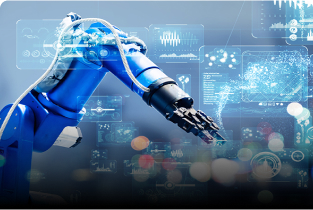
Technology is rapidly changing the way people live, work, communicate, and interact with machines. Two technologies playing a major role in this transformation are the Internet of Things (IoT) and Robotics.
IoT connects physical devices to networks so they can collect, exchange, and analyze data. Robotics combines mechanical engineering, electronics, software, sensors, and artificial intelligence to create machines capable of performing tasks with varying levels of autonomy.
When these technologies work together, they can create smart, connected, and intelligent systems capable of sensing their environment, making decisions, and taking action.
From smart homes and industrial automation to healthcare robots, autonomous vehicles, smart agriculture, and intelligent factories, IoT and Robotics are creating new possibilities across industries.
What Is IoT?
The Internet of Things (IoT) refers to a network of physical objects equipped with sensors, software, communication technologies, and computing capabilities that allow them to collect and exchange data.
IoT devices can include:
- Smart home appliances
- Wearable devices
- Industrial machines
- Connected vehicles
- Medical equipment
- Smart agriculture systems
- Environmental sensors
- Security systems
An IoT system typically involves devices, sensors, connectivity, data processing, cloud or edge computing, and applications.
For example, a smart agriculture system can use sensors to monitor soil moisture and environmental conditions. The collected data can then be analyzed to determine when irrigation is needed.
What Is Robotics?
Robotics is an interdisciplinary field focused on designing, building, programming, and operating robots.
Robots can be designed to perform repetitive, dangerous, precise, or complex tasks.
Modern robots may combine:
- Mechanical components
- Sensors
- Motors and actuators
- Embedded systems
- Computer vision
- Artificial intelligence
- Machine learning
- Control systems
- Communication technologies
Robots are used in manufacturing, healthcare, logistics, agriculture, exploration, defense, education, and many other fields.
How IoT and Robotics Work Together
IoT and Robotics become particularly powerful when connected.
An IoT-enabled robot can collect information through sensors, communicate with other devices, send data to a central platform, and use analytics or AI to make decisions.
For example, a warehouse robot could receive inventory information from an IoT platform, identify the location of products, navigate through the facility, and transport items automatically.
This combination creates systems that are not only automated but also connected and data-driven.
Major Applications of IoT and Robotics
1. Smart Manufacturing
IoT and Robotics are at the center of modern industrial automation.
Connected machines can continuously collect operational data, while robots can perform assembly, inspection, packaging, and material-handling tasks.
Businesses can use these technologies to improve productivity, monitor equipment, reduce downtime, and optimize manufacturing processes.
2. Healthcare
Healthcare is another important area for IoT and Robotics.
Connected medical devices can monitor patients and transmit information to healthcare systems. Robots can support surgery, rehabilitation, logistics, elderly care, and other healthcare-related activities.
3. Smart Homes
Smart homes use connected devices to automate everyday activities.
Examples include:
- Smart lighting
- Smart thermostats
- Security cameras
- Smart locks
- Connected appliances
- Voice-controlled systems
Robotic vacuum cleaners and other household robots can also interact with smart home environments.
4. Agriculture
IoT sensors can monitor soil moisture, temperature, humidity, weather conditions, and crop environments.
Robotics can then be used for tasks such as planting, harvesting, spraying, monitoring, and weed detection.
Together, these technologies can support more efficient and data-driven farming.
5. Logistics and Warehousing
Modern warehouses increasingly use automated robots and connected systems to move products, manage inventory, and optimize operations.
IoT sensors can provide real-time information about products and equipment, while robots can perform physical tasks.
6. Smart Cities
Smart cities use connected technologies to improve urban services.
IoT can support:
- Traffic monitoring
- Smart parking
- Waste management
- Energy management
- Environmental monitoring
- Public infrastructure monitoring
Robotics can also support inspection, maintenance, emergency response, and other specialized tasks.
7. Autonomous Vehicles
Connected sensors, cameras, GPS systems, AI, and robotics technologies contribute to the development of autonomous and semi-autonomous vehicles.
These systems need to perceive their surroundings, process information, make decisions, and control vehicle movement.
8. Space and Exploration
Robotic systems can operate in environments that may be dangerous or inaccessible to humans.
Connected robotic platforms can collect data, communicate with control systems, and perform exploration or inspection tasks.
Essential Skills for IoT and Robotics
A career in IoT and Robotics often requires knowledge across multiple technical areas.
Programming
Programming is essential for developing connected devices and robotic systems.
Popular languages include:
- C
- C++
- Python
- Java
- JavaScript
The appropriate language depends on the hardware, operating system, and application.
Electronics
Understanding electronics helps professionals work with sensors, microcontrollers, circuits, motors, and communication modules.
Embedded Systems
Embedded systems are fundamental to many IoT devices and robots. Professionals should understand microcontrollers, real-time systems, hardware interfaces, and device programming.
Sensors and Actuators
Sensors allow systems to collect information from their environment, while actuators enable machines to perform physical actions.
Understanding how these components work is essential for robotics and IoT development.
Networking
IoT devices need to communicate with other devices and systems.
Important networking technologies and concepts include:
- Wi-Fi
- Bluetooth
- Ethernet
- Cellular networks
- MQTT
- HTTP
- Network security
Artificial Intelligence and Machine Learning
AI and Machine Learning can make IoT and robotic systems more intelligent.
They can help machines recognize objects, identify patterns, predict events, understand environments, and make decisions.
Robotics and Control Systems
Robotics professionals need knowledge of motion control, robot programming, kinematics, navigation, and automation.
Popular IoT and Robotics Technologies
The ecosystem includes many technologies and development platforms.
Some commonly used technologies include:
- Arduino
- Raspberry Pi
- ESP32
- NVIDIA platforms
- Microcontrollers
- Sensors and actuator modules
- ROS and robotics software frameworks
- Cloud platforms
- Edge computing systems
- AI and machine learning frameworks
The appropriate technology depends on the project’s goals, hardware requirements, budget, and environment.
Benefits of IoT and Robotics
The combination of IoT and Robotics can provide several advantages.
Increased Automation
Robots can perform repetitive and complex tasks with limited human intervention.
Improved Efficiency
Connected systems can use real-time data to optimize processes and resources.
Better Monitoring
IoT devices can continuously monitor machines, environments, and operations.
Predictive Maintenance
Data from connected equipment can help organizations identify potential failures before they cause major disruptions.
Enhanced Safety
Robots can perform dangerous tasks in environments that may be unsafe for humans.
Data-Driven Decisions
Organizations can use data collected by connected devices to improve planning and decision-making.
Career Opportunities in IoT and Robotics
The growth of connected systems and automation is creating opportunities across engineering and technology fields.
Potential careers include:
- IoT Engineer
- Robotics Engineer
- Embedded Systems Engineer
- Automation Engineer
- Robotics Software Developer
- IoT Developer
- Computer Vision Engineer
- Control Systems Engineer
- AI Engineer
- Machine Learning Engineer
- Industrial Automation Specialist
- Robotics Researcher
Professionals can find opportunities in manufacturing, healthcare, automotive, agriculture, logistics, technology, energy, aerospace, and research.
How to Start a Career in IoT and Robotics
If you want to build a career in this field, a practical learning path can help.
Step 1: Learn Programming
Begin with C/C++ or Python and understand programming fundamentals.
Step 2: Study Electronics
Learn about circuits, sensors, microcontrollers, motors, and electronic communication.
Step 3: Learn Embedded Systems
Practice programming microcontrollers and working with hardware components.
Step 4: Learn IoT Communication
Understand networking, device communication, protocols, cloud platforms, and IoT architectures.
Step 5: Explore Robotics
Learn robot programming, control systems, sensors, navigation, and robotic operating environments.
Step 6: Learn AI and Machine Learning
Add computer vision, machine learning, and AI skills to create more intelligent systems.
Step 7: Build Projects
Practical projects are one of the best ways to develop real-world skills.
Project ideas include:
- Smart home automation
- Smart irrigation system
- IoT weather station
- Robotic obstacle-avoidance system
- Smart security system
- Automated warehouse robot
- Line-following robot
- IoT-based energy monitoring system
Challenges in IoT and Robotics
Despite their benefits, IoT and Robotics also present challenges.
Security
Connected devices can create additional cybersecurity risks if they are poorly designed or maintained.
Privacy
IoT devices can collect large amounts of information, making responsible data management essential.
Cost
Advanced robotics systems can require significant investment in hardware, software, infrastructure, and maintenance.
Complexity
Developing systems that combine hardware, software, networking, AI, and mechanical components can be technically challenging.
Reliability
Robotic and IoT systems often need to operate continuously and reliably in real-world environments.
The Future of IoT and Robotics
The future of IoT and Robotics is closely connected to Artificial Intelligence, edge computing, 5G and other advanced connectivity technologies, digital twins, cloud computing, and autonomous systems.
Future systems are likely to become more connected, adaptive, and capable of making decisions with less human intervention.
Smart factories may use networks of connected robots and sensors. Healthcare systems may combine wearable devices with intelligent robotic assistants. Agriculture may use autonomous machines and real-time environmental monitoring. Cities may increasingly rely on connected infrastructure to improve services and resource management.
The convergence of IoT, Robotics, AI, and automation is likely to be one of the important technological developments shaping the coming years.
Why Learn IoT and Robotics?
IoT and Robotics offer an exciting combination of software, hardware, engineering, automation, and artificial intelligence.
Students and professionals who develop skills across these areas can work on real-world technologies that interact with the physical world.
If you enjoy building things, programming devices, solving engineering problems, and exploring emerging technologies, IoT and Robotics can provide an exciting career path.
Conclusion
IoT and Robotics are transforming the way machines interact with people, data, and the physical world.


