
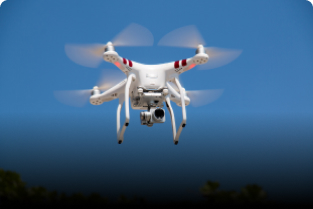
Drone engineering is an exciting and rapidly developing field that combines technology, electronics, robotics, aerodynamics, and software development. From aerial photography and precision agriculture to disaster management, industrial inspections, and defense applications, drones are transforming the way industries operate.
For beginners interested in technology and innovation, drone engineering offers opportunities to explore unmanned aerial vehicles (UAVs), learn how flying systems work, and develop practical engineering skills. Whether you are a student, an engineering graduate, or a technology enthusiast, understanding the fundamentals of drone engineering can help you build a strong foundation for future learning and career development.
In this blog, we will explore the essential skills, tools, technologies, and learning resources beginners need to start their journey in drone engineering.
What Is Drone Engineering?
Drone engineering is the branch of engineering focused on designing, developing, testing, operating, and maintaining unmanned aerial vehicles. These aircraft can fly without a human pilot onboard and may be controlled remotely or operate autonomously using onboard sensors and software.
Drone engineering combines several technical disciplines, including:
- Mechanical engineering: Designing the drone frame, propellers, and structural components.
- Electrical and electronics engineering: Working with motors, batteries, circuits, and electronic speed controllers.
- Software engineering: Developing flight-control software, navigation systems, and autonomous functions.
- Robotics: Integrating sensors, control systems, and automated decision-making.
- Aerodynamics: Understanding lift, thrust, drag, and flight stability.
By combining these disciplines, drone engineers develop systems capable of performing tasks efficiently, safely, and accurately.
Why Should Beginners Learn Drone Engineering?
Drone engineering is worth exploring because it offers a combination of practical engineering, programming, and problem-solving. It also introduces learners to technologies used in robotics, automation, and artificial intelligence.
Some important reasons to learn drone engineering include:
1. Growing Industry Applications
Drones are used in agriculture, construction, filmmaking, logistics research, environmental monitoring, infrastructure inspection, and emergency response. Understanding drone technology can help beginners explore different technical industries.
2. Hands-On Technical Learning
Building or programming a drone allows learners to apply theoretical concepts in real-world projects. Beginners can experiment with sensors, motors, microcontrollers, flight controllers, and simulation software.
3. Opportunities to Explore Emerging Technologies
Modern drones increasingly incorporate artificial intelligence, computer vision, GPS navigation, obstacle detection, and autonomous flight capabilities. Learning the fundamentals provides a starting point for exploring these advanced technologies.
4. Multiple Career Pathways
Drone engineering knowledge can support career development in UAV design, embedded systems, robotics, electronics, flight-control software, testing, and drone operations. Specific job requirements depend on the role, employer, and relevant qualifications.
Essential Skills for Drone Engineering Beginners
Before building an advanced drone, beginners should develop a basic understanding of the technologies that make drones fly.
1. Basic Electronics
Electronics is one of the most important foundations of drone engineering. Drones contain several electronic components that work together to control movement, monitor flight conditions, and distribute power.
Beginners should learn about:
- Voltage, current, resistance, and power
- Batteries and power management
- Brushless DC motors
- Electronic speed controllers (ESCs)
- Sensors and circuit connections
- Microcontrollers and embedded systems
A simple electronics project using a microcontroller can help learners understand how sensors and electronic components interact.
2. Programming Skills
Programming enables drones to process sensor data, execute commands, communicate with ground-control systems, and perform automated tasks.
Python is a useful starting point for beginners because it supports data analysis, computer vision, automation, and many drone-related software libraries.
C and C++ are valuable for embedded programming, real-time control systems, and understanding lower-level flight-control software.
Start by learning variables, conditions, loops, functions, and basic data structures. Later, explore sensor integration and drone communication protocols.
3. Aerodynamics and Flight Principles
Understanding flight mechanics helps beginners learn why drones rise, descend, hover, and move in different directions.
Important concepts include:
- Lift: The aerodynamic force that helps an aircraft remain airborne.
- Thrust: The force produced by propellers that enables movement and counteracts gravity.
- Drag: The resistance an aircraft experiences while moving through the air.
- Weight: The gravitational force acting on the drone.
- Stability: The ability of a drone to maintain or recover its intended orientation.
Multirotor drones change their motor speeds to control roll, pitch, and yaw, allowing them to hover and maneuver.
4. Mathematics and Physics
You do not need to master advanced mathematics before starting, but a basic understanding of mathematics and physics is helpful.
Focus on:
- Algebra and basic trigonometry
- Vectors and coordinate systems
- Forces and motion
- Rotational motion
- Basic statistics and sensor measurements
As you advance, calculus, linear algebra, and control theory become increasingly useful for navigation, trajectory planning, and autonomous flight.
5. Problem-Solving and Troubleshooting
Drone engineering involves identifying problems and finding reliable solutions. A drone may experience unstable flight, communication failures, sensor inaccuracies, or battery-related issues.
Beginners should learn to inspect components, read documentation, interpret error messages, test one variable at a time, and record results. These habits are essential for building safer and more reliable systems.
Important Tools and Technologies for Learning Drone Engineering
Choosing the right tools can make learning easier and reduce the cost of early experimentation.
1. Drone Simulation Software
Simulation software lets beginners explore drone flight and test control algorithms without immediately purchasing or flying a physical drone.
Popular options include:
- Gazebo: A robotics simulator that can be used with suitable drone simulation configurations.
- AirSim: An open-source simulator originally developed by Microsoft for autonomous vehicles, including drones; check current maintenance and compatibility before choosing it.
- PX4 SITL: Allows PX4 flight-control software to run in a simulated environment.
- ArduPilot SITL: Enables testing ArduPilot-based vehicle behavior in software.
Simulation is particularly useful for experimenting with flight modes, navigation, and control logic before conducting real-world tests.
2. Flight Controllers
A flight controller is the central control system responsible for processing sensor information and adjusting motor outputs to stabilize and guide a drone.
Beginners can explore flight-control platforms such as:
- PX4: An open-source flight-control platform for drones and other autonomous vehicles.
- ArduPilot: An open-source autopilot project supporting multiple vehicle types.
- Betaflight: A flight-control firmware widely used in FPV multirotor drones.
Each platform serves different purposes. Choose one based on your learning goals, hardware compatibility, and available documentation.
3. Microcontrollers and Development Boards
Microcontrollers help beginners understand embedded programming and sensor integration.
Useful learning platforms include Arduino-compatible boards, ESP32 development boards, and Raspberry Pi systems for projects requiring more computing power.
For example, you can use a development board to read temperature, distance, or motion sensor data before attempting more complex drone-related projects. A microcontroller project is not automatically a substitute for a proper flight controller.
4. Computer-Aided Design (CAD) Software
CAD software is useful for designing drone frames, mounting brackets, protective enclosures, and custom mechanical parts.
Beginners can explore:
- FreeCAD: A free and open-source parametric CAD application.
- Fusion: CAD and engineering design software with free-access options for eligible users.
- SolidWorks: Professional mechanical design software commonly used in engineering environments.
Start by designing simple parts, such as a sensor mount or battery holder, before attempting a complete drone frame.
5. Electronics Testing Equipment
Basic testing tools help learners inspect circuits and diagnose hardware problems.
Useful equipment includes a digital multimeter, soldering tools, wire strippers, suitable connectors, and a regulated bench power supply. Beginners should also learn proper battery handling and electrical safety before connecting motors or high-current components.
Best Learning Resources for Drone Engineering
A combination of tutorials, official documentation, structured courses, and hands-on projects can help beginners build their knowledge systematically.
1. Official Drone Development Documentation
Official documentation is one of the most valuable resources for understanding how drone systems work.
- PX4 User Guide: Flight-control concepts, setup instructions, simulation, and development. Visit https://docs.px4.io/
- ArduPilot Documentation: Autopilot setup, vehicle configuration, simulation, and testing. Visit https://ardupilot.org/
- ROS 2 Documentation: Robotics software concepts, communication, and integration. Visit https://docs.ros.org/
Beginners should start with introductory guides and simulations before attempting advanced configurations.
2. Online Learning Platforms
Online courses can provide structured instruction in programming, electronics, robotics, and UAV technology.
Explore platforms such as:
- Coursera: Courses in robotics, control systems, programming, and related engineering topics.
- edX: University-level learning opportunities in engineering, computer science, and robotics.
- Udemy: Practical courses covering drone construction, electronics, flight-control platforms, and programming.
- NPTEL: Engineering courses that can help learners in India develop foundations in control systems, embedded systems, and related subjects.
Course availability and quality vary, so check the syllabus, instructor credentials, practical exercises, and recent reviews before enrolling.
3. YouTube Tutorials
YouTube is useful for visual demonstrations of electronics, drone components, programming, and troubleshooting.
Look for educational content covering:
- How quadcopters work
- Brushless motors and ESCs
- Flight-controller setup
- Basic Python and embedded programming
- Drone simulation with PX4 or ArduPilot
- Sensor integration and robotics fundamentals
Use tutorials alongside official documentation rather than relying on videos alone, especially when configuring hardware or changing flight settings.
4. Books and Technical References
Books on robotics, control systems, embedded programming, and aerodynamics can provide deeper theoretical knowledge.
Beginners can start with introductory books on robotics and electronics before moving to specialized material on unmanned aircraft systems. Choose references that match your current mathematics and programming level.
A Step-by-Step Roadmap to Learn Drone Engineering
A structured learning plan helps beginners avoid becoming overwhelmed by the number of technologies involved.
Step 1: Understand Drone Components
Learn about frames, propellers, motors, ESCs, batteries, flight controllers, GPS modules, and inertial measurement units (IMUs).
Goal: Explain the function of each major component and how the components work together.
Step 2: Learn Basic Electronics and Programming
Study electrical fundamentals and begin programming with Python. Then explore embedded programming using C or C++ when appropriate.
Goal: Build a small sensor-reading project and understand how to interpret its output.
Step 3: Explore Drone Simulation
Install a compatible simulator and follow the official setup instructions for PX4 or ArduPilot.
Goal: Launch a simulated drone, explore basic flight modes, and understand how software interacts with a flight-control system.
Step 4: Study Flight Control and Navigation
Learn about feedback control, PID controllers, coordinate systems, sensor fusion, and GPS-based navigation.
Goal: Understand how a drone maintains stability and follows movement commands.
Step 5: Complete a Beginner Project
Choose a project that matches your current skills. For example, develop a simulated waypoint mission or create a program that analyzes drone sensor data.
Goal: Apply theory to a working demonstration and document your results.
Step 6: Move to Supervised Hardware Experiments
Once you understand the fundamentals, explore a small educational drone kit or a compatible flight-control platform.
Goal: Learn safe assembly, calibration, pre-flight checks, and controlled testing in an appropriate environment.
Always follow the manufacturer’s instructions, battery safety guidance, local aviation rules, and applicable restrictions. Do not test experimental flight-control code on a drone near people, roads, airports, or other hazards.
Beginner-Friendly Drone Engineering Projects
Practical projects help learners develop confidence and demonstrate their skills.
1. Drone Component Identification Project
Create a diagram showing the main components of a quadcopter and explain their functions.
Skills learned: Drone architecture, electronics, technical documentation.
2. Sensor Data Analysis
Use sample IMU or GPS data to create graphs and identify changes in acceleration, orientation, or position.
Skills learned: Python, data analysis, sensor fundamentals.
3. Simulated Waypoint Navigation
Configure a simulated drone to follow a series of predefined waypoints using a supported simulation environment.
Skills learned: Navigation, coordinates, flight planning, simulation.
4. Drone Frame Design
Design a basic quadcopter frame or a component mount using CAD software.
Skills learned: Mechanical design, dimensions, structural considerations, prototyping.
5. Computer Vision Experiment
Use sample aerial imagery to detect objects, classify scenes, or identify features with a computer-vision library.
Skills learned: Python, image processing, computer vision, introductory AI.
Start with simulation, recorded data, and non-flying prototypes. Progress to physical flight only when the project, equipment, and testing environment are appropriate.
Career Opportunities in Drone Engineering
Drone engineering knowledge can lead to several technical and operational career paths. The right pathway depends on your education, practical experience, programming ability, and specialization.
Potential roles include:
- Drone Design Engineer: Works on drone structures, mechanical components, and system integration.
- UAV Software Engineer: Develops software for flight control, communication, navigation, and autonomy.
- Embedded Systems Engineer: Works with microcontrollers, sensors, firmware, and electronic systems.
- Robotics Engineer: Develops autonomous systems, perception, control, and navigation capabilities.
- Drone Testing Engineer: Evaluates performance, reliability, and system behavior.
- Drone Operations Specialist: Supports mission planning, equipment operation, and data collection, subject to applicable certification and regulatory requirements.
Industries that use drone technology include agriculture, construction, energy, infrastructure inspection, mapping, environmental monitoring, research, and public safety.
Building a portfolio of documented projects, simulations, code, and design work can help demonstrate your skills to employers.
Drone Engineering in India: Important Considerations
Students and aspiring professionals in India should understand that drone operations are subject to applicable aviation regulations. The Directorate General of Civil Aviation (DGCA) and the Ministry of Civil Aviation are important official sources for regulatory information.
Before flying a drone, check the current requirements for the drone category, airspace permissions, registration or identification requirements where applicable, and any training or remote-pilot certification rules relevant to the operation.
The official Digital Sky platform is an important starting point for checking Indian drone airspace and regulatory services:
https://digitalsky.dgca.gov.in/
Regulatory requirements can change, so consult current official guidance rather than relying on old tutorials or informal advice.
Common Mistakes Beginners Should Avoid
Learning drone engineering becomes easier when you focus on fundamentals and follow a structured approach.
1. Buying expensive hardware too early: Begin with free documentation and simulation tools before investing in a complete drone setup.
2. Ignoring electronics fundamentals: Understanding power, motors, sensors, and electrical connections helps prevent hardware problems.
3. Skipping programming basics: Learn fundamental programming concepts before attempting autonomous navigation or complex flight-control modifications.
4. Relying only on tutorials: Combine video lessons with official documentation, practical experiments, and project notes.
5. Testing experimental code in real flight too soon: Validate changes in simulation and use controlled, supervised testing procedures before any physical flight.
6. Ignoring regulations and safety: Learn the applicable rules and inspect your equipment before operating a drone.
Conclusion
Drone engineering offers beginners an opportunity to explore electronics, robotics, programming, aerodynamics, and autonomous systems through practical projects. By developing foundational skills, learning simulation tools, studying official documentation, and completing small projects, learners can gradually progress toward more advanced drone technologies.
The best approach is to start small, focus on one concept at a time, and document everything you build or test. Whether your goal is to design UAV hardware, develop flight-control software, explore robotics, or pursue a career in drone technology, consistent practice and a strong understanding of engineering fundamentals will help you move forward.
Start your drone engineering journey today by learning the basics, experimenting with simulation software, and building your first beginner-friendly project.
Frequently Asked Questions (FAQs)
1. Is drone engineering suitable for beginners?
Yes. Beginners can start with basic electronics, programming, aerodynamics, and drone simulation. Advanced topics such as autonomous navigation and flight-control development can be learned gradually.
2. Which programming language is best for drone engineering?
Python is a good starting point for automation, data analysis, and computer vision. C and C++ are also important for embedded programming and many flight-control applications.
3. Do I need an engineering degree to learn drone engineering?
No formal engineering degree is required to begin learning the fundamentals. However, some professional engineering positions require a relevant degree or equivalent qualifications and experience.
4. Which software should beginners learn first?
Start with Python and a drone simulation environment compatible with PX4 or ArduPilot. You can later explore CAD software, ROS 2, and computer-vision tools based on your interests.
5. How long does it take to learn drone engineering?
You can learn basic concepts within a few weeks of consistent study. Developing practical proficiency in electronics, programming, flight control, and autonomous systems generally requires several months or longer, depending on your background and learning schedule.


