
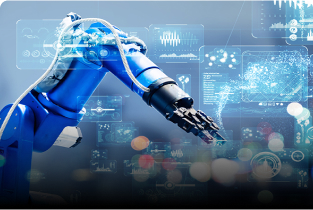
Technology is transforming the way people live, work, and interact with the world. Two important technologies driving this transformation are the Internet of Things (IoT) and robotics. Both play significant roles in automation, smart devices, industrial operations, healthcare, agriculture, and modern manufacturing.
Although IoT and robotics are often used together, they serve different purposes. IoT focuses on connecting physical devices to the internet or other networks so they can collect, exchange, and analyze data. Robotics focuses on designing, building, and operating machines that can perform physical tasks with varying levels of automation.
Understanding the differences between IoT and robotics can help students, engineers, and businesses choose the right technology for their needs. In this blog, we will explore IoT vs. robotics, their key differences, applications, benefits, and how these technologies work together to shape the future.
What Is the Internet of Things (IoT)?
The Internet of Things, commonly known as IoT, refers to a network of physical devices connected through the internet or other communication networks. These devices contain sensors, software, and communication technologies that allow them to collect and exchange information.
IoT enables users to monitor devices remotely, analyze real-time data, and automate certain processes. Depending on the application, IoT devices may communicate through Wi-Fi, Bluetooth, cellular networks, Zigbee, or other communication technologies.
Examples of IoT
- Smart home devices: Smart lights, thermostats, doorbells, and security cameras.
- Healthcare devices: Connected health monitors and wearable fitness trackers.
- Industrial IoT: Sensors that monitor machinery, temperature, pressure, and equipment performance.
- Smart agriculture: Soil moisture sensors and connected irrigation systems.
- Smart cities: Connected streetlights, environmental sensors, and traffic monitoring systems.
Benefits of IoT
IoT offers several advantages for individuals and organizations:
- Remote monitoring: Users can monitor connected devices from different locations.
- Real-time data collection: Sensors provide information about conditions and equipment performance.
- Improved efficiency: Automated monitoring can reduce manual work and resource waste.
- Predictive maintenance: Sensor data can help identify potential equipment problems before failures occur.
- Better decision-making: Data analysis can help organizations understand patterns and improve operations.
However, IoT systems also require appropriate cybersecurity, privacy protections, reliable connectivity, and ongoing maintenance.
What Is Robotics?
Robotics is a field of engineering and technology focused on designing, building, programming, and operating robots. Robots are machines that can perform physical tasks, ranging from simple repetitive actions to complex operations that require sensing, planning, and adaptation.
A robot may include mechanical components, sensors, motors, controllers, and software. Some robots follow predefined instructions, while others use artificial intelligence and machine learning to interpret their surroundings and make decisions.
Examples of Robotics
- Industrial robots: Perform welding, painting, assembly, and material handling.
- Medical robots: Assist healthcare professionals with selected surgical and rehabilitation tasks.
- Service robots: Help with cleaning, delivery, and other service activities.
- Agricultural robots: Support planting, harvesting, crop monitoring, and weed control.
- Humanoid robots: Designed with human-like body structures to perform certain physical or interactive tasks.
- Autonomous mobile robots: Move through environments to transport materials or support warehouse operations.
Benefits of Robotics
Robotics offers several important benefits:
- Automation of repetitive tasks: Robots can perform repeated operations consistently.
- Improved precision: Properly designed robots can perform tasks with high repeatability.
- Enhanced workplace safety: Robots can handle some hazardous or physically demanding activities.
- Higher productivity: Automated systems can increase production capacity.
- Operation in challenging environments: Specialized robots can work in areas that are difficult or dangerous for humans.
Robotics also involves challenges such as initial investment, maintenance, programming complexity, and safety requirements.
IoT vs. Robotics: Key Differences
Although IoT and robotics can complement each other, they differ in their primary objectives, components, and functions.
| Feature | Internet of Things (IoT) | Robotics |
|---|---|---|
| Main purpose | Connect devices and exchange data | Perform physical tasks using machines |
| Core components | Sensors, communication modules, software, and connected devices | Mechanical structures, actuators, sensors, controllers, and software |
| Primary function | Monitoring, communication, and data collection | Movement, manipulation, and physical automation |
| Connectivity | Often uses network connections to exchange data | May operate independently or connect to networks |
| Interaction with the physical world | Primarily senses and monitors conditions, though it can trigger actions through connected systems | Can physically move, manipulate objects, and perform tasks |
| Automation | Automates monitoring, alerts, and connected processes | Automates physical activities and operations |
| Common examples | Smart thermostats, connected sensors, and smart meters | Industrial arms, delivery robots, and robotic vacuum cleaners |
| Key skills | Networking, sensors, cloud platforms, and data analysis | Mechanical engineering, electronics, control systems, and programming |
The main distinction is that IoT connects devices and enables data exchange, while robotics enables machines to perform physical tasks. Some systems combine both technologies to achieve more advanced automation.
IoT vs. Robotics: How Do They Work Together?
IoT and robotics can be integrated to create intelligent systems that sense their environments, exchange information, and perform actions automatically.
In a smart factory, for example, IoT sensors can monitor machine temperature, vibration, and production conditions. The data can be sent to a monitoring platform, where software identifies unusual patterns. A connected robotic system may then adjust its operation, move materials, or pause a process when configured to do so safely.
Similarly, an agricultural robot can use IoT sensors to receive information about soil moisture and environmental conditions. The robot can use this information to support targeted watering, crop inspection, or other farming tasks.
This integration becomes even more powerful when artificial intelligence is added. AI can help analyze sensor data, identify patterns, and support decisions about what a robot should do next.
However, network connectivity alone does not make a robot intelligent. Reliable integration requires suitable sensors, control systems, software, communication protocols, and safety mechanisms.
Applications of IoT and Robotics Across Industries
1. Manufacturing and Industrial Automation
Manufacturing is one of the most important areas where IoT and robotics work together.
Industrial IoT sensors collect information about production equipment, energy consumption, and operating conditions. Robots perform tasks such as assembly, welding, packaging, and material handling.
When these technologies are integrated, manufacturers can monitor production in real time, coordinate certain automated processes, and identify maintenance needs.
Example: A factory uses IoT sensors to monitor equipment vibration while robotic arms assemble products. Maintenance teams can investigate unusual readings before a potential equipment failure interrupts production.
2. Healthcare and Medical Technology
IoT and robotics are creating new possibilities in healthcare. Connected medical devices can collect health-related measurements, while robots can assist with selected clinical and operational tasks.
Examples include wearable health monitors, connected hospital equipment, rehabilitation robots, robotic-assisted surgical systems, and automated laboratory equipment.
These technologies can support healthcare professionals by improving monitoring, precision, and workflow efficiency. Medical applications must still meet appropriate safety, privacy, and clinical validation requirements.
3. Smart Homes and Buildings
IoT is widely used in smart homes to connect lighting, thermostats, appliances, and security systems. Robotics adds physical automation through devices such as robotic vacuum cleaners and lawn-mowing robots.
For example, a connected home system can monitor room temperature and adjust heating or cooling settings. A robotic vacuum can navigate rooms and clean floors according to a schedule.
Combining IoT and robotics can make home automation more convenient, although compatibility and data security remain important considerations.
4. Agriculture and Smart Farming
Modern agriculture increasingly uses connected sensors, drones, automated machinery, and agricultural robots.
IoT sensors can monitor soil moisture, temperature, humidity, and other environmental conditions. Robotics can support crop inspection, precision spraying, harvesting, and weed removal.
By combining these technologies, farmers can make more informed decisions about irrigation, crop management, and resource use.
For example, a connected irrigation system can use soil moisture readings to activate watering equipment when specified conditions are met. In more advanced systems, robotic equipment may support additional field operations.
5. Transportation and Logistics
IoT and robotics are helping improve the movement and management of goods.
Connected sensors can track vehicle locations, monitor cargo conditions, and provide information about fleet performance. Robots can move products through warehouses, sort packages, and support inventory management.
When these technologies work together, businesses can improve visibility across supply chains and coordinate certain transportation and warehouse operations more efficiently.
6. Smart Cities
Smart cities use connected technologies to monitor infrastructure and improve public services.
IoT sensors can collect information about traffic flow, air quality, energy consumption, and waste levels. Robotics can support selected inspection, maintenance, and delivery tasks.
For example, connected environmental sensors can monitor air quality, while specialized robots may inspect infrastructure in hazardous or difficult-to-access locations.
Successful smart city projects require reliable infrastructure, responsible data management, and careful consideration of public safety.
Essential Skills Required for IoT and Robotics
Students and professionals interested in these fields should develop skills that match their chosen area of specialization.
Skills for IoT
- Programming with Python, C, or C++
- Understanding sensors and microcontrollers
- Networking fundamentals and communication protocols
- Working with cloud platforms and IoT dashboards
- Data collection, analysis, and visualization
- Cybersecurity and connected-device management
Skills for Robotics
- Mechanical design and engineering fundamentals
- Electronics and embedded systems
- Programming with Python or C++
- Control systems and motor operation
- Sensors, actuators, and microcontrollers
- Robot simulation and computer vision
- Mathematics, including geometry and linear algebra
Skills for Integrated IoT and Robotics
If you want to work with both technologies, consider learning embedded programming, networking, sensor integration, control systems, and basic artificial intelligence.
Hands-on projects are particularly useful. You could begin with a connected temperature-monitoring system, build a sensor-controlled robot, or develop a small mobile robot that sends status updates to an IoT dashboard.
Career Opportunities in IoT and Robotics
The growing use of automation and connected devices creates career opportunities across engineering, software development, manufacturing, and research.
| Career | Primary Responsibilities |
|---|---|
| IoT Developer | Develops connected-device applications and communication systems |
| Robotics Engineer | Designs and develops robotic systems |
| Embedded Systems Engineer | Builds software and hardware for embedded devices |
| Automation Engineer | Develops automated processes and control systems |
| IoT Solutions Architect | Designs connected-device and IoT infrastructure |
| Robotics Software Engineer | Develops software for robot movement, perception, and control |
| Control Systems Engineer | Designs and evaluates systems that regulate machine behavior |
| Computer Vision Engineer | Develops systems that interpret visual information |
To prepare for these careers, focus on relevant technical foundations, practical projects, and a portfolio demonstrating your ability to solve real-world problems. The qualifications required depend on the role and employer.
The Future of IoT and Robotics
The future of IoT and robotics will be influenced by advances in artificial intelligence, edge computing, wireless communication, sensors, and autonomous systems.
Several developments are particularly important:
- AI-powered robotics: Robots will continue to gain capabilities for recognizing objects, interpreting instructions, and adapting to certain changing environments.
- Industrial IoT: More connected equipment will support production monitoring, operational analysis, and predictive maintenance.
- Edge computing: Processing information closer to devices can reduce response times and limit dependence on cloud connectivity.
- Collaborative robots: Robots designed to work alongside people may support flexible manufacturing and other shared workspaces when appropriate safety measures are in place.
- Autonomous systems: Advances in sensing, navigation, and decision-making may expand applications in logistics, agriculture, and inspection.
- Digital twins: Virtual representations of physical assets can combine sensor data and simulation to support monitoring, testing, and maintenance planning.
These technologies offer substantial opportunities, but their success will depend on cost, reliability, cybersecurity, safety, and the ability to integrate them with existing systems.
Challenges of IoT and Robotics Integration
Despite their advantages, combining IoT and robotics can create technical and operational challenges.
Cybersecurity risks: Connected devices can introduce vulnerabilities if their software, credentials, or networks are not adequately protected.
High implementation costs: Hardware, software, installation, training, and maintenance may require substantial investment.
Integration complexity: Devices from different manufacturers may use incompatible protocols or data formats.
Data privacy: Connected systems may collect sensitive information that requires appropriate protection.
Safety concerns: Robots operating near people need suitable safeguards, risk assessments, and emergency controls.
Skills requirements: Organizations need professionals who understand software, electronics, networking, mechanics, and system integration.
Careful planning, regular updates, appropriate testing, and clear operational procedures can help reduce these risks.
Conclusion
IoT and robotics are two important technologies transforming modern industries, but they serve different purposes. IoT connects physical devices and enables them to collect and exchange information, while robotics focuses on machines that perform physical tasks.


