
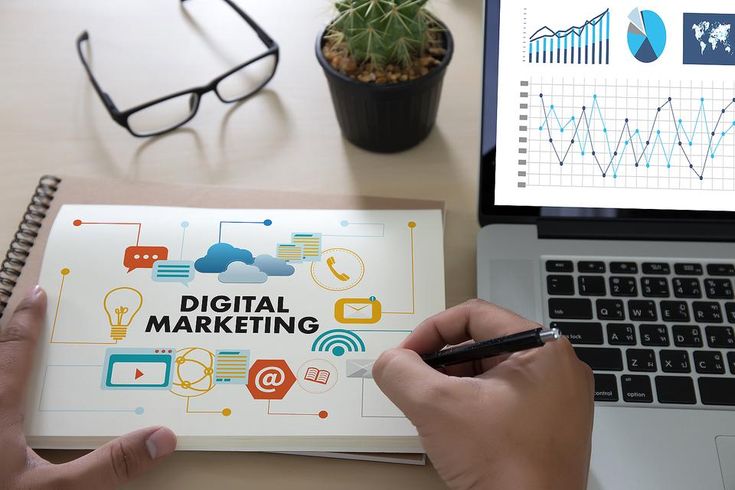
In today’s competitive business environment, having a strong online presence is essential for small businesses that want to attract customers, increase sales, and build a recognizable brand. Traditional marketingHow Small Businesses Can Benefit from Digital Marketing
methods, such as newspaper advertisements, flyers, and billboards, can still be useful, but digital marketing provides businesses with additional ways to reach potential customers and measure their marketing performance.
Digital marketing includes strategies such as search engine optimization (SEO), social media marketing, email marketing, content marketing, and paid online advertising. These techniques help small businesses connect with their target audience, promote their products or services, and compete more effectively in the digital marketplace.
Whether you run a local shop, an online store, a startup, or a service-based business, digital marketing can help you reach more people and build long-term customer relationships.
In this blog, we will explore how small businesses can benefit from digital marketing and which strategies can help them achieve sustainable growth.
What Is Digital Marketing?
Digital marketing is the process of promoting products, services, or brands through online channels and digital technologies. It enables businesses to communicate with potential customers through search engines, websites, social media platforms, email, and other digital channels.
Unlike some traditional advertising methods, digital marketing allows businesses to target specific audiences, track engagement, and evaluate campaign performance.
Common types of digital marketing include:
- Search Engine Optimization (SEO): Improving a website’s visibility in organic search results.
- Social Media Marketing: Promoting products and services through platforms such as Instagram, Facebook, LinkedIn, and YouTube.
- Content Marketing: Creating useful blogs, videos, guides, and other content to attract and educate customers.
- Email Marketing: Sending newsletters, offers, updates, and personalized messages to subscribers.
- Pay-Per-Click Advertising (PPC): Running paid advertisements on search engines and other digital platforms.
- Local Digital Marketing: Helping nearby customers discover a business through local search results, maps, reviews, and location-based content.
Small businesses can combine these methods according to their goals, audience, and available budget.
1. Reaching a Larger Audience
One of the biggest advantages of digital marketing is its ability to connect small businesses with a broader audience.
In the past, a small business might have depended primarily on customers who lived nearby. With a website and effective digital marketing, the same business can attract customers from other cities, regions, or even countries.
For example, a small clothing business can showcase its products on Instagram, publish product information on its website, and use search engine optimization to attract people searching for specific clothing styles.
Similarly, a freelance graphic designer can use LinkedIn, a professional portfolio, and targeted content to connect with potential clients beyond their local area.
By selecting the right channels, small businesses can expand their reach without necessarily investing in expensive traditional advertising.
2. Cost-Effective Marketing Opportunities
Many small businesses operate with limited marketing budgets. Digital marketing offers flexible options that allow business owners to begin with relatively modest investments.
Creating social media profiles, publishing blog posts, improving website content, and sending emails to subscribers can be affordable ways to build visibility. Paid advertising can also be started with a controlled budget and adjusted based on campaign performance.
However, digital marketing is not always free. Website hosting, professional content creation, marketing software, advertising campaigns, and specialist services may involve expenses.
The key is to choose strategies that match business goals and monitor whether the results justify the investment.
For example, a local bakery might start by sharing product photos and customer reviews on social media before investing in paid advertisements. This approach helps the business test what attracts customers before committing more resources.
3. Improving Brand Awareness
Brand awareness refers to how familiar customers are with a business and its products or services.
Digital marketing helps small businesses establish a recognizable identity through consistent messaging, visual branding, helpful content, and regular online communication.
A business can strengthen its brand by:
- Publishing useful and relevant content.
- Maintaining consistent logos, colors, and messaging.
- Sharing product demonstrations and behind-the-scenes videos.
- Responding professionally to customer questions and reviews.
- Highlighting customer experiences and business achievements.
For example, a small skincare brand can publish educational content about product ingredients and skincare routines. Over time, this can help potential customers become more familiar with the brand and understand its value.
Consistent and trustworthy communication can help a small business build recognition in a crowded market.
4. Targeting the Right Customers
Another important benefit of digital marketing is the ability to reach audiences based on relevant characteristics and interests.
Depending on the platform, businesses may be able to target customers using factors such as location, search intent, interests, or previous interactions with their websites.
For example, a fitness studio can promote its services to people in nearby neighborhoods, while a software company can create content aimed at professionals searching for a particular business solution.
Targeted marketing helps businesses focus their resources on audiences who are more likely to be interested in their offerings.
However, effective targeting requires an understanding of customer needs. Businesses should define their ideal customer, identify common problems, and develop messages that explain how their products or services provide value.
5. Increasing Website Traffic Through SEO
Search engine optimization is a valuable long-term digital marketing strategy for small businesses.
SEO involves improving website content, structure, technical performance, and relevance so that search engines can better understand and display the website for appropriate searches.
When potential customers search for products or services related to a business, a well-optimized website may appear in relevant organic search results.
Small businesses can improve SEO by:
- Researching keywords that match customer search intent.
- Publishing useful, original, and informative content.
- Optimizing page titles, headings, and meta descriptions.
- Improving website speed and mobile usability.
- Creating clear website navigation and internal links.
- Earning relevant, trustworthy backlinks.
- Keeping business information accurate across appropriate online directories.
For local businesses, maintaining an accurate Google Business Profile can also help customers discover their services through Google Search and Maps.
SEO usually requires consistent effort, and results are not guaranteed. However, it can become an important source of relevant website traffic over time.
6. Generating More Leads and Sales
Digital marketing can help small businesses turn online visibility into customer inquiries and purchases.
A lead is a potential customer who expresses interest in a business by taking an action, such as submitting a contact form, requesting a quotation, or signing up for a newsletter.
Businesses can generate leads through landing pages, useful downloadable resources, contact forms, social media campaigns, and targeted advertising.
For example, a digital marketing agency might publish a free SEO checklist and invite website visitors to request a consultation. Interested visitors can then become leads for the agency’s services.
To improve conversions, businesses should make the next step clear. Useful calls to action include:
- Request a Free Consultation
- Shop Now
- Book an Appointment
- Get a Quote
- Subscribe for Updates
A well-designed website, clear product information, transparent pricing, and a simple purchasing process can help turn interested visitors into paying customers.
7. Building Strong Customer Relationships
Long-term business success depends not only on attracting new customers but also on retaining existing ones.
Digital marketing makes it easier for small businesses to stay connected with customers through email newsletters, social media updates, personalized offers, and helpful customer support.
For example, an online store can send order updates, product care instructions, and relevant recommendations to customers who have agreed to receive marketing communications.
Businesses can also use customer feedback to improve their products and services.
Responding promptly to questions, addressing complaints professionally, and sharing useful information can help build trust and encourage repeat purchases.
Personalized communication should always respect customer privacy and applicable marketing consent requirements.
8. Measuring Marketing Performance
One of the major advantages of digital marketing is the ability to measure many aspects of campaign performance.
Tools such as Google Analytics and advertising platform dashboards can help businesses understand how people interact with their websites and campaigns.
Important metrics include:
| Metric | What it measures |
|---|---|
| Website traffic | The number of visits to a website |
| Click-through rate (CTR) | The percentage of impressions that result in clicks |
| Conversion rate | The percentage of relevant visitors who complete a desired action |
| Cost per lead | The average marketing cost of generating a lead |
| Customer acquisition cost (CAC) | The average cost of acquiring a customer |
| Return on ad spend (ROAS) | Revenue attributed to advertising relative to advertising spend |
These metrics help business owners identify which campaigns are performing well and where improvements may be needed.
For instance, if an advertisement generates many clicks but few purchases, the business might need to improve its landing page, product information, pricing, or checkout process.
Measuring results makes it easier to make informed decisions rather than relying entirely on guesswork.
9. Competing With Larger Businesses
Small businesses may not have the resources of large companies, but digital marketing creates opportunities to compete in specific markets and customer segments.
A small business can focus on a specialized audience, provide personalized service, and publish content that directly addresses customer needs.
For example, a local handmade jewelry business can highlight its craftsmanship, customization options, and unique designs instead of competing solely on price with large retailers.
Similarly, a small consulting firm can publish detailed guides about a particular industry challenge to demonstrate its expertise.
Success depends on offering genuine value, choosing appropriate marketing channels, and maintaining a consistent presence. Digital marketing does not guarantee that a small business will outperform larger competitors, but it can help create meaningful opportunities for growth.
10. Supporting Local Business Growth
Local digital marketing is particularly useful for businesses that serve customers in a specific geographic area.
Restaurants, salons, repair services, fitness centers, clinics, and retail shops can use local search strategies to help nearby customers find them.
Useful local marketing activities include:
- Creating and maintaining a Google Business Profile.
- Keeping business hours, addresses, and contact information accurate.
- Encouraging genuine customer reviews without offering prohibited incentives.
- Publishing location-relevant website content.
- Sharing local offers and updates on social media.
- Making it easy for customers to call, book, or request directions.
For example, a neighborhood plumbing service can improve its website to explain its services and the areas it covers. When combined with accurate business listings and strong customer reviews, these efforts may help the business attract relevant local inquiries.
11. Using Social Media to Engage Customers
Social media provides small businesses with opportunities to share information, demonstrate products, answer questions, and build communities around their brands.
Different platforms serve different purposes. Instagram and Pinterest can be useful for visually appealing products, LinkedIn can support professional networking and business-to-business marketing, and YouTube can help businesses publish detailed demonstrations or tutorials.
Effective social media marketing involves more than posting advertisements. Businesses should create content that educates, entertains, inspires, or solves problems for their target audience.
A small restaurant, for example, might share menu highlights, cooking videos, customer feedback, and information about special events.
Tracking engagement, website visits, inquiries, and sales can help determine whether social media activity is contributing to business goals.
12. Taking Advantage of AI and Marketing Automation
Artificial intelligence and marketing automation tools can help small businesses complete certain marketing tasks more efficiently.
Depending on the tool, businesses can use AI to brainstorm content ideas, summarize customer feedback, draft email campaigns, analyze trends, or assist with customer support.
Automation tools can also schedule social media posts, send welcome emails, organize leads, and remind customers about appointments.
For example, a small online store can use an email marketing platform to send an order confirmation automatically and follow up with relevant information after a purchase.
These technologies can save time, but human review remains important. Businesses should verify AI-generated information, maintain their brand voice, protect customer data, and avoid sending irrelevant or excessive messages.
Best Digital Marketing Strategies for Small Businesses
The most effective strategy depends on the business model, customer preferences, and marketing budget.
| Strategy | Best suited for | Main objective |
|---|---|---|
| SEO | Businesses seeking long-term search visibility | Attract relevant organic traffic |
| Social media marketing | Consumer brands and community-focused businesses | Build awareness and engagement |
| Email marketing | Businesses with an opted-in subscriber list | Encourage retention and repeat sales |
| PPC advertising | Businesses seeking targeted paid traffic | Generate traffic, leads, or sales |
| Content marketing | Businesses that can educate or inform customers | Build trust and demonstrate expertise |
| Local SEO | Businesses serving a particular area | Attract nearby customers |
Small businesses do not need to use every channel at once. Starting with one or two suitable strategies can make marketing more manageable and easier to evaluate.
How to Create a Digital Marketing Plan for a Small Business
A simple, structured plan can help business owners focus on activities that support their goals.
Step 1: Define your business goals. Decide whether you want to increase website traffic, generate leads, improve sales, or attract more local customers.
Step 2: Identify your target audience. Understand your customers’ needs, interests, location, and purchasing behavior.
Step 3: Choose suitable marketing channels. Select the platforms and strategies your audience uses most often.
Step 4: Create useful content. Develop blogs, videos, product descriptions, social media posts, and other materials that answer customer questions.
Step 5: Set a realistic budget. Account for advertising, website costs, tools, and any professional services you require.
Step 6: Measure the results. Track relevant performance indicators and compare them with your original goals.
Step 7: Improve your strategy. Use the data to refine your content, campaigns, audience targeting, and customer experience.
Regular evaluation helps businesses focus on activities that deliver meaningful results.
Common Digital Marketing Mistakes Small Businesses Should Avoid
Although digital marketing offers many opportunities, certain mistakes can reduce its effectiveness.
Common problems include:
- Trying to target everyone instead of defining a specific audience.
- Publishing content without a clear purpose.
- Ignoring website usability and mobile performance.
- Expecting immediate results from SEO.
- Spending on advertisements without tracking conversions.
- Buying fake followers or reviews.
- Neglecting customer questions and feedback.
- Failing to maintain consistent business information online.
- Using customer data without appropriate permission.
- Choosing marketing channels based on popularity rather than business goals.
Avoiding these mistakes can help small businesses use their time and budget more effectively.
Conclusion
Digital marketing offers small businesses practical ways to increase visibility, reach relevant customers, generate leads, build stronger relationships, and measure their marketing performance. Strategies such as SEO, social media marketing, email campaigns, content creation, and paid advertising can help businesses compete in an increasingly digital marketplace.


