
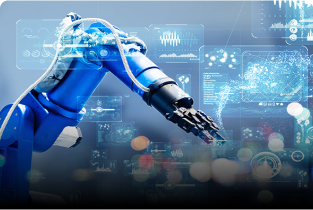
The rapid advancement of technology is changing how people live, work, and interact with the world. Two technologies playing an important role in this transformation are the Internet of Things (IoT) and robotics. IoT connects physical devices to the internet, allowing them to collect and exchange data, while robotics enables machines to perform tasks with greater precision, speed, and efficiency.
When combined, IoT and robotics create powerful opportunities for automation, intelligent decision-making, and real-time monitoring. From smart factories and connected healthcare devices to autonomous robots and precision agriculture, these technologies are transforming industries and opening new possibilities for businesses.
However, their development also brings challenges related to cybersecurity, cost, employment, privacy, and technical complexity. Understanding both the opportunities and challenges of IoT and robotics is essential for businesses, students, engineers, and technology enthusiasts preparing for the future.
What Are IoT and Robotics?
Understanding the Internet of Things (IoT)
The Internet of Things refers to a network of physical devices equipped with sensors, software, and connectivity that allow them to collect and exchange data.
Examples of IoT devices include smart thermostats, wearable fitness trackers, industrial sensors, connected vehicles, and smart home appliances.
IoT helps users monitor conditions remotely, automate routine processes, and make decisions based on real-time information. For example, a smart irrigation system can use soil moisture sensors to determine when crops need water.
Understanding Robotics
Robotics is a field of engineering and technology focused on designing, building, programming, and operating robots. Robots can perform repetitive, precise, physically demanding, or hazardous tasks.
Examples include industrial robotic arms, warehouse robots, surgical robots, autonomous mobile robots, and agricultural robots.
Modern robotics combines mechanical engineering, electronics, computer programming, sensors, and artificial intelligence to create machines that can interact with their surroundings.
How IoT and Robotics Work Together
IoT and robotics become especially powerful when integrated. IoT sensors provide robots with information about their environment, while connected systems allow people and machines to monitor performance and coordinate tasks.
For example, in a smart factory, connected sensors can monitor machinery and production conditions. Robots can use this information to adjust operations, move materials, or support quality control.
This combination helps create intelligent systems that are more connected, responsive, and efficient.
Major Opportunities in the Future of IoT and Robotics
1. Smart Manufacturing and Industrial Automation
Manufacturing is one of the most promising areas for IoT and robotics. Factories are increasingly adopting connected sensors, automated machinery, and intelligent robots to improve production processes.
IoT sensors can monitor equipment temperature, vibration, energy consumption, and operating conditions. Robotics systems can perform assembly, packaging, welding, and material handling with consistent precision.
When these technologies work together, manufacturers can identify production problems earlier, reduce downtime, and improve product quality.
For example, a factory can use sensor data to predict when a machine needs maintenance and coordinate robotic operations to reduce production interruptions.
As smart manufacturing expands, businesses will need professionals with expertise in robotics, industrial IoT, automation, and data analysis.
2. Healthcare and Medical Robotics
IoT and robotics are creating new opportunities in healthcare by supporting patient monitoring, medical procedures, rehabilitation, and hospital operations.
Connected medical devices can collect information such as heart rate, blood pressure, and other relevant measurements. Healthcare professionals can use this information to monitor patients and identify changes that may require attention.
Robots can assist with surgical procedures, rehabilitation exercises, laboratory automation, and the transportation of medical supplies.
For example, a connected rehabilitation robot can record a patient’s movement and provide information that helps healthcare professionals adjust therapy.
These technologies may improve efficiency and support better patient care. However, medical systems require careful validation, privacy protection, and appropriate clinical supervision.
3. Smart Agriculture and Precision Farming
Agriculture is increasingly using technology to improve productivity, conserve resources, and manage changing environmental conditions.
IoT sensors can monitor soil moisture, temperature, humidity, and crop conditions. Agricultural robots can assist with planting, harvesting, weeding, spraying, and crop inspection.
By combining connected sensors with robotics, farmers can make more informed decisions about irrigation, fertilizer application, and pest management.
For example, an IoT-based irrigation system can detect low soil moisture and trigger watering when required. Agricultural robots can also use sensor data to identify areas that need attention.
These applications can help reduce water waste, improve resource utilization, and support more sustainable farming practices.
4. Smart Homes and Connected Living
Smart homes demonstrate how IoT and robotics can make everyday activities more convenient.
Connected lights, thermostats, security cameras, and appliances allow people to monitor and control household systems remotely. Robotic vacuum cleaners and lawn-mowing robots can automate routine household tasks.
In the future, these systems may work together more intelligently. A smart home could use occupancy sensors to adjust lighting and temperature while a domestic robot performs scheduled cleaning tasks.
Connected home technologies may also support older adults and people with disabilities through reminders, monitoring systems, and assistive devices.
Nevertheless, developers must prioritize accessibility, data security, reliability, and user control.
5. Logistics, Warehousing, and Transportation
The logistics industry depends on accurate inventory management, efficient transportation, and timely deliveries. IoT and robotics can improve these processes through real-time tracking and automated material handling.
Connected sensors and tracking devices can monitor shipments, vehicle conditions, and inventory locations. Warehouse robots can transport goods, support order picking, and move materials between storage areas.
Autonomous mobile robots can also coordinate with warehouse management systems to improve the movement of products.
In transportation, IoT sensors can help monitor vehicle performance and road conditions, while robotics and autonomous driving technologies may support selected transport tasks.
These applications can improve operational visibility and productivity, although safety, reliability, and regulatory requirements remain important considerations.
6. Environmental Monitoring and Sustainability
IoT and robotics can contribute to environmental protection by collecting data and performing tasks in places that may be difficult or dangerous for humans to access.
Connected sensors can monitor air quality, water conditions, soil quality, and energy consumption. Robots can inspect pipelines, examine hazardous environments, and assist with certain environmental cleanup activities.
For example, underwater robots equipped with sensors can collect information about marine environments, while connected monitoring stations can help detect changes in water quality.
Smart energy systems can also use connected devices to monitor consumption and support more efficient energy management.
As environmental concerns grow, these technologies may play an increasingly important role in conservation, infrastructure monitoring, and sustainable resource management.
7. Artificial Intelligence and Intelligent Automation
Artificial intelligence (AI) is expanding the capabilities of IoT and robotics. AI systems can analyze sensor data, recognize patterns, interpret images, and support decisions based on changing conditions.
When AI is integrated with connected devices and robots, machines can perform more complex tasks with less direct human intervention.
For example, an industrial robot equipped with computer vision may identify defective products on a production line. A connected robot can send performance data to a monitoring system, allowing operators to track results and identify problems.
AI can also help robots navigate environments, recognize objects, and plan actions.
However, intelligent automation requires careful testing. AI systems may make mistakes, and robots operating in physical environments must be designed with appropriate safety measures.
Key Challenges Facing IoT and Robotics
Despite their potential, IoT and robotics face several challenges that could influence how quickly and effectively they are adopted.
1. Cybersecurity Risks
IoT devices and connected robots communicate through networks, creating potential entry points for cyberattacks. Poorly secured devices may expose sensitive information or allow unauthorized access to critical systems.
A compromised industrial robot, for example, could disrupt production or create physical safety risks.
Organizations can reduce these risks by using strong authentication, encrypted communications, secure software updates, network segmentation, and continuous security monitoring.
Cybersecurity should be included from the beginning of system design rather than added only after deployment.
2. High Implementation and Maintenance Costs
Developing and deploying IoT and robotics systems can require significant investment.
Costs may include sensors, robots, connectivity, cloud infrastructure, software development, integration, employee training, and ongoing maintenance.
Small businesses may find it difficult to justify these expenses without clear evidence of value.
To manage costs, organizations should begin with focused pilot projects, measure their results, and expand gradually when the benefits justify the investment.
3. Data Privacy and Ownership
IoT devices can collect large amounts of information about people, businesses, and physical environments. This data may include location information, household activity, employee behavior, or sensitive operational details.
If data is collected or shared without appropriate safeguards, it can create privacy concerns and reduce public trust.
Organizations should collect only necessary information, clearly explain how it will be used, restrict access, and follow applicable data protection requirements.
Users should also have meaningful control over their information whenever appropriate.
4. Integration with Existing Systems
Many organizations already depend on older machinery, software, and communication networks. Connecting these systems with modern IoT devices and robots can be technically challenging.
Different devices may use incompatible protocols, data formats, or software platforms. Integration problems can increase costs and affect system reliability.
Businesses should evaluate compatibility, use suitable standards where possible, and plan carefully for testing, maintenance, and future upgrades.
5. Employment and Workforce Changes
Automation can change the types of tasks people perform. Robots may take over certain repetitive or physically demanding activities, while IoT systems can automate monitoring and reporting.
These changes may reduce demand for some tasks while increasing demand for skills in robotics maintenance, software development, cybersecurity, system integration, and data analysis.
Businesses, educational institutions, and governments can help workers adapt through reskilling programs, technical education, and opportunities to learn new skills.
The long-term employment impact will vary by industry, region, and the way organizations introduce automation.
6. Reliability and Safety Concerns
IoT systems depend on sensors, connectivity, software, and power supplies. Failures in any of these components can interrupt operations or produce incorrect information.
Robots introduce additional safety considerations because they interact physically with people, machinery, and their surroundings.
Organizations should conduct rigorous testing, maintain equipment, establish emergency procedures, and implement suitable fail-safe mechanisms.
Human supervision remains especially important in environments where system failures could cause injury or significant damage.
7. Shortage of Skilled Professionals
Building and maintaining IoT and robotics systems requires knowledge across several disciplines, including programming, electronics, networking, mechanical engineering, automation, and cybersecurity.
A shortage of professionals with the right combination of skills can slow technology adoption.
Students and working professionals can prepare by learning programming languages such as Python and C++, exploring microcontrollers and sensors, and developing practical projects that combine hardware and software.
Hands-on experience is particularly valuable because real-world IoT and robotics projects involve troubleshooting, integration, and testing.
Emerging Trends Shaping the Future of IoT and Robotics
Several technological developments are expected to influence how IoT and robotics evolve.
1. Edge computing: Processing data closer to devices can reduce latency and limit the need to send all information to distant cloud servers.
2. Collaborative robots: Cobots are designed to work alongside people in suitable environments, supporting tasks such as assembly, inspection, and material handling.
3. Digital twins: Virtual representations of physical assets can use real-world data to support simulation, monitoring, and maintenance planning.
4. 5G and advanced connectivity: Faster, lower-latency communication can support selected applications that require timely data exchange between connected devices and robots.
5. Autonomous mobile robots: Improvements in sensors, navigation, and AI are helping robots move through warehouses, factories, and other structured environments.
6. AI-powered IoT systems: AI can help analyze connected-device data, identify unusual conditions, and support automated responses.
7. Human-robot collaboration: Future systems may increasingly combine human judgment and creativity with robotic precision and repeatability.
These developments offer exciting opportunities, but their practical value will depend on cost, reliability, safety, and the needs of individual applications.
Career Opportunities in IoT and Robotics
As organizations adopt connected devices and automation, several career paths may become available to people with relevant technical skills.
- IoT Developer: Builds software that connects devices, collects sensor data, and enables remote monitoring.
- Robotics Engineer: Designs, programs, tests, and maintains robotic systems.
- Embedded Systems Engineer: Develops software and hardware for microcontrollers and other embedded devices.
- Automation Engineer: Creates systems that automate industrial and business processes.
- IoT Security Specialist: Helps protect connected devices, networks, and data.
- Robotics Software Developer: Develops algorithms for robot control, navigation, perception, and motion.
- AI and Machine Learning Engineer: Builds intelligent models used in robotics and connected applications.
- Systems Integration Engineer: Connects hardware, software, sensors, and communication systems into a working solution.
To prepare for these careers, learners can study programming, electronics, networking, control systems, and basic AI. Building practical projects with microcontrollers, sensors, and small robots can help develop the skills needed to solve real-world problems.
How Businesses Can Prepare for the Future
Businesses that want to adopt IoT and robotics successfully should focus on clear objectives rather than implementing technology simply because it is new.
Here are several practical steps:
- Identify business needs: Determine whether automation can address a specific problem, such as equipment downtime, inventory errors, or inefficient workflows.
- Start with a pilot project: Test the technology in a limited environment before expanding it across the organization.
- Evaluate costs and benefits: Consider setup expenses, maintenance, employee training, productivity gains, and potential risks.
- Strengthen cybersecurity: Protect devices, networks, software, and sensitive data from unauthorized access.
- Train employees: Help workers develop the skills needed to operate, maintain, and collaborate with automated systems.
- Plan for integration: Ensure new technologies can communicate with existing business systems.
- Monitor and improve: Measure performance regularly and update systems as technology and business needs change.
A thoughtful implementation strategy can help businesses capture the benefits of IoT and robotics while reducing unnecessary risks.
Conclusion
The future of IoT and robotics offers significant opportunities to transform industries, improve productivity, and solve complex problems. From smart manufacturing and healthcare to precision agriculture, logistics, and environmental monitoring, these technologies are enabling more connected and automated systems.


