
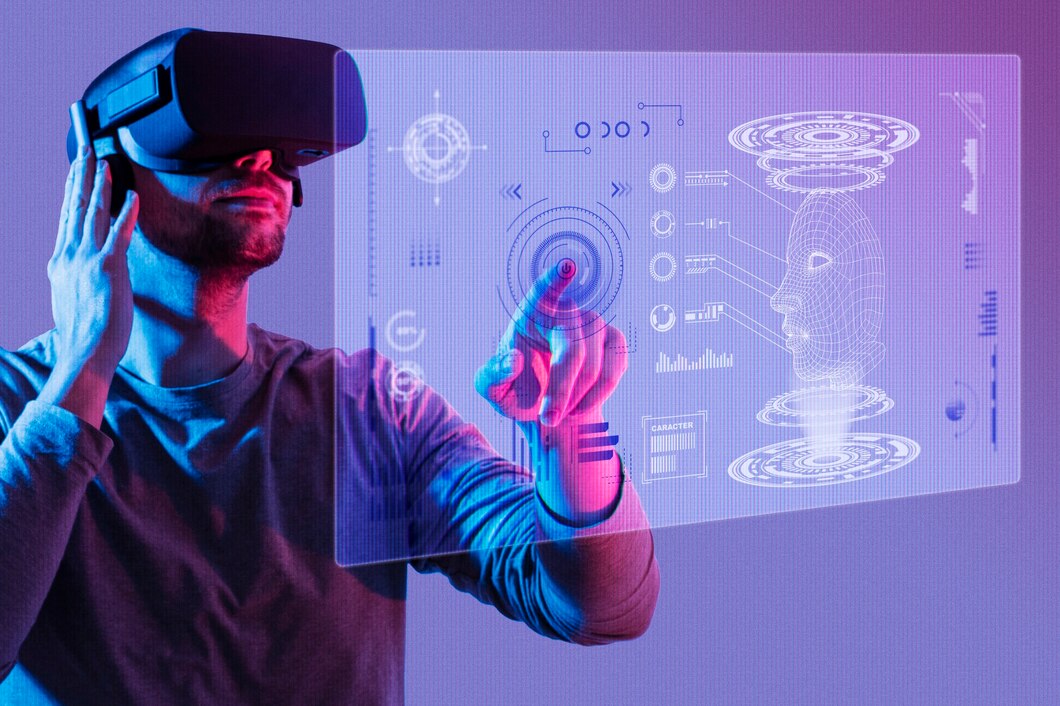
Augmented Reality (AR) and Virtual Reality (VR) are transforming the way people interact with digital environments. From immersive gaming experiences and virtual classrooms to architectural visualization and industrial simulations, these technologies are creating new opportunities across different industries. One of the most important technologies behind these immersive experiences is 3D modeling.
3D modeling is the process of creating three-dimensional digital objects, characters, environments, and structures using specialized software. In AR and VR development, it helps developers build realistic and interactive experiences that allow users to explore and engage with digital content.
As immersive technologies continue to evolve, 3D modeling has become an essential part of creating engaging, visually appealing, and functional AR and VR applications.
1. Creates Realistic Virtual Environments
One of the biggest advantages of 3D modeling is its ability to create realistic digital environments. In virtual reality, users can explore computer-generated spaces that look and feel similar to real-world locations.
For example, VR developers can create virtual offices, classrooms, museums, shopping malls, and gaming environments using 3D models.
In augmented reality, 3D models allow digital objects to appear within the user’s real-world surroundings. This makes AR applications more interactive and visually engaging.
Realistic textures, lighting, shapes, and materials help create immersive experiences that improve user engagement.
2. Improves User Interaction and Engagement
AR and VR applications are designed to provide interactive experiences rather than simple visual content. 3D modeling makes these interactions possible by allowing users to view, rotate, move, and manipulate digital objects.
For example, in an AR shopping application, customers can visualize 3D models of furniture inside their homes before purchasing them.
Similarly, VR training applications can use interactive 3D models to help students and professionals understand complex equipment and procedures.
These interactive features make learning, shopping, and entertainment more engaging.
3. Supports Gaming and Entertainment Development
The gaming and entertainment industries are among the biggest users of AR and VR technologies. 3D modeling plays a crucial role in developing characters, environments, objects, and animations for immersive games.
Game developers use 3D models to create realistic characters, detailed landscapes, vehicles, buildings, and interactive objects.
In VR gaming, these models allow players to explore virtual worlds and interact with their surroundings. In AR gaming, digital characters and objects can be placed within real-world environments.
High-quality 3D assets help create visually appealing gaming experiences and make virtual environments more believable.
4. Enhances Architecture and Interior Design Visualization
3D modeling has significantly improved how architects and interior designers present their ideas to clients.
Traditionally, designers relied on drawings, blueprints, and physical models to explain their concepts. With AR and VR, they can now create interactive visualizations of buildings and interior spaces.
Using VR technology, clients can virtually walk through a property before construction is completed. They can explore room layouts, examine furniture placement, and understand the overall design.
AR applications also allow designers to display virtual furniture, lighting, and decorative elements within real-world spaces.
This helps clients make better decisions and reduces misunderstandings during the design process.
5. Makes Education and Training More Effective
3D modeling is helping educational institutions and training organizations create interactive learning environments.
AR and VR applications use three-dimensional models to explain complicated concepts in a simple and visual way.
For example:
- Medical students can explore 3D models of human organs and anatomical structures.
- Engineering students can examine the internal components of machines.
- Science students can visualize molecules, chemical structures, and biological processes.
- Industrial employees can practice operating equipment in virtual environments.
These experiences make complex information easier to understand and provide opportunities for practical learning without depending entirely on physical resources.
6. Improves Product Design and Prototyping
Product designers and manufacturers use 3D modeling to develop and test product concepts before creating physical prototypes.
When combined with AR and VR, 3D models allow designers to examine product dimensions, shapes, materials, and functionality in immersive environments.
For example, automobile manufacturers can use VR to visualize vehicle interiors and evaluate design concepts. Furniture companies can use AR to help customers see how products will look in their homes.
This approach can reduce prototyping expenses, improve collaboration, and accelerate product development.
7. Supports Healthcare and Medical Applications
The healthcare industry is another important area where 3D modeling supports AR and VR development.
Medical professionals can use three-dimensional anatomical models to understand complex body structures and prepare for medical procedures.
Some important applications include:
- Medical Education: Interactive 3D models help students understand human anatomy.
- Surgical Planning: 3D visualizations can help medical teams examine anatomical structures before procedures.
- Patient Education: Doctors can use visual models to explain medical conditions and treatment options.
- Rehabilitation: VR environments can support guided rehabilitation exercises.
- Medical Simulation: Virtual environments allow healthcare professionals to practice certain procedures in controlled settings.
These applications demonstrate how 3D modeling can contribute to medical education, visualization, and training.
8. Essential 3D Modeling Tools for AR and VR Development
Choosing the right software is important for creating high-quality 3D assets. Different tools provide different features for modeling, texturing, animation, and interactive application development.
Some popular tools include:
1. Blender: An open-source 3D creation tool used for modeling, animation, rendering, and texturing.
2. Autodesk Maya: Widely used for advanced 3D modeling, character creation, and animation.
3. Autodesk 3ds Max: Commonly used for architectural visualization, product modeling, and 3D design.
4. Unity: A real-time development platform used to build interactive AR and VR applications.
5. Unreal Engine: A powerful real-time engine known for high-quality graphics and immersive virtual environments.
6. Substance 3D Painter: Used for creating detailed textures and realistic materials for 3D objects.
Learning these tools can help aspiring AR and VR developers develop the technical skills needed to create immersive digital experiences.
9. The Future of 3D Modeling in AR and VR Development
The future of 3D modeling is closely connected to advancements in artificial intelligence, real-time rendering, cloud computing, and immersive technologies.
AI-powered tools are making it easier to generate 3D assets, automate certain modeling tasks, and improve creative workflows.
Other developments shaping the future include:
- AI-Assisted 3D Modeling: Artificial intelligence can help accelerate asset creation and design processes.
- Real-Time Rendering: Advanced graphics technologies are improving the visual quality of interactive environments.
- Digital Twins: 3D models of physical objects and systems can support monitoring, simulation, and analysis.
- Cloud-Based Collaboration: Designers and developers can collaborate on 3D projects across different locations.
- Advanced AR and VR Devices: Improved displays, tracking, and processing capabilities are creating more immersive experiences.
As these technologies develop, 3D modeling will continue to play an important role in the expansion of AR and VR applications.
Conclusion
3D modeling is a fundamental part of AR and VR development because it transforms creative concepts into interactive three-dimensional experiences. From gaming and education to healthcare, architecture, and product design, it helps developers create realistic environments and meaningful digital interactions.


