
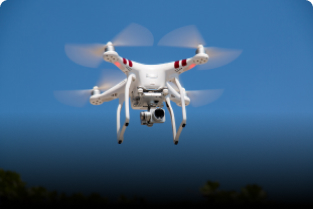
Drone engineering has evolved significantly over the years, making drones more intelligent, efficient, and capable of performing complex tasks. One of the most important technologies behind this development is sensors. Sensors play a crucial role in helping drones understand their surroundings, maintain stability, navigate accurately, and perform automated operations. From agriculture and healthcare to defence, construction, and disaster management, sensors have expanded the possibilities of modern drone applications.
Understanding the role of sensors in drone engineering is essential for anyone interested in drone design, development, and emerging technologies.
What Are Sensors in Drone Engineering?
Sensors are electronic components that collect information from a drone’s surroundings and internal systems. They detect changes in factors such as movement, altitude, temperature, pressure, distance, and location.
The collected information is processed by the drone’s flight controller or onboard computer to make decisions and control its movements. Sensors allow drones to operate with greater accuracy, avoid obstacles, and respond to changing environmental conditions.
Types of Sensors Used in Modern Drones
Different types of sensors are used in drone engineering depending on the drone’s purpose and technical requirements. Some of the most important include:
1. GPS Sensors
GPS sensors help drones determine their geographical position and navigate along predefined routes. They are particularly useful in aerial mapping, agricultural monitoring, surveying, and delivery operations.
GPS technology also supports automated flight features such as waypoint navigation and return-to-home functions.
2. Accelerometers
Accelerometers measure changes in acceleration and movement along different axes. They help drones understand their orientation and detect changes in speed or direction.
These sensors are essential for maintaining flight stability and supporting precise movement.
3. Gyroscope Sensors
Gyroscopes measure angular velocity and help drones detect rotational movements. They work alongside accelerometers to maintain balance and control during flight.
By continuously monitoring changes in orientation, gyroscopes help drones remain stable even in challenging flying conditions.
4. Barometric Pressure Sensors
Barometric pressure sensors measure atmospheric pressure to estimate a drone’s altitude. They help maintain consistent flying heights and support accurate vertical movement.
These sensors are especially valuable in aerial photography, inspection, and surveying applications.
5. Ultrasonic Sensors
Ultrasonic sensors use sound waves to measure the distance between a drone and nearby objects. They help drones detect obstacles and maintain safe distances from surrounding surfaces.
They are commonly used in low-altitude flying and indoor navigation.
6. LiDAR Sensors
LiDAR (Light Detection and Ranging) sensors use laser pulses to measure distances and create detailed three-dimensional representations of surrounding environments.
They are widely used in land surveying, infrastructure inspection, construction planning, and terrain mapping.
7. Infrared Sensors
Infrared sensors detect heat and infrared radiation. They are useful for identifying temperature variations, locating heat sources, and conducting thermal inspections.
These sensors are particularly valuable in firefighting, wildlife monitoring, and search-and-rescue operations.
How Sensors Improve Drone Performance
Sensors contribute to several important aspects of drone performance and functionality.
Improved Flight Stability: Accelerometers and gyroscopes help drones maintain balance and respond to unexpected movements.
Accurate Navigation: GPS and other positioning technologies allow drones to follow planned flight paths and reach specific destinations.
Obstacle Detection: Ultrasonic, infrared, and LiDAR sensors help drones identify nearby objects and reduce the risk of collisions.
Better Data Collection: Cameras, thermal sensors, and LiDAR systems allow drones to collect valuable information for analysis and decision-making.
Automated Operations: Sensor data enables drones to perform certain tasks with limited human intervention, improving operational efficiency.
Applications of Sensors in Different Industries
Sensor technology has made drone engineering valuable across various industries.
Agriculture
In precision agriculture, drones equipped with multispectral and thermal sensors help farmers monitor crop health, identify water stress, and assess field conditions. This information supports better irrigation and crop management decisions.
Construction and Infrastructure
Construction companies use drones with GPS and LiDAR sensors to conduct land surveys, monitor project progress, and inspect infrastructure. These technologies help improve measurement accuracy and reduce the need for manual inspections.
Defence and Security
Drones equipped with advanced cameras, thermal sensors, and navigation systems support surveillance, border monitoring, and reconnaissance operations.
Disaster Management
During natural disasters, drones equipped with thermal and visual sensors help emergency teams locate missing individuals, identify dangerous areas, and assess damage.
Environmental Monitoring
Environmental researchers use sensor-equipped drones to monitor forests, wildlife, air quality, and changes in natural landscapes. These applications support conservation efforts and environmental research.
Challenges of Using Sensors in Drone Engineering
Although sensors offer significant advantages, their integration into drone systems also presents certain challenges.
- High Costs: Advanced sensors, particularly LiDAR and specialised imaging systems, can increase drone manufacturing costs.
- Power Consumption: Some sensors require considerable electrical power, affecting overall battery performance.
- Environmental Interference: Rain, fog, dust, strong sunlight, and electromagnetic interference can affect sensor accuracy.
- Data Processing: Advanced sensors generate large amounts of information that require efficient processing and storage.
- Calibration and Maintenance: Sensors must be properly calibrated and maintained to ensure reliable performance.
Drone engineers must address these challenges when designing efficient and dependable drone systems.
The Future of Sensor Technology in Drone Engineering
The future of drone engineering will be strongly influenced by advancements in sensor technology. Artificial intelligence, machine learning, computer vision, and sensor fusion are making drones increasingly intelligent.
Sensor fusion combines information from multiple sensors to create a more reliable understanding of a drone’s position and surroundings. This can improve navigation, obstacle detection, and flight control.
Developments in lightweight sensors, energy-efficient components, and advanced imaging technologies will also help drones perform more complex operations. As these technologies continue to improve, drones are expected to become increasingly useful in autonomous inspection, precision agriculture, smart cities, and emergency response.
Conclusion
Sensors are among the most essential components of modern drone engineering. They provide the information drones need to maintain stability, navigate accurately, detect obstacles, and collect valuable data. From GPS and gyroscopes to LiDAR and infrared sensors, each technology contributes to making drones smarter and more efficient.


