
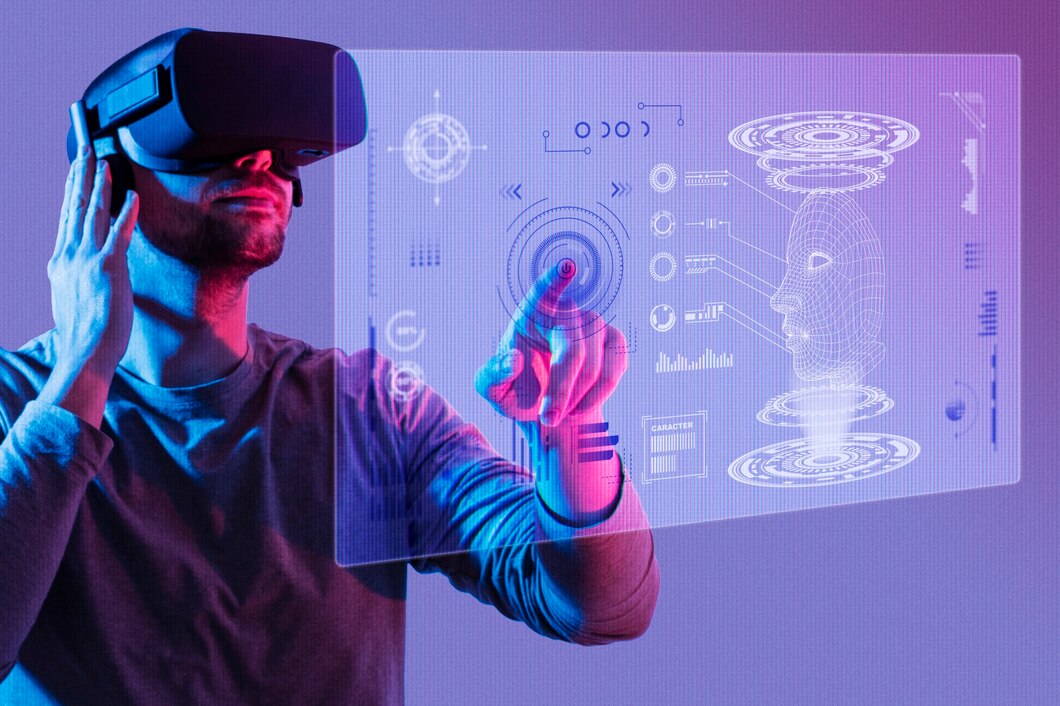
In today’s rapidly evolving digital landscape, terms like AR (Augmented Reality), VR (Virtual Reality), and MR (Mixed Reality) are reshaping how we interact with technology. These immersive technologies are not just buzzwords—they are transforming industries, enhancing user experiences, and driving innovation in fields ranging from gaming to healthcare. Let’s explore what each of these technologies means and why they are important in the world of innovation.
1. Augmented Reality (AR)
Augmented Reality overlays digital elements onto the real world. It enhances your perception of your surroundings without replacing them. For example, AR apps can display virtual furniture in your living room through your phone’s camera or show navigation directions on your car’s windshield.
Key Applications of AR:
-
Retail: Virtual try-ons for clothes, eyewear, or makeup.
-
Education: Interactive lessons that bring textbooks to life.
-
Manufacturing: AR-assisted assembly instructions for workers.
-
Healthcare: Real-time imaging and guidance during surgeries.
AR’s strength lies in its ability to blend the digital and physical seamlessly, making it a powerful tool for everyday convenience and business innovation.
2. Virtual Reality (VR)
Virtual Reality creates a fully immersive digital environment that completely replaces the real world. Using VR headsets, users can step into simulated worlds for entertainment, training, or exploration.
Key Applications of VR:
-
Gaming and Entertainment: Immersive games and virtual concerts.
-
Training and Simulation: Flight simulations for pilots or surgery practice for medical students.
-
Tourism: Virtual tours of landmarks or real estate properties.
-
Mental Health: Exposure therapy for phobias and stress relief through virtual environments.
VR’s ability to transport users to entirely new realities is revolutionizing the way we learn, entertain ourselves, and solve complex problems.
3. Mixed Reality (MR)
Mixed Reality combines the best of AR and VR. In MR, digital objects not only coexist with the real world but also interact with it in real-time. For example, you could place a holographic model of a car engine on a table, rotate it, and see it respond to your movements or touch.
Key Applications of MR:
-
Product Design: Engineers and designers can manipulate 3D models in real-world spaces.
-
Collaboration: Teams in different locations can work on virtual objects as if they were in the same room.
-
Healthcare: Surgeons can visualize 3D patient scans while performing operations.
-
Education: Interactive and hands-on learning experiences for students.
MR’s unique feature is its dynamic interaction between physical and digital elements, making it ideal for advanced collaboration and problem-solving.
4. Why AR, VR, and MR Matter for Technology Innovation
These technologies are at the forefront of the metaverse and Industry 4.0 revolutions. They:
-
Enhance Productivity: By enabling simulations and real-time data visualization.
-
Improve User Engagement: Offering immersive and personalized experiences.
-
Drive New Business Models: Such as virtual shopping and remote collaboration.
-
Foster Creativity: Providing new tools for designers, artists, and engineers.
Companies like Apple, Meta, Microsoft, and startups worldwide are investing heavily in these areas, signaling their potential to shape the future.
5. The Future of AR/VR/MR
The future promises even more integration of AR, VR, and MR into daily life. Advances in hardware (lighter headsets, better sensors) and software (AI-powered interactions, 5G connectivity) will make these technologies more accessible and impactful. From remote surgeries to virtual classrooms, the possibilities are limitless.
Final Thoughts
AR, VR, and MR are not just trends—they represent the next wave of technology innovation. By merging the digital and physical worlds, they are transforming industries, creating new opportunities, and redefining how we interact with information and each other. Whether you’re a business leader, developer, or tech enthusiast, understanding these technologies is key to staying ahead in today’s innovation-driven world.


