
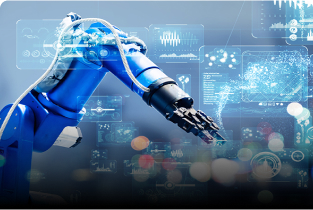
Mechanical engineering is one of the most versatile branches of engineering, often serving as the foundation for multiple emerging technologies. In today’s rapidly evolving tech landscape, two fields stand out as particularly relevant for mechanical engineers: Internet of Things (IoT) and Robotics. Both offer exciting opportunities, but the question is — which one is more useful for a mechanical engineer?
Let’s break it down.
Understanding IoT and Robotics
-
IoT (Internet of Things):
IoT is about connecting physical devices — machines, sensors, equipment — to the internet, enabling them to collect and share data. For mechanical engineers, IoT has applications in predictive maintenance, smart manufacturing, industrial automation, automotive design, and energy efficiency. -
Robotics:
Robotics involves designing, building, and programming machines that can perform tasks autonomously or semi-autonomously. Mechanical engineers play a key role in robot design, kinematics, dynamics, material selection, and integration with electronics and software.
How IoT Helps Mechanical Engineers
-
Smart Manufacturing (Industry 4.0): IoT sensors help track machine performance and reduce downtime.
-
Product Design: Engineers can embed sensors in prototypes to test stress, vibration, or heat under real conditions.
-
Predictive Maintenance: IoT data from machines reduces unexpected breakdowns and extends equipment life.
-
Energy Optimization: IoT systems allow engineers to design more efficient HVAC, automotive, and industrial systems.
👉 IoT makes a mechanical engineer more data-driven and equips them with tools to monitor, optimize, and improve mechanical systems.
How Robotics Helps Mechanical Engineers
-
Core Mechanical Design: Robotics heavily depends on mechanical engineering for structural design, motion, and control.
-
Industrial Automation: Robots are replacing repetitive human tasks in automotive, manufacturing, and logistics.
-
Medical Robotics: Mechanical engineers help design surgical robots, prosthetics, and exoskeletons.
-
Aerospace & Defence: Robotics is central in drones, unmanned vehicles, and robotic arms used in space missions.
👉 Robotics allows mechanical engineers to apply their design and problem-solving skills directly into building functional machines.
Which One Should Mechanical Engineers Focus On?
It depends on your career goals:
-
If you want to work in data-driven industries like smart factories, predictive maintenance, automotive diagnostics, or energy systems → IoT is more useful.
-
If you are interested in designing machines, automation systems, or mechatronics applications → Robotics is more useful.
In reality, IoT and Robotics are increasingly interconnected. Robots in factories often rely on IoT sensors for real-time feedback. Similarly, IoT systems sometimes require robotic components to act on collected data.
Final Thoughts
For a mechanical engineer, Robotics is a more natural extension of their skills, since it directly builds on mechanics, kinematics, and design principles. However, IoT adds a powerful layer of intelligence, making mechanical systems smarter and more efficient.
The best path?
-
Start with Robotics to build a strong foundation in mechanical systems.
-
Then add IoT knowledge to stay relevant in the age of smart, connected machines.


