
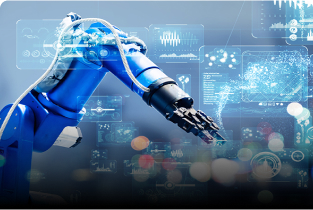
Technology is evolving rapidly, and two of the most influential fields shaping the modern world are Robotics and the Internet of Things (IoT). While they often work together—especially in smart factories and automation—each field has its own purpose, structure, and application. Understanding the differences helps students, professionals, and tech enthusiasts choose the right learning path or career.
1. What Is Robotics?
Robotics is the branch of technology that deals with designing, building, programming, and operating robots.
A robot is a machine that can perform tasks automatically or semi-autonomously. Robotics combines elements from:
-
Mechanical engineering
-
Electronics
-
Computer programming
-
Artificial intelligence
-
Control systems
Robots range from industrial arms used in manufacturing to humanoid robots, drones, and even autonomous vehicles.
Purpose of Robotics
The main goal is to perform tasks with precision, speed, and reliability, often replacing or assisting humans in complex, repetitive, or hazardous tasks.
2. What Is IoT (Internet of Things)?
The Internet of Things refers to a network of everyday physical devices connected to the internet, collecting and exchanging data.
Any device that communicates through the internet or sensors and can be controlled remotely is part of IoT.
Common IoT devices include:
-
Smart home appliances (smart bulbs, thermostats)
-
Wearables (fitness trackers)
-
Smart security systems
-
Connected medical devices
-
Industrial sensors
Purpose of IoT
The goal of IoT is to connect devices, gather data, automate processes, and make systems more efficient through communication and analytics.
3. Key Differences Between Robotics and IoT
a. Core Function
-
Robotics: Focuses on building independent physical machines capable of performing actions.
-
IoT: Focuses on connecting devices to communicate and share data.
b. Physical vs. Digital
-
Robotics: Involves physical hardware—motors, sensors, actuators.
-
IoT: Involves digital communication technologies—Wi-Fi, cloud, sensors, and APIs.
c. Level of Autonomy
-
Robotics: Robots often act autonomously using AI or pre-programmed instructions.
-
IoT: IoT devices act based on data exchange but usually require cloud systems or apps to make decisions.
d. Primary Objective
-
Robotics: Perform tasks or physical actions.
-
IoT: Collect and communicate data for monitoring and automation.
4. How Robotics and IoT Work Together
Even though they are different, Robotics and IoT can be combined to create powerful solutions.
This integration is known as IoRT (Internet of Robotic Things).
Examples include:
-
Smart robots in factories connected to cloud analytics
-
IoT-enabled delivery drones
-
Home cleaning robots that update data to mobile apps
-
Autonomous vehicles communicating with sensors on roads
Together, they improve efficiency, decision-making, and automation across many industries.
5. Career Opportunities in Robotics vs. IoT
Robotics Careers
-
Robotics engineer
-
Automation engineer
-
Mechatronics engineer
-
Drone developer
-
Robot programmer
IoT Careers
-
IoT developer
-
IoT hardware engineer
-
Cloud engineer
-
IoT cybersecurity expert
-
Data analyst for IoT systems
Conclusion
While Robotics focuses on creating intelligent machines that perform tasks, IoT focuses on connecting devices for data exchange and smarter automation. Both fields complement each other and are crucial for the future of industries like manufacturing, healthcare, transportation, and smart cities.


