
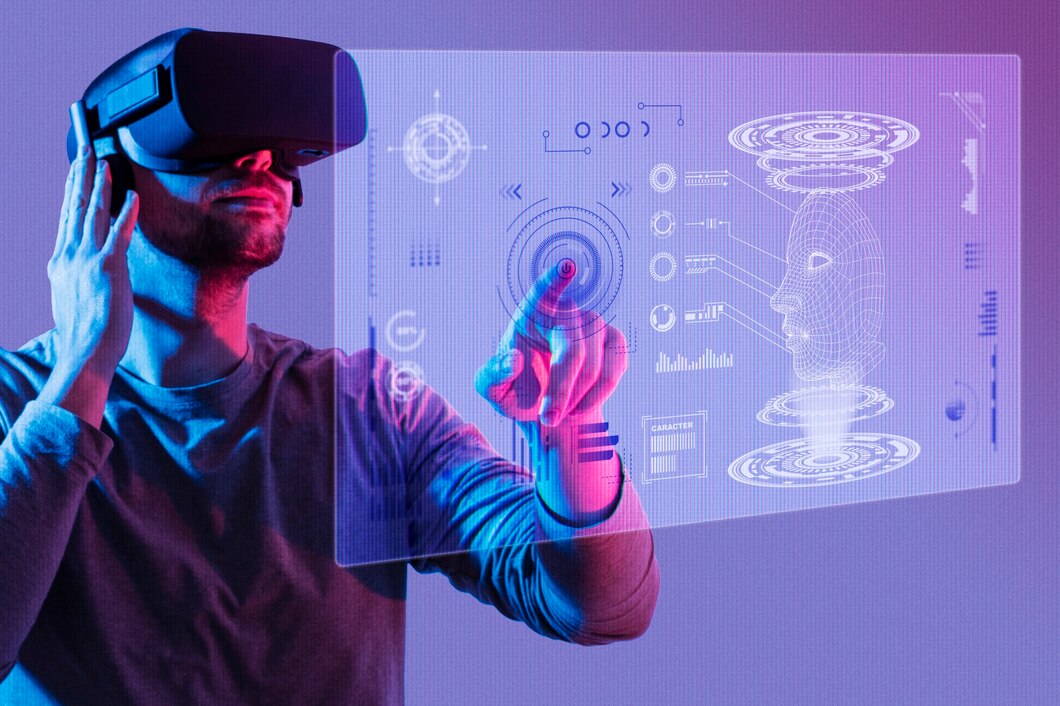
Corporate training has evolved rapidly in recent years, and one of the biggest technological breakthroughs transforming this space is Augmented Reality (AR) and Virtual Reality (VR). These immersive technologies are no longer limited to gaming or entertainment—they are now powerful tools that help companies train employees more effectively, safely, and efficiently.
But why are so many organizations investing in AR/VR for training? Let’s explore the major reasons.
1. Immersive Learning Improves Understanding
AR/VR places learners inside realistic environments where they can interact with objects, tools, and scenarios. This hands-on experience boosts learning because employees aren’t just reading or watching—they’re doing.
For example:
-
A new machine operator can practice running equipment in VR without any real-world danger.
-
Sales teams can use AR to visualize product features during training.
This immersive involvement strengthens memory retention and improves overall understanding.
2. Safer Training for High-Risk Job
In industries like manufacturing, construction, oil & gas, and healthcare, training often involves real risks. AR/VR allows employees to practice dangerous procedures in a risk-free virtual environment.
Examples include:
-
Fire safety training
-
Hazard identification
-
Emergency response drills
-
Operating heavy machinery
By simulating accidents or emergency scenarios, companies ensure workers learn safely without exposing them to real-life dangers.
3. Cost-Effective and Scalable Training
Traditional corporate training can be expensive due to:
-
Trainer fees
-
Physical equipment
-
Travel and accommodation
-
Training materials
AR/VR reduces these costs significantly. Once a VR training module is created, it can be reused anytime, anywhere. Employees can repeat sessions without additional spending, making it ideal for large organizations.
4. Faster Learning with Higher Retention Rates
Studies show that immersive learning leads to much higher retention compared to classroom or video-based training. VR keeps learners fully engaged, reducing distractions.
Why retention improves:
-
Hands-on experience
-
Realistic simulations
-
Step-by-step visual guidance
-
Full immersion without interruptions
Employees often learn tasks faster and with fewer repetitions.
5. Real-Time Feedback and Performance Tracking
AR/VR platforms can track various metrics such as:
-
Response time
-
Accuracy
-
Mistake patterns
-
Completion time
-
Eye movement (in some advanced systems)
This helps companies measure employee performance and provide personalized feedback without needing instructors present every time.
6. Boosts Employee Confidence
One of the biggest challenges during training is fear—fear of making mistakes, damaging equipment, or facing criticism.
AR/VR eliminates this fear because learners can:
-
Make mistakes without consequences
-
Retry tasks multiple times
-
Learn at their own pace
Confidence increases when employees feel fully prepared before entering real work situations.
7. Engaging and Motivating Learning Experienc
AR/VR makes learning more interactive and enjoyable. Gamification elements—like badges, scoring, or simulations—keep employees motivated.
Engaged employees learn faster, stay focused, and enjoy the training experience.
8. Remote and Global Training Made Easy
With VR headsets or AR-enabled mobile devices, companies can train employees across different countries without physical presence.
Benefits include:
-
No travel required
-
Consistent training material
-
Training anytime, anywhere
-
Increased global collaboration
This is especially valuable for remote organizations or global enterprises.
9. Perfect for Skill-Based Training
AR/VR is ideal for roles requiring hands-on practice, such as:
-
Healthcare procedures
-
Technical maintenance
-
Engineering tasks
-
Customer service scenarios
-
Soft-skills training like communication and negotiation
Employees get to practice real workflows virtually before applying them on the job.
Final Thoughts
AR and VR are revolutionizing corporate training by making it safer, more interactive, and cost-effective. Companies adopting these technologies are able to train their workforce faster, reduce risks, and achieve better learning outcomes.


