
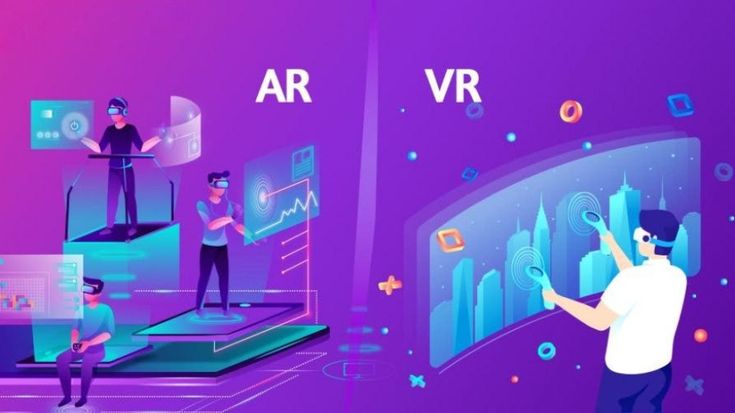
What Are the Major Benefits of AR/VR Technologies?

Augmented Reality (AR) and Virtual Reality (VR) have rapidly evolved from futuristic concepts to essential tools in various industries. By blending the physical and digital worlds, these technologies offer transformative opportunities across sectors like healthcare, entertainment, education, real estate, and more. Let’s explore the major benefits of AR and VR technologies that are shaping the way we interact with the world.

1. Enhanced Learning and Training

One of the most impactful benefits of AR/VR technologies is their ability to revolutionize training and education. VR offers immersive environments where learners can practice skills or experience simulations that would be difficult, dangerous, or expensive in real life.

For instance, medical students can perform surgeries in a virtual environment before working with actual patients. Similarly, VR is used to simulate emergency scenarios for first responders, allowing them to train in high-pressure environments without real-world consequences. AR complements this by providing real-time information overlays, enhancing on-the-job training in industries like manufacturing and aviation.

2. Improved Customer Experience

Both AR and VR have redefined the customer experience, particularly in retail and marketing. AR enables consumers to visualize products in real time before purchasing. For example, AR apps allow users to try on clothes or see how furniture looks in their living rooms via their smartphones. This creates a more interactive shopping experience, reducing uncertainty and increasing buyer confidence.

In the realm of VR, customers can embark on fully immersive shopping experiences, such as browsing virtual stores, trying out products in 3D, or experiencing travel destinations through virtual tours. These technologies allow brands to engage customers in novel ways, which can drive higher sales and customer satisfaction.

3. Revolutionizing Healthcare

AR and VR are making huge strides in healthcare, providing better tools for both medical professionals and patients. VR enables doctors to practice complex surgeries in a controlled, simulated environment, reducing the risk of errors. Surgeons can rehearse procedures multiple times to perfect their techniques.

On the patient side, VR is being used for pain management and therapy. It’s shown to reduce anxiety and discomfort during medical treatments by immersing patients in calming virtual environments. Additionally, AR is being employed for real-time, hands-free guidance during surgeries, enhancing precision and improving patient outcomes.

4. Enhanced Collaboration and Communication

The shift to remote work and virtual meetings has brought AR and VR into the spotlight. VR allows team members to collaborate in a shared virtual space, making remote communication feel more like an in-person interaction. Whether it’s brainstorming in a virtual meeting room or working on a design prototype together in 3D, VR can bridge the gap between people in different locations.

AR also has a role in enhancing communication by providing visual instructions and data overlays, which can be particularly useful in industries like architecture, engineering, and construction. AR enables real-time collaboration, where team members can see the same data or 3D models, fostering better understanding and decision-making.

5. Increased Productivity and Efficiency

By providing immersive experiences and digital overlays, AR and VR can enhance productivity in numerous sectors. For example, AR-equipped devices in manufacturing can display step-by-step instructions on assembly lines, reducing the time spent on training and minimizing human errors. Workers can access the data they need in real time, helping them stay focused on their tasks and improve overall efficiency.

In VR, employees can be trained in various scenarios, accelerating the onboarding process without impacting the real-world workflow. This leads to faster ramp-up times and smoother integration into projects, which boosts overall organizational productivity.

6. Immersive Entertainment and Gaming

The entertainment and gaming industries have experienced some of the most significant benefits from AR/VR technologies. Virtual reality allows gamers to immerse themselves in entire virtual worlds, enhancing gameplay with lifelike experiences that are not possible with traditional gaming platforms. From action-packed VR adventures to tranquil explorations of virtual landscapes, the opportunities for gaming are vast.

AR has also found its place in entertainment, with games like Pokémon GO using the real world as the playing field, blending the virtual and physical realms in real time. The interactive nature of AR gaming has opened up a new avenue for outdoor engagement and exploration, captivating users and encouraging social interaction.

7. Improved Design and Visualization

In industries like architecture and interior design, AR and VR have revolutionized the way professionals conceptualize and visualize their projects. VR allows architects and clients to walk through virtual buildings before construction begins, making it easier to spot potential design flaws and make adjustments.

AR is equally useful by enabling designers to overlay virtual elements onto real-world spaces, helping clients better visualize how design choices, such as color schemes or furniture, will appear in their actual environment. This leads to more informed decision-making and reduces the chances of dissatisfaction once the project is completed.

8. Revolutionizing Real Estate

AR and VR are redefining how properties are bought, sold, and rented. With VR, potential buyers can take virtual tours of homes and apartments without needing to visit the property in person, making the real estate process more efficient and accessible, especially for long-distance or international clients. This level of accessibility has become even more valuable in recent years, as it eliminates the need for time-consuming travel and lets buyers explore properties at their own pace.

Additionally, AR can allow users to envision modifications to properties, such as changes in paint colors or furniture placement, helping them better understand the potential of a space.

9. Enhanced Travel and Tourism

Travelers are increasingly using VR to explore destinations before booking trips. Virtual tours of museums, cities, hotels, and tourist attractions help people make more informed decisions about their travel plans. Additionally, VR can offer experiences like virtual trips to far-off destinations, allowing users to explore places they might not otherwise visit.

In the tourism industry, AR enhances experiences by overlaying digital information onto real-world surroundings. For example, tourists can point their phones at a historical landmark and instantly access information about its history, significance, and nearby attractions.

Conclusion

The benefits of AR and VR technologies are far-reaching, influencing a wide range of industries by enhancing learning, communication, customer experiences, productivity, and more. As these technologies continue to evolve, we can expect even greater innovations that will further blur the lines between the physical and digital worlds. Whether for business or personal use, AR and VR are changing the way we interact with technology and the world around us.


How Much Do Fashion Designers Make Annually?

Fashion design is an exciting, creative career that offers the opportunity to influence trends, craft stunning collections, and build iconic brands. If you’re considering a career in fashion design, one of the first questions you might have is: How much do fashion designers make annually?

In this blog, we’ll take a look at the factors that influence a fashion designer’s salary, as well as what you can expect to earn in different roles and industries within the fashion world.


Average Salary for Fashion Designers

The salary of a fashion designer can vary significantly based on experience, location, type of employment, and the designer’s specialization. According to data from the U.S. Bureau of Labor Statistics (BLS), the average annual salary for a fashion designer as of 2023 is around $75,000. However, this figure can be higher or lower depending on several factors, which we’ll discuss in the following sections.


Factors Affecting Fashion Designer Salaries

  1. Experience Level

    • Entry-level designers: Just starting out in fashion design, typically with little to no professional experience, can expect to earn between $40,000 to $50,000 annually.

    • Mid-level designers: With a few years of experience and a growing portfolio, salaries can rise to $60,000 to $80,000.

    • Experienced designers: Senior designers with 10+ years of experience and established recognition in the industry can earn $90,000 to $150,000 or more, particularly if they hold leadership roles or run their own design studios.

  2. Industry and Type of Employment

    • Fashion Houses and Brands: Designers working for well-known fashion houses (like Chanel, Gucci, or Prada) or large retail companies tend to earn higher salaries due to the prestige and scale of the companies. In these settings, salaries can range from $70,000 to $150,000 or even higher, depending on the designer’s position and success.

    • Freelance Designers: Freelance fashion designers have the potential to earn more, but their income can be less predictable. They often charge hourly or per-project rates, which can range from $30 to $100 per hour depending on their expertise and the type of client.

    • Designing for Smaller Brands or Startups: If you work for a smaller company or emerging fashion startup, your salary may start on the lower end (around $40,000 to $60,000), but as the brand grows, your earnings potential can increase significantly.

  3. Location

    • Fashion designers working in major fashion capitals like New York, Paris, Milan, or Los Angeles generally earn higher salaries due to the higher cost of living and the competitive nature of these cities. In contrast, designers working in smaller cities or regions may have lower salaries.

    • Average salaries by location:

      • New York City: $70,000 – $120,000

      • Los Angeles: $60,000 – $100,000

      • Chicago: $55,000 – $90,000

      • London and Paris: Similar ranges to New York due to the demand for fashion professionals in these cities.

  4. Specialization

    • Apparel Designers: Fashion designers who specialize in clothing design typically earn a steady income, but the range can be wide depending on whether they focus on luxury, ready-to-wear, or mass-market fashion.

    • Accessory Designers: Designers who create accessories (shoes, handbags, jewelry) often earn slightly less than apparel designers, but those working in high-end luxury accessories can make comparable salaries.

    • Footwear Designers: Footwear designers working for top brands can earn impressive salaries, especially if they work with high-profile clients or companies.

    • Sustainable Fashion Designers: With the rise in demand for eco-friendly and sustainable fashion, designers in this niche can find lucrative opportunities, though the income may be more variable, depending on the market.


Top-Earning Fashion Designers

Some of the most successful and well-known fashion designers make millions of dollars annually. For example:

  • Coco Chanel: As one of the most iconic designers in history, Chanel built a fashion empire that continues to thrive.

  • Ralph Lauren: With an estimated net worth of over $7 billion, Ralph Lauren’s brand has made him one of the richest fashion designers in the world.

  • Tom Ford: Known for his work at Gucci and his own label, Tom Ford’s earnings have skyrocketed, especially with his luxury fashion line and beauty products.

These designers, along with others like Marc Jacobs, Donatella Versace, and Virgil Abloh, have achieved success in ways that have expanded their wealth well beyond design.


Final Thoughts

While the salary of a fashion designer can vary greatly, it’s important to remember that compensation is just one part of the equation. Many designers pursue their craft out of passion, creativity, and the desire to shape the fashion industry. The financial rewards can come as you build your reputation, network, and brand.

For those starting out, the financial journey might be a slow climb, but with dedication, innovation, and hard work, the potential for high earnings in the fashion world is substantial. Whether you work for a large brand, start your own label, or design freelance, fashion design offers exciting opportunities to create, inspire, and, ultimately, thrive.

Graphic or Web Design: Which Is Better?

In the world of design, two disciplines often stand out: graphic design and web design. Both play crucial roles in creating visually appealing and functional products, but they each have distinct focuses, skills, and outcomes. If you’re considering which path to pursue or what direction your design career should take, you might be wondering: graphic design vs. web design – which is better?

In this post, we’ll dive into both fields to help you understand their differences, similarities, and how each could fit your interests and career goals.


What is Graphic Design?

Graphic design focuses on creating visual content for print and digital media. It involves arranging text, images, and illustrations to communicate a message, promote a brand, or enhance user engagement. Graphic designers often work on materials like:

  • Logos

  • Brand identities

  • Brochures

  • Posters

  • Packaging

Key Skills:

  • Typography

  • Layout design

  • Image editing and illustration

  • Branding and visual identity

Pros of Graphic Design:

  • Focus on static visual art.

  • Great for creative expression in physical and digital formats.

  • Often involves shorter project cycles (like creating a flyer or logo).

  • Easier to get started with since it’s mostly about learning design principles and software tools.


What is Web Design?

Web design, on the other hand, is all about designing websites and web applications. It involves creating aesthetically pleasing and functional layouts for the web, ensuring the design works across different devices and browsers. Web designers focus on:

  • User experience (UX)

  • User interface (UI)

  • Responsive design (adapting to different screen sizes)

  • Interactive elements (buttons, forms, navigation)

Key Skills:

  • HTML, CSS, and basic JavaScript

  • Wireframing and prototyping

  • Responsive design techniques

  • UX/UI principles

Pros of Web Design:

  • Involves interactive and dynamic content.

  • Focus on user experience and functionality.

  • Growing demand with businesses needing websites and apps.

  • Opportunities for long-term involvement with digital products, which evolve over time.


Graphic Design vs. Web Design: Key Differences

While both disciplines share some core design principles (like color theory, composition, and visual hierarchy), the main difference lies in the medium and purpose.

  • Static vs. Interactive: Graphic design focuses on static visuals, while web design involves dynamic, interactive user interfaces.

  • Print vs. Screen: Graphic designers may create materials for print, while web designers focus on digital platforms. Web design requires additional knowledge of coding and responsive techniques.

  • Technical Skills: Web designers need coding skills (HTML, CSS, and sometimes JavaScript), whereas graphic designers primarily use design software (like Adobe Photoshop or Illustrator).

  • User Experience: UX plays a major role in web design, requiring a strong understanding of user interaction, while graphic design focuses on visual aesthetics.


Which is Better for You?

Ultimately, the choice between graphic design and web design comes down to your personal interests, skills, and career goals. Here are some considerations to help you decide:

  • Choose Graphic Design if:

    • You enjoy working with visuals in both physical and digital formats.

    • You love creating brand identities, logos, and marketing materials.

    • You prefer a focus on design aesthetics rather than functionality.

  • Choose Web Design if:

    • You enjoy working with interactive elements and user experience.

    • You want to build websites or apps that are functional and visually appealing.

    • You’re interested in learning coding languages like HTML and CSS.


Final Thoughts

Both graphic and web design are exciting and rewarding fields, but they cater to different interests and skills. Graphic design offers creative freedom in a wide range of industries, while web design allows you to create real-time, interactive experiences for users. Whether you decide to pursue one or both, there’s no wrong answer—each discipline offers unique opportunities for personal and professional growth.

So, which is better? That depends on what excites you more—creating stunning visuals or crafting seamless user experiences. Whichever path you choose, the design world is full of possibilities!

“What Kind of Programming Skills (Languages) Should a UX Designer Expect to Know Today?”

In the evolving world of digital product design, the lines between design and development are increasingly blurred. While UX designers don’t necessarily need to be expert coders, having a foundational understanding of certain programming languages can be a game-changer. Not only does it help in communicating with developers, but it also empowers designers to prototype more effectively and create realistic user experiences.

So, what programming skills should a modern UX designer expect to know today? Let’s explore.


1. HTML (HyperText Markup Language)

Why it matters:
HTML is the backbone of the web. It structures web content and helps UX designers understand how layouts are built. Knowing HTML can be especially useful when designing responsive layouts and user flows.

What to focus on:

  • Semantic tags (<header>, <article>, <footer>)

  • Forms and inputs

  • Basic structure and page layout


2. CSS (Cascading Style Sheets)

Why it matters:
CSS controls the presentation of HTML. With CSS, UX designers can style elements, manage layouts, and handle responsiveness. Understanding CSS can help designers communicate design intent more clearly to developers or even style high-fidelity prototypes.

What to focus on:

  • Flexbox and Grid

  • Media queries (for responsive design)

  • Typography and spacing

  • Transitions and animations


3. JavaScript (Basic Level)

Why it matters:
JavaScript brings interactivity to the web. While designers don’t need to master it, understanding how JavaScript affects user interactions (e.g., modals, sliders, form validation) helps in designing intuitive and technically feasible UI components.

What to focus on:

  • DOM manipulation basics

  • Event handling

  • Conditional logic (e.g., if/else statements)


4. Front-End Frameworks (Familiarity)

Why it matters:
Frameworks like React, Angular, or Vue are widely used in front-end development. UX designers don’t need to code full apps, but understanding how components work in these frameworks can enhance collaboration with dev teams and improve design decisions.

What to focus on:

  • Component-based architecture (especially in React)

  • Design systems integration

  • States and props (in React)


5. Version Control with Git (Basic Use)

Why it matters:
Designers who collaborate closely with developers or contribute to front-end projects may benefit from knowing how to use Git. It helps in tracking changes and collaborating on code without overwriting others’ work.

What to focus on:

  • Cloning repositories

  • Committing and pushing changes

  • Understanding branches


6. Prototyping Tools with Code Options

Some modern tools like Framer or Webflow let you build fully interactive prototypes with real code elements. Familiarity with code in these environments allows designers to push the limits of what’s possible in prototyping.


Why Coding Matters for UX Designers

While coding isn’t a core responsibility for UX designers, having basic programming skills offers major advantages:

  • Improved collaboration with developers

  • More realistic prototypes

  • Feasibility awareness in design decisions

  • Increased employability and versatility in teams


Final Thoughts

To be clear, you don’t need to be a full-stack developer to be an excellent UX designer. But in today’s competitive landscape, understanding the basics of HTML, CSS, and JavaScript can set you apart. It bridges the gap between design and development, making you a more effective, creative, and collaborative designer.

So, if you haven’t already dipped your toes into coding, now’s the perfect time to start. Your designs—and your development team—will thank you.

Why Is Medical Coding Important?

Behind every hospital visit, insurance claim, and medical report lies a complex system of numbers and letters that most patients never see—medical codes. These codes may seem like a background process, but they are absolutely essential to the healthcare system.

So, what exactly is medical coding, and why is it so important?


What Is Medical Coding?

Medical coding is the process of translating a patient’s healthcare diagnosis, procedures, medical services, and equipment into universal alphanumeric codes. These codes are derived from:

  • ICD (International Classification of Diseases)

  • CPT (Current Procedural Terminology)

  • HCPCS (Healthcare Common Procedure Coding System)

Trained professionals—medical coders—analyze clinical documentation and assign the appropriate codes. This standardized language is used across hospitals, insurance companies, and government health agencies.


Why Is Medical Coding So Important?

1. Accurate Billing and Reimbursement

Healthcare providers don’t get paid without accurate coding. Insurance companies require specific codes to process claims and determine how much to reimburse a provider.

  • Correct codes ensure faster payments.

  • Incorrect or missing codes can lead to denials, delays, or audits.

Medical coding literally keeps the financial side of healthcare running.


2. Standardization and Communication

Medical codes create a universal language for healthcare providers, insurers, and regulatory bodies. Regardless of the country or language, a code means the same thing everywhere.

This standardization:

  • Reduces confusion.

  • Improves communication between providers.

  • Ensures uniform data collection for research and policy-making.


3. Patient Care and Safety

Accurate coding helps maintain complete and consistent medical records. When a patient visits multiple providers, medical history can be easily understood through their coded data.

This contributes to:

  • Better diagnoses and treatment decisions.

  • Fewer errors and duplicate tests.

  • A smoother patient care experience.


4. Healthcare Analytics and Research

Medical coding feeds data into massive health databases. Researchers use coded information to:

  • Track disease outbreaks.

  • Monitor public health trends.

  • Develop treatment guidelines and policies.

For example, tracking COVID-19 cases globally relied heavily on correct ICD codes.


5. Regulatory Compliance

Healthcare providers must follow government regulations like HIPAA (in the U.S.). Proper coding helps them:

  • Stay compliant with health laws.

  • Avoid legal penalties.

  • Prepare for audits and reviews.

It’s not just a best practice—it’s the law.


6. Career Opportunities

As healthcare grows, so does the demand for skilled medical coders. It’s a stable, in-demand career with remote job options, professional certifications, and opportunities for advancement into auditing, compliance, or data analysis.


Final Thoughts

Medical coding may happen behind the scenes, but its impact is front and center in the world of healthcare. From ensuring fair payment and protecting patients to powering research and data-driven decisions, it is the backbone of modern medicine.

What Are Some Interesting Psychological Marketing Tactics?

Marketing is more than just catchy slogans and attractive visuals—it’s about understanding how people think. Successful brands tap into the psychology of consumer behavior to subtly influence decisions and build lasting relationships. So, what are some of the most interesting psychological marketing tactics? Let’s explore.


1. The Scarcity Principle

We want what we can’t have—or what might soon be gone.

Using phrases like:

  • “Only 2 left in stock”

  • “Limited time offer”

  • “Last chance to buy”

…triggers a sense of urgency and fear of missing out (FOMO). Scarcity drives people to act fast and make impulse purchases, especially in e-commerce.


2. Social Proof

People tend to follow the crowd. That’s why testimonials, reviews, and user-generated content are so powerful.

  • “Best-seller” labels

  • Star ratings

  • Customer photos

These elements build trust and show potential buyers that others have had a positive experience. It’s the digital equivalent of a friend’s recommendation.


3. The Decoy Effect

Offer three pricing options:

  • Basic: $9

  • Standard: $15

  • Premium: $16

Here, the Standard option acts as a decoy, making the Premium offer look like a better deal. People are more likely to pick the higher-priced item when a slightly worse deal is placed next to it.


4. Anchoring Bias

The first number people see influences their decision.

If a product is listed at $150, then discounted to $99, it feels like a deal—even if $99 was the original price. This is anchoring in action: we compare prices relative to the first one we see, not the actual value.


5. Color Psychology

Colors evoke emotion and action. For example:

  • Red = urgency, passion (used in clearance sales)

  • Blue = trust, calm (used by tech and finance companies)

  • Yellow = optimism, attention-grabbing (used in window displays)

Choosing the right color palette can make or break your branding and call-to-action buttons.


6. Loss Aversion

People are more motivated to avoid losses than to achieve gains. Instead of saying:

“Get 20% more data”

Say:

“Don’t lose your 20% bonus!”

The second phrasing triggers a stronger emotional response and drives action.


7. The Zeigarnik Effect

People remember unfinished tasks better than completed ones. That’s why progress bars, checklists, and step-by-step forms are so effective.

Once someone starts a task—like creating an account—they’re more likely to complete it just to resolve the mental tension.


8. Reciprocity

Give something, and people will feel compelled to return the favor. That’s why:

  • Free trials

  • Free samples

  • Valuable downloadable content

…can turn curious visitors into loyal customers.


9. Framing Effect

How you present a message matters more than the message itself.

  • “90% fat-free” sounds better than “10% fat”

  • “Success rate of 95%” is more encouraging than “5% failure rate”

It’s the same data—but framed more positively.


10. Storytelling

Humans are wired to connect with stories, not sales pitches.

When brands tell a compelling story—about their mission, their journey, or a customer’s transformation—it builds emotional bonds that facts and figures alone can’t.


Final Thoughts

Marketing isn’t manipulation—it’s understanding human nature and aligning your message with how people naturally think, feel, and act. By using these psychological tactics ethically and creatively, brands can build trust, increase conversions, and stand out in a crowded marketplace.

How Can We Prevent the Development of Dangerous Nanotechnology?

Nanotechnology—science at the scale of atoms and molecules—has the potential to revolutionize industries from medicine to manufacturing. However, like any powerful technology, it also poses serious risks if misused or poorly regulated. As we stand at the cusp of a nanotech-driven era, it becomes crucial to address a pressing question: How can we prevent the development of dangerous nanotechnology?

Understanding the Risks

Before we dive into solutions, it’s important to understand what makes nanotechnology potentially dangerous:

  • Environmental Impact: Nanoparticles can be highly reactive and may harm ecosystems when released into air, water, or soil.

  • Health Risks: Inhalation or ingestion of certain nanoparticles could lead to toxicity, inflammation, or unknown long-term effects in humans.

  • Weaponization: In the wrong hands, nanotechnology could be used to create undetectable weapons, including biological agents or surveillance tools.

  • Loss of Control: Autonomous nanosystems, such as self-replicating nanobots, could spiral out of control if not properly designed or regulated.

So, how do we strike a balance between innovation and safety?

1. Establishing Global Regulations

One of the most critical steps is the development of international nanotechnology regulations. Just like nuclear technology, nanotech should be governed by globally accepted rules that:

  • Define safe use and disposal methods.

  • Set manufacturing standards.

  • Ban specific high-risk applications (e.g., nanoweapons).

  • Encourage transparent reporting of research and deployment.

Global collaboration ensures that rogue development is minimized, and there is accountability across borders.

2. Ethical Oversight in Research

Universities, tech companies, and labs must adopt ethical review boards specifically trained in nanotech. These boards would:

  • Evaluate the potential societal impact of proposed experiments.

  • Enforce “do no harm” principles.

  • Reject projects that could lead to weaponization or irreversible damage.

Ethics must guide innovation, not follow it.

3. Promoting Safe-by-Design Approaches

A “safe-by-design” approach integrates safety features right from the conceptual phase. This includes:

  • Limiting self-replication abilities of nanobots.

  • Ensuring nanomaterials degrade harmlessly in the environment.

  • Creating nanostructures that are only functional under controlled conditions.

Designing with foresight minimizes unintended consequences.

4. Public Awareness and Education

A well-informed public acts as a natural check against dangerous tech. By increasing awareness about nanotechnology’s pros and cons:

  • Citizens can push for stronger regulations.

  • Scientists can be held accountable.

  • Future developers can be inspired to innovate responsibly.

Educational institutions and media have a big role in demystifying nanotechnology.

5. Funding Responsible Innovation

Governments and investors should support projects that prioritize public benefit over private profit. This means:

  • Encouraging open-source nanotech research.

  • Funding projects focused on healthcare, renewable energy, and environmental clean-up.

  • Avoiding ventures linked to military or surveillance uses unless strictly regulated.

Incentivizing responsibility reshapes the development landscape.

6. Early Detection and Risk Assessment

Regular monitoring systems should be developed to detect harmful nanoparticles in the environment. This includes:

  • Real-time air and water quality sensors.

  • Standardized testing of nanomaterial toxicity.

  • Independent watchdog organizations that audit nanotech companies and research labs.

Prevention starts with early detection.


Conclusion

Nanotechnology holds the key to incredible advancements—but with great power comes great responsibility. Preventing the development of dangerous nanotechnology isn’t about halting progress. It’s about guiding it wisely, ethically, and with a long-term vision for humanity and the planet.

Is Corporate Law Anything Like How It Is Portrayed in Suits?

If you’ve ever binge-watched Suits, chances are you’ve imagined yourself power-walking in designer suits through a high-rise Manhattan law firm, tossing around legal jargon, and negotiating billion-dollar deals before lunch. But once the credits roll, a lingering question remains: Is corporate law in real life anything like it is portrayed in Suits?

Short answer? Kind of—but mostly no.

Let’s dive into what’s real, what’s glamorized, and what aspiring corporate lawyers should actually expect.


1. The Glamour Factor: Fiction vs. Reality

In Suits, everyone looks flawless, offices resemble luxury hotels, and the drama never stops. Real corporate law? Let’s just say it includes a lot less Armani and a lot more paperwork.

  • Reality: Corporate law is often long hours, meticulous contract drafting, and endless due diligence. While big firms may have sleek offices and well-dressed attorneys, it’s less about style and more about substance.

  • Verdict: Suits seriously turns up the glamour dial.


2. The Legal Drama

The show thrives on courtroom showdowns and verbal takedowns. But corporate lawyers rarely step foot in a courtroom. Their battlefield is the boardroom, and their weapons are spreadsheets, contracts, and negotiation skills.

  • Reality: Corporate law focuses on mergers, acquisitions, regulatory compliance, contracts, financing, and corporate governance. Litigation is a different field altogether.

  • Verdict: Real corporate law has drama—but it’s more strategic and subtle, not so much yelling in court.


3. The Fast-Paced Deals and “Winging It”

Harvey Specter can close multimillion-dollar deals over coffee. Mike Ross, with his photographic memory (and no law degree), regularly improvises legal strategies.

  • Reality: Corporate deals are slow, detailed processes. Lawyers spend weeks or months negotiating terms, reviewing clauses, and getting approvals. And no, you cannot “wing it” without legal credentials (or ethics violations).

  • Verdict: Deals take time. TV speed is fiction.


4. Work Environment and Culture

Yes, law firms can be competitive and high-pressure. But most lawyers aren’t locked in power struggles or fighting off blackmail in their spare time.

  • Reality: Work-life balance can be tough, especially in top-tier law firms. Hierarchies do exist, and junior associates often handle the heavy lifting. But real firms are also about teamwork, mentorship, and professionalism.

  • Verdict: The intensity is real—but minus the personal vendettas and soap-opera twists.


5. The Characters: Harvey, Mike, Donna, and the Rest

These characters are iconic—Harvey the confident closer, Mike the brilliant fraud, Donna the all-knowing assistant. But do they reflect real roles in corporate law?

  • Reality:

    • Partners like Harvey do manage big clients, but not with unlimited autonomy.

    • Associates (like Mike should’ve been) often do the legwork and rarely call the shots.

    • Legal assistants like Donna are vital—but being psychic isn’t a job requirement.

  • Verdict: Based on real roles, but highly dramatized personalities.


6. The Ethics (Or Lack Thereof)

One major issue: Suits constantly bends (and breaks) the rules. Mike’s entire story arc hinges on fraud. The characters frequently blur legal and moral boundaries.

  • Reality: Ethics and legal compliance are taken very seriously in real law practice. Unauthorized practice of law is illegal and can result in disbarment or jail.

  • Verdict: This is the biggest stretch of all.


Final Thoughts: The Verdict on Suits vs. Real Life

Suits is undeniably entertaining—a slick, fast-talking legal fantasy. It captures the spirit of corporate law’s high-stakes, high-pressure environment, but not the daily grind, the deep research, or the importance of ethics and accuracy.

How Is the Master’s in Business Analytics Course?

In today’s data-driven world, businesses are swimming in oceans of information—and they need skilled professionals to make sense of it all. This is where a Master’s in Business Analytics (MSBA) comes into play. But how good is this course really? Is it worth the investment of time and money? Let’s break it down.


What is a Master’s in Business Analytics?

A Master’s in Business Analytics is a postgraduate program designed to equip students with the tools to analyze data and use it to drive business strategy and decision-making. It combines elements of data science, statistics, and business management.

You’ll typically learn:

  • Predictive and descriptive analytics

  • Data visualization and storytelling

  • Machine learning for business

  • Statistical modeling

  • Programming (often Python, R, or SQL)

  • Business strategy and decision-making


Why Is It So Popular?

Business analytics is booming because nearly every industry needs data insights—from finance and retail to healthcare and tech. Companies want to understand customer behavior, optimize operations, and predict future trends.

A master’s degree in this field offers:

  • High employability: Businesses are constantly hiring data-savvy analysts.

  • Diverse career paths: You can become a data analyst, business intelligence analyst, data consultant, or even move into management roles.

  • Attractive salaries: Graduates often land roles with competitive starting packages.


What’s the Course Structure Like?

Most programs are 1–2 years long and blend theory with hands-on practice. You’ll often work on real-world datasets and complete capstone projects or internships.

Core subjects might include:

  • Data Mining

  • Big Data Technologies

  • Business Economics

  • Marketing Analytics

  • Operations Research

  • Decision Models

Some programs also allow specializations like:

  • Supply chain analytics

  • HR analytics

  • Financial analytics


Skills You’ll Gain

By the time you graduate, you’ll be able to:

  • Use tools like Excel, Tableau, Power BI, Python, and R

  • Clean, interpret, and visualize complex data

  • Build predictive models and perform statistical analysis

  • Translate insights into actionable business strategies

Soft skills like communication, problem-solving, and critical thinking are also heavily emphasized.


Who Should Consider This Course?

This degree is ideal for:

  • Business graduates who want to specialize in data

  • Engineers or IT professionals looking to switch to business roles

  • Anyone interested in combining analytics with strategic thinking

Even if you don’t have a strong math or coding background, many programs offer foundation modules to help you catch up.


Career Opportunities After Graduation

Graduates from MSBA programs are in high demand across sectors. Common job titles include:

  • Business Analyst

  • Data Analyst

  • Marketing Analyst

  • Operations Analyst

  • Business Intelligence Manager

  • Data Consultant

You could work in companies like Google, Amazon, Deloitte, IBM, banks, retail chains, or even startups.


Is It Worth It?

If you’re looking for a career that mixes data with real-world business impact, then yes—it’s worth it. The return on investment can be strong, especially if you attend a well-regarded university and gain relevant work experience during your course.

However, it’s not just about getting the degree—you’ll need to stay updated with tools, trends, and continuously sharpen your analytical mindset.


Final Thoughts

A Master’s in Business Analytics is more than just a trending course—it’s a gateway to one of the most in-demand careers today. Whether you’re a fresh graduate or a working professional looking to upskill, this course offers the perfect mix of technical and business knowledge to thrive in the digital economy.

What Will Be the Cause of the Next Stock Market Crash?

History has shown us that stock market crashes are inevitable. Whether triggered by economic missteps, geopolitical conflicts, or speculative bubbles, these downturns have profound impacts on economies, businesses, and individual investors. The pressing question now is: what could cause the next stock market crash?

While it’s impossible to predict the future with certainty, we can examine the patterns of the past and current global indicators to identify potential triggers that might ignite the next financial storm.


1. High Interest Rates and Tight Monetary Policy

The U.S. Federal Reserve and other central banks have aggressively raised interest rates in recent years to combat inflation. While this strategy can cool rising prices, it also increases borrowing costs for companies and consumers. Higher rates often lead to lower corporate profits, reduced consumer spending, and ultimately, slower economic growth.

If central banks miscalculate and keep rates high for too long, they risk tipping the economy into recession—dragging the stock market down with it.


2. Global Debt Crisis

Government and corporate debt levels around the world have reached record highs. According to the IMF, global debt exceeded $300 trillion in 2024. Much of this debt was taken on during the pandemic and in the years following to stimulate economic recovery.

The danger? If a major economy defaults—or even shows signs of being unable to service its debt—it could cause a domino effect in the financial markets. Investor confidence would erode rapidly, triggering panic selling and a broad market downturn.


3. Geopolitical Instability and Wars

Geopolitical tensions are intensifying. Ongoing conflicts such as the Russia-Ukraine war, instability in the Middle East, and growing U.S.-China tensions over Taiwan and trade create a fragile global landscape.

Markets are highly sensitive to uncertainty, especially when it threatens global trade or energy supplies. A major escalation in any of these areas could severely disrupt global supply chains, spike commodity prices, and rattle investor confidence.


4. Overvalued Tech Sector and AI Hype Bubble

Just like the dot-com bubble in the early 2000s, today’s booming tech sector could be a double-edged sword. Stocks of AI and tech companies have soared due to massive investor interest and future growth expectations.

But here’s the catch: some of these companies have yet to show profits or viable business models. If earnings don’t match the hype, investors might begin to sell off en masse, causing a tech-led crash that ripples through the broader market.


5. Corporate Earnings Decline

Stock prices are fundamentally tied to earnings. If corporate earnings begin to disappoint—whether due to inflation, reduced consumer spending, or supply chain disruptions—it could lead to a market correction.

Investors who have priced in continued growth may flee when they see profit margins shrinking or companies cutting their forecasts. A string of weak earnings reports could be the catalyst for a major sell-off.


6. Black Swan Events

Lastly, we can’t rule out a Black Swan event—something rare, unpredictable, and extremely disruptive. The COVID-19 pandemic was one such example. A new pandemic, a massive cyberattack on global financial systems, or even a natural disaster affecting a major economic region could be the next shock that no one sees coming.


Can We Prevent the Crash?

The truth is, while economists, analysts, and governments try to manage risks, markets have a mind of their own. Crashes are a natural part of the financial cycle. However, being aware of warning signs and staying diversified in your investments can reduce the damage.

Staying informed, not chasing hype, and maintaining a long-term perspective are the best defenses any investor can have.


Final Thoughts

Predicting exactly when the next crash will occur is impossible—but the why might be hiding in plain sight. Whether it’s rising interest rates, global conflict, or an overhyped tech sector, several storm clouds are already forming.

Form submitted! Our team will reach out to you soon.
0
    0
    Your Cart
    Your cart is emptyReturn to Course