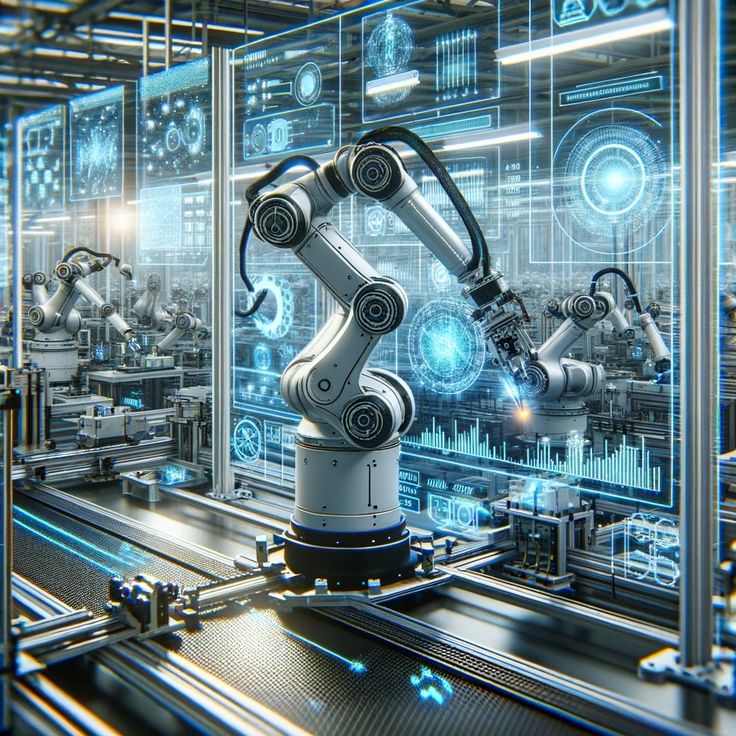
How Are Embedded Systems, IoT, and Robotics Interconnected?

The world of technology is evolving rapidly, and three major fields—embedded systems, the Internet of Things (IoT), and robotics—are playing a crucial role in shaping our future. While they may seem like distinct domains, they are deeply interconnected and often work together to power modern smart devices, automation systems, and intelligent machines. Let’s explore how these fields intersect and influence each other.


Understanding Embedded Systems, IoT, and Robotics

1. Embedded Systems: The Core of Smart Devices

An embedded system is a specialized computing system designed to perform dedicated functions within a larger device. These systems integrate hardware and software and are typically optimized for real-time processing, efficiency, and reliability.

Examples of embedded systems include:

  • Microcontrollers in washing machines
  • Real-time controllers in medical devices
  • Automotive ECU (Electronic Control Unit) systems

2. Internet of Things (IoT): Connecting Devices to the Cloud

The Internet of Things (IoT) is a network of interconnected devices that communicate and exchange data over the internet. These devices use sensors, embedded systems, and cloud computing to collect, analyze, and transmit data.

Examples of IoT applications:

  • Smart home automation (e.g., smart thermostats, security cameras)
  • Wearable health devices (e.g., fitness trackers, smartwatches)
  • Industrial IoT (IIoT) in smart manufacturing

3. Robotics: The Intelligence Behind Automation

Robotics involves designing, building, and operating intelligent machines that can perform tasks autonomously or semi-autonomously. Robots rely on embedded systems for control, IoT for connectivity, and artificial intelligence (AI) for decision-making.

Examples of robotics applications:

  • Autonomous vehicles
  • Industrial robots in manufacturing
  • Medical robots for surgery and patient care

How Embedded Systems, IoT, and Robotics Work Together

1. Embedded Systems Power IoT and Robotics

Embedded systems act as the brain of both IoT devices and robots. They handle data collection, processing, and communication while ensuring efficient operation.

  • In IoT, embedded systems process sensor data and send it to the cloud for further analysis.
  • In robotics, embedded processors control actuators, sensors, and communication modules to enable movement and decision-making.

2. IoT Enhances Robotics with Connectivity

IoT enables robots to connect to cloud platforms, access data, and make smarter decisions in real time. With IoT integration, robots can:

  • Receive updates and commands remotely.
  • Share sensor data for predictive maintenance.
  • Collaborate in smart factories for industrial automation.

3. Robotics Brings Automation to IoT Applications

While IoT focuses on data exchange, robotics introduces autonomous actions based on that data. For instance:

  • Smart IoT sensors in agriculture detect soil moisture levels, and robotic irrigation systems water crops accordingly.
  • IoT-connected surveillance cameras detect motion, and security robots respond to threats.

Real-World Applications of This Interconnection

1. Smart Manufacturing (Industry 4.0)

Factories use embedded systems for machine control, IoT for remote monitoring, and robotics for automation. Together, they enhance efficiency, reduce downtime, and improve production quality.

2. Healthcare and Medical Devices

Medical robots, such as surgical assistants, use embedded systems for precision control. IoT connectivity allows doctors to monitor patient data remotely, while AI-powered robots assist in diagnostics and surgeries.

3. Autonomous Vehicles and Drones

Self-driving cars and drones integrate embedded systems for real-time navigation, IoT for traffic and weather updates, and robotics for autonomous movement and decision-making.


The Future of Embedded Systems, IoT, and Robotics

As technology advances, the integration of AI, 5G, and edge computing will further enhance the synergy between embedded systems, IoT, and robotics. Future innovations could lead to:

  • More autonomous and intelligent robots.
  • Smarter and more energy-efficient IoT networks.
  • Advanced embedded systems with AI-driven processing capabilities.

Conclusion

Embedded systems, IoT, and robotics are interconnected technologies driving the future of automation, smart cities, and intelligent devices. Embedded systems serve as the backbone, IoT provides connectivity, and robotics brings intelligence and automation. Together, they form the foundation for groundbreaking innovations across industries.
Is Machine Learning a Good Choice for a Career?

Machine Learning (ML) has emerged as one of the most promising and in-demand career paths in the technology industry. With its applications spanning across healthcare, finance, e-commerce, and artificial intelligence, many professionals and students are considering a career in ML. But is it really a good choice? Let’s explore the benefits, challenges, and future prospects of pursuing a career in machine learning.

Why Choose a Career in Machine Learning?

1. High Demand and Growth Potential

The demand for machine learning engineers and data scientists is growing exponentially. Companies are leveraging ML for predictive analytics, automation, and decision-making. Reports from LinkedIn and Glassdoor consistently list ML-related roles among the top emerging jobs.

2. Attractive Salary Packages

Machine learning professionals are among the highest-paid in the tech industry. According to industry reports, ML engineers earn an average salary ranging from $100,000 to $150,000 annually, with experienced professionals making even more.

3. Diverse Industry Applications

ML is not confined to the tech sector. Industries like healthcare, banking, retail, and manufacturing are integrating ML for tasks like fraud detection, medical diagnosis, customer behavior analysis, and autonomous systems.

4. Continuous Learning Opportunities

ML is an ever-evolving field, which means there is always something new to learn. With advancements in deep learning, natural language processing, and reinforcement learning, professionals have numerous opportunities to upskill and stay ahead.

5. Opportunities for Research and Innovation

For those passionate about research, ML offers a vast landscape of innovation. Many professionals work on groundbreaking AI projects, contribute to open-source communities, or even pursue higher education in artificial intelligence and ML.

Challenges in a Machine Learning Career

While a career in ML is rewarding, it also comes with challenges:

1. Steep Learning Curve

Mastering ML requires strong mathematical foundations in linear algebra, probability, statistics, and calculus. Additionally, proficiency in programming languages like Python, R, and knowledge of frameworks like TensorFlow and PyTorch are essential.

2. Data Dependency

ML models rely heavily on quality data. Working with insufficient or biased datasets can impact model accuracy, making data preprocessing and cleaning crucial tasks.

3. Competitive Job Market

With the growing popularity of ML, competition for top positions is fierce. Continuous skill development and hands-on project experience are necessary to stand out.

4. Computational Resources

ML models, especially deep learning networks, require significant computational power. Access to high-end GPUs and cloud computing services may be necessary for large-scale projects.

Future of Machine Learning Careers

The future of ML is bright, with advancements in AI and automation continuously expanding the scope of ML applications. Fields like explainable AI, ethical AI, and federated learning are gaining traction, opening up new career paths.

Conclusion: Is Machine Learning a Good Career Choice?

Yes! If you are passionate about technology, problem-solving, and continuous learning, machine learning can be an excellent career choice. With its high demand, lucrative salaries, and exciting innovation opportunities, ML offers a fulfilling and future-proof career path. However, it requires dedication, technical proficiency, and a willingness to adapt to the evolving AI landscape.

Do You Recommend Python for Data Science?

Python has become one of the most popular programming languages for data science, and for good reason. Whether you are a beginner exploring the field or a seasoned professional, Python offers a wide range of benefits that make it an excellent choice for data science applications. But is Python really the best language for data science? Let’s explore the reasons why Python is highly recommended.

Why Python is Ideal for Data Science

1. Ease of Learning and Use

Python has a simple and readable syntax, making it easier for beginners to learn and apply in data science projects. Unlike other languages, Python allows users to write clear and concise code, which is crucial for data analysis and modeling.

2. Rich Ecosystem and Libraries

One of Python’s strongest advantages is its vast collection of libraries specifically designed for data science, including:

  • NumPy – For numerical computing and array operations
  • Pandas – For data manipulation and analysis
  • Matplotlib & Seaborn – For data visualization
  • Scikit-learn – For machine learning
  • TensorFlow & PyTorch – For deep learning applications

These libraries simplify complex data operations and reduce the time needed for implementation.

3. Strong Community Support

Python has a large and active community of developers, data scientists, and machine learning experts who continuously contribute to its improvement. Online resources, tutorials, and forums make it easier to troubleshoot issues and learn new techniques.

4. Integration with Other Technologies

Python seamlessly integrates with big data tools like Apache Spark, Hadoop, and databases such as SQL, making it a versatile choice for handling large datasets efficiently.

5. Scalability and Flexibility

Python is highly scalable and can be used for everything from simple data analysis to building complex machine learning models. It supports multiple programming paradigms, including procedural, functional, and object-oriented programming.

6. Wide Industry Adoption

Python is widely used across industries such as finance, healthcare, e-commerce, and social media. Companies like Google, Facebook, Netflix, and Amazon leverage Python for data science and AI-driven applications.

Are There Any Drawbacks?

While Python is a top choice for data science, it does have some limitations:

  • Performance: Python is slower compared to languages like C++ and Java due to its interpreted nature.
  • Memory Consumption: Python’s dynamic memory allocation can lead to higher memory usage, making it less ideal for applications requiring extreme efficiency.
  • Mobile Development: Python is not the best choice for mobile app development, though it excels in data science and web applications.

Conclusion: Should You Use Python for Data Science?

Absolutely! Python’s ease of use, rich ecosystem, strong community support, and powerful data science capabilities make it a top recommendation for anyone looking to enter or advance in the field of data science. Whether you’re analyzing data, building machine learning models, or developing AI applications, Python provides the tools and flexibility needed to succeed.

Where Does One Start to Get a Career in Artificial Intelligence?

Artificial Intelligence (AI) is one of the most exciting and rapidly growing fields in technology today. From self-driving cars to chatbots and medical diagnosis systems, AI is revolutionizing industries worldwide. If you’re wondering how to start a career in AI, this guide will walk you through the necessary steps to break into this field successfully.

1. Understand the Basics of AI

Before diving into AI as a career, it’s essential to understand what it encompasses. AI is a broad field that includes subdomains such as:

  • Machine Learning (ML): Teaching computers to learn from data.
  • Deep Learning: A subset of ML that uses neural networks to process information.
  • Natural Language Processing (NLP): Enabling computers to understand human language.
  • Computer Vision: Teaching machines to interpret images and videos.
  • Robotics: Creating intelligent physical systems.

Familiarizing yourself with these areas will help you determine which aspect of AI interests you the most.

2. Develop Strong Mathematical and Programming Skills

AI heavily relies on mathematics and programming. To build a solid foundation:

  • Mathematics: Learn linear algebra, probability, statistics, and calculus, as they are fundamental to AI algorithms.
  • Programming: Python is the most commonly used language in AI. Familiarize yourself with libraries like TensorFlow, PyTorch, NumPy, and Pandas.

3. Gain Formal Education or Certifications

A degree in computer science, mathematics, data science, or engineering can be beneficial. However, a formal degree is not always necessary. You can opt for online courses and certifications such as:

  • Coursera: Machine Learning by Andrew Ng
  • Udacity: AI Nanodegree
  • edX: AI for Everyone
  • Fast.ai: Practical Deep Learning for Coders

4. Work on AI Projects and Build a Portfolio

Hands-on experience is crucial in AI. Start with beginner-friendly projects such as:

  • Image recognition using Convolutional Neural Networks (CNNs)
  • Sentiment analysis on Twitter data using NLP
  • Building a chatbot
  • Predicting stock prices using machine learning

Uploading projects on GitHub, Kaggle, or a personal portfolio website will help showcase your skills to potential employers.

5. Participate in AI Competitions and Hackathons

Engage in platforms like Kaggle, where you can solve real-world AI problems and collaborate with other AI enthusiasts. Participating in hackathons and AI challenges helps improve problem-solving skills and gain recognition.

6. Gain Industry Experience Through Internships

Apply for AI internships at tech companies, research institutions, or startups. Internships provide valuable experience and networking opportunities. Companies like Google, Microsoft, and IBM often have AI internship programs.

7. Keep Up With AI Trends and Research

AI is constantly evolving. Stay updated by:

  • Reading research papers from arXiv and Google Scholar
  • Following AI pioneers like Andrew Ng, Geoffrey Hinton, and Yann LeCun
  • Joining AI communities like Reddit AI, AI Stack Exchange, and LinkedIn groups
  • Attending AI conferences such as NeurIPS, CVPR, and ICML

8. Apply for AI Jobs or Start a Research Career

Once you have a strong foundation, start applying for AI roles such as:

  • Machine Learning Engineer
  • Data Scientist
  • AI Researcher
  • NLP Engineer
  • Computer Vision Engineer

If you are passionate about research, consider pursuing a Master’s or Ph.D. in AI-related fields.

Final Thoughts

Starting a career in AI requires dedication, continuous learning, and hands-on practice. Whether you pursue a formal education or take an alternative learning path, the key is to build projects, stay updated, and gain real-world experience. With AI shaping the future, now is the perfect time to embark on this exciting journey.

What is the Best Android Development Framework?

Cybersecurity is an essential field in today’s digital world, with increasing threats and vulnerabilities that require skilled professionals to address. Whether you’re a beginner or looking to advance your expertise, there are numerous resources available to help you learn cybersecurity. Below are some of the best platforms, courses, books, and tools to get started.

1. Online Courses and Learning Platforms

a. Coursera

  • Offers cybersecurity courses from top universities like Stanford, the University of London, and IBM.
  • Courses include “Cybersecurity Specialization” by the University of Maryland and “Introduction to Cybersecurity” by NYU.
  • Provides certificates upon completion.

b. Udemy

  • Budget-friendly courses with lifetime access.
  • Popular courses include “The Complete Cyber Security Course” by Nathan House and “Ethical Hacking for Beginners.”
  • Covers a wide range of topics from ethical hacking to network security.

c. Cybrary

  • Provides free and paid courses tailored to cybersecurity professionals.
  • Offers hands-on labs and virtual environments for practical experience.
  • Covers beginner to advanced topics, including penetration testing and incident response.

d. edX

  • Features courses from MIT, Harvard, and other prestigious institutions.
  • Topics range from network security to cryptography.
  • Offers certificates and professional certification programs.

2. Books on Cybersecurity

a. “The Web Application Hacker’s Handbook” by Dafydd Stuttard & Marcus Pinto

  • A deep dive into web security vulnerabilities and penetration testing.

b. “Hacking: The Art of Exploitation” by Jon Erickson

  • Covers fundamental hacking techniques with real-world examples.

c. “Cybersecurity for Dummies” by Joseph Steinberg

  • A beginner-friendly introduction to cybersecurity principles.

d. “Metasploit: The Penetration Tester’s Guide” by David Kennedy et al.

  • A great resource for learning penetration testing using the Metasploit framework.

3. Hands-On Practice and Labs

a. Hack The Box

  • A platform offering real-world hacking challenges and penetration testing labs.
  • Suitable for both beginners and experts.

b. TryHackMe

  • Provides interactive cybersecurity training with gamified learning.
  • Covers ethical hacking, digital forensics, and network security.

c. OverTheWire

  • Offers free war games for learning Linux security and command-line skills.

d. RangeForce

  • A cloud-based cybersecurity training platform with real-world attack simulations.

4. Cybersecurity Blogs and Websites

a. Krebs on Security

  • A blog by cybersecurity journalist Brian Krebs covering the latest cyber threats and attacks.

b. The Hacker News

  • Provides up-to-date news on cybersecurity, hacking, and IT security trends.

c. Dark Reading

  • A resource for cybersecurity professionals, offering research, articles, and insights on emerging threats.

d. BleepingComputer

  • Covers security news, malware analysis, and removal guides.
5. Cybersecurity Certifications

a. Certified Ethical Hacker (CEH)

  • Focuses on ethical hacking and penetration testing.
  • Offered by EC-Council.

b. CompTIA Security+

  • A beginner-friendly certification covering fundamental cybersecurity concepts.

c. Certified Information Systems Security Professional (CISSP)

  • Ideal for experienced cybersecurity professionals.
  • Covers risk management, cryptography, and security architecture.

d. Offensive Security Certified Professional (OSCP)

  • A hands-on certification for penetration testers.

Conclusion

Cybersecurity is a dynamic field that requires continuous learning. Whether through online courses, books, hands-on practice, or industry certifications, there are many ways to build your expertise. By leveraging these resources, you can develop the skills needed to protect digital assets and combat cyber threats effectively.

What is the Best Android Development Framework?

With the ever-evolving mobile app industry, choosing the right Android development framework is crucial for building efficient, scalable, and high-performance applications. There are several frameworks available, each with unique advantages. In this blog, we explore some of the best Android development frameworks to help developers make informed decisions.

1. Android Native Framework (Android SDK + Jetpack)

Android’s official framework provides developers with the most control and flexibility. Using Java or Kotlin, developers can build apps that fully utilize Android’s capabilities. Jetpack, a suite of libraries, helps streamline development with pre-built components for UI, navigation, and data handling.

Pros:

  • Full access to Android APIs and features
  • High performance and optimized for Android devices
  • Large community and extensive documentation

Cons:

  • Steeper learning curve for beginners
  • Longer development time compared to cross-platform frameworks

2. Flutter

Flutter, developed by Google, is an open-source UI toolkit that allows developers to create natively compiled applications using a single Dart codebase. It provides a rich set of widgets and excellent performance.

Pros:

  • Fast development with hot reload
  • Beautiful and customizable UI components
  • Single codebase for Android and iOS

Cons:

  • Larger app size compared to native apps
  • Limited access to some native functionalities

3. React Native

Developed by Facebook, React Native allows developers to build cross-platform mobile apps using JavaScript and React. It bridges the gap between native and web development by offering near-native performance with reusable components.

Pros:

  • Code reusability for Android and iOS
  • Large community support
  • Faster development compared to native Android

Cons:

  • Performance issues for complex animations and heavy processing apps
  • Requires native modules for full functionality

4. Kotlin Multiplatform Mobile (KMM)

KMM enables developers to write shared business logic in Kotlin while keeping platform-specific UI development separate. It is gaining popularity among Android developers looking for code-sharing solutions.

Pros:

  • Native performance with shared business logic
  • Strong support from JetBrains and Google
  • Seamless integration with existing projects

Cons:

  • Limited resources and smaller community compared to Flutter or React Native
  • Requires expertise in Kotlin

5. Xamarin

Xamarin, owned by Microsoft, allows developers to build cross-platform apps using C# and .NET. It offers native-like performance and deep integration with platform-specific APIs.

Pros:

  • Code-sharing across multiple platforms
  • Access to native APIs
  • Strong support from Microsoft

Cons:

  • Larger app size
  • Slower performance compared to native development

Conclusion

The best Android development framework depends on your project’s requirements, development speed, and target audience. If you need maximum performance and access to Android features, native development with the Android SDK is ideal. For cross-platform development, Flutter and React Native offer speed and efficiency. Meanwhile, KMM and Xamarin provide alternatives for code-sharing across platforms.

Is Web Development a Dying Career?

Web development has been a crucial field for decades, fueling the digital transformation of businesses, industries, and personal projects. However, with the rise of AI, low-code and no-code platforms, and evolving market demands, many wonder whether web development is a dying career. The reality, however, is quite different.

The Changing Landscape of Web Development

While the field of web development has evolved significantly, it is far from obsolete. New technologies are shaping how websites and applications are built, but these advancements do not eliminate the need for skilled developers. Instead, they redefine their roles and responsibilities.

1. Rise of AI and Automation

AI-powered tools like ChatGPT, Copilot, and automated website builders (Wix, Webflow) make it easier for non-technical users to create websites. However, these tools lack the flexibility and customization that professional developers provide. Businesses with complex requirements still need developers to build scalable, secure, and high-performance web applications.

2. Low-Code and No-Code Platforms

No-code and low-code platforms enable users to develop functional websites and apps with minimal coding. While these platforms are great for small projects and startups, they have limitations in terms of customization, security, and scalability. Large enterprises still rely on experienced web developers to create and maintain tailored solutions.

3. High Demand for Specialized Skills

The demand for full-stack developers, UI/UX designers, cybersecurity experts, and performance optimization specialists continues to grow. Technologies like React, Next.js, Node.js, and cloud computing are in high demand, making web developers who specialize in these areas highly valuable.

4. The Expanding Role of Web Developers

Web development is no longer just about coding static websites. Developers are now involved in designing user experiences, integrating AI, ensuring cybersecurity, and optimizing performance for mobile and desktop users. The industry is shifting, not dying.

Job Market Trends and Opportunities

According to job market statistics, web development remains a lucrative career choice. The U.S. Bureau of Labor Statistics projects an 8% job growth for web developers from 2020 to 2030, faster than the average for most occupations. Companies continue to invest in online presence, e-commerce, and digital transformation, ensuring a steady demand for web development expertise.

How to Stay Relevant as a Web Developer

To thrive in the evolving landscape, web developers must:

  • Learn modern frameworks and technologies (e.g., React, Vue, Next.js, Tailwind CSS, cloud computing, and API development).
  • Understand UI/UX design principles to create user-friendly and engaging websites.
  • Keep up with AI and automation trends to integrate smart solutions into web projects.
  • Enhance cybersecurity knowledge to protect applications from vulnerabilities.
  • Stay adaptable by continuously learning and improving skills.

Conclusion: Web Development is Evolving, Not Dying

Web development is not a dying career—it is transforming. While AI and no-code tools simplify certain tasks, they do not replace the need for skilled developers. The demand for dynamic, secure, and scalable digital solutions ensures that web development remains a valuable and future-proof career choice. By staying updated with industry trends and continuously improving their skills, web developers can secure long-term success in the tech industry

Will Robotics Engineers Be the Most In-Demand in the Future?

The rise of automation and artificial intelligence is reshaping industries worldwide, making robotics engineering one of the most promising fields. But will robotics engineers be the most in-demand professionals in the future? Let’s explore the trends, career prospects, and factors driving the demand for robotics engineers.

The Growing Demand for Robotics Engineers

As industries integrate more automation, the need for robotics engineers continues to grow. Several sectors are contributing to this demand:

1. Manufacturing & Industrial Automation

  • Robotics is revolutionizing production lines, reducing costs, and increasing efficiency.
  • Companies like Tesla and BMW rely heavily on robotic automation.

2. Healthcare & Medical Robotics

  • Robotics is transforming surgeries, prosthetics, and rehabilitation.
  • The rise of robotic-assisted surgeries, such as the Da Vinci Surgical System, highlights this trend.

3. Logistics & Warehousing

  • Companies like Amazon and Walmart use robotics for warehouse automation and supply chain optimization.
  • Demand for autonomous delivery robots and drones is on the rise.

4. AI-Powered Robotics

  • The integration of AI and machine learning in robotics is creating smart, adaptable systems.
  • Fields like autonomous vehicles and AI-driven robotics are growing exponentially.

5. Space Exploration & Defense

  • Organizations like NASA and ISRO use robotics for planetary exploration and space missions.
  • Military applications, including autonomous drones and robotic soldiers, are expanding.

Job Market Outlook for Robotics Engineers

According to industry reports, the global robotics market is expected to reach $160 billion by 2030, significantly increasing the demand for skilled engineers.

Key Skills for Future Robotics Engineers

  • Programming (Python, C++, ROS)
  • AI & Machine Learning
  • Mechatronics & Embedded Systems
  • 3D Modeling & Simulation
  • Cybersecurity in Robotics

Will Robotics Engineers Be the Most In-Demand?

While robotics engineering is rapidly growing, fields like AI, data science, and cybersecurity are also experiencing high demand. However, robotics engineering stands out due to its multidisciplinary nature, integrating software, hardware, and AI.

With automation expanding into every industry, robotics engineers will play a crucial role in shaping the future. Those who upskill in AI, automation, and mechatronics will find themselves at the forefront of this technological revolution.

Conclusion

Robotics engineering is undoubtedly one of the most in-demand careers of the future. As industries continue to automate, the need for skilled robotics engineers will only increase. By gaining expertise in robotics, AI, and automation, professionals can secure rewarding opportunities in this fast-growing field.


How much does a drone engineer in India make?

With the rapid advancement of drone technology in industries like defense, agriculture, logistics, and surveillance, the demand for drone engineers in India is rising. If you’re considering a career in drone engineering, you might be wondering about the earning potential in this field. Let’s explore the salary prospects for drone engineers in India.

Entry-Level Salary

Freshers or those with less than one year of experience in drone engineering can expect an average salary ranging from ₹3 to ₹6 LPA (Lakhs per Annum). Entry-level positions are typically available in drone startups, research institutions, and government projects.

Mid-Level Salary

Drone engineers with 2 to 5 years of experience can earn between ₹6 to ₹12 LPA. Professionals at this level may work on designing UAVs, developing control systems, or improving drone software and hardware.

Senior-Level Salary

Experienced drone engineers with 5+ years of experience can command salaries from ₹12 to ₹25 LPA or more, depending on their expertise and the industry they work in. Those involved in defense projects, aerospace companies, or international firms may earn higher packages.

Industry-Wise Salary Breakdown

  • Aerospace & Defense: ₹10 – ₹25 LPA
  • Agriculture & Surveying: ₹6 – ₹12 LPA
  • Logistics & Delivery: ₹8 – ₹15 LPA
  • Research & Development: ₹7 – ₹18 LPA
  • Government & Public Sector: ₹5 – ₹10 LPA
Freelancing & Entrepreneurship Opportunities

Apart from full-time jobs, skilled drone engineers can earn through freelancing or starting their own drone-based businesses. Drone services like aerial photography, surveying, and industrial inspections can generate earnings of ₹1-5 LPA as a freelancer and significantly more as a business owner.

Factors Affecting Salary

  1. Educational Qualification – A degree in aeronautical engineering, robotics, or electronics can impact salary potential.
  2. Certifications – Certifications from DGCA (Directorate General of Civil Aviation) can increase job prospects and salary.
  3. Industry & Location – Major cities like Bangalore, Hyderabad, and Delhi offer better salaries compared to smaller towns.
  4. Skills & Experience – Expertise in UAV design, AI integration, and programming can result in higher pay.

Conclusion

Drone engineering in India is a promising career with lucrative salary prospects. As industries increasingly adopt drone technology, salaries and job opportunities will continue to grow. Gaining experience, acquiring relevant certifications, and staying updated with industry trends can significantly enhance your earning potential in this field.

How Do I Learn AR/VR?

Augmented Reality (AR) and Virtual Reality (VR) are revolutionizing industries like gaming, healthcare, real estate, and education. If you want to break into this exciting field, here’s a step-by-step guide to learning AR/VR effectively.

1. Understand the Basics of AR and VR

Before diving into development, you need to understand the fundamental differences between AR and VR:

  • Augmented Reality (AR) enhances the real world with digital elements (e.g., Pokémon GO, Snapchat filters).
  • Virtual Reality (VR) creates an entirely digital environment (e.g., Oculus Rift, HTC Vive experiences).

Familiarize yourself with popular AR and VR applications to get an idea of how these technologies work in real-world scenarios.

2. Learn Programming Languages

To develop AR/VR applications, knowledge of programming languages is essential. The most commonly used languages include:

  • C# – Used with Unity for AR/VR development.
  • C++ – Preferred for high-performance VR applications.
  • Python & JavaScript – Used in some AR/VR web-based applications.

If you’re new to programming, start with Python or C# as they are beginner-friendly.

3. Master AR/VR Development Platforms

Several platforms and tools are widely used for AR/VR development:

  • Unity3D (Best for beginners, supports AR/VR development with C#)
  • Unreal Engine (Great for high-quality VR applications, uses C++)
  • ARKit (iOS) and ARCore (Android) for mobile AR development
  • Vuforia and Microsoft HoloLens for AR applications

4. Get Hands-On with AR/VR Hardware

Practical experience is key. Invest in AR/VR devices to test your applications:

  • AR Devices: Microsoft HoloLens, Magic Leap, Smartphones (ARKit & ARCore-supported phones)
  • VR Headsets: Oculus Quest, HTC Vive, PlayStation VR, Valve Index
5. Take Online Courses and Tutorials

There are many online resources to learn AR/VR development:

  • Coursera & Udacity – Offer beginner to advanced courses.
  • YouTube Tutorials – Free step-by-step AR/VR guides.
  • Udemy & Pluralsight – Affordable courses with hands-on projects.
  • Official Unity & Unreal Engine Documentation – Best for in-depth learning.

6. Build AR/VR Projects

The best way to learn is by doing. Start small:

  • Basic AR Apps – Develop a simple AR object placement app using ARKit or ARCore.
  • VR Environments – Create a basic VR world using Unity or Unreal Engine.
  • Gaming & Training Simulations – Try interactive AR/VR experiences to enhance skills.

7. Join AR/VR Communities & Attend Events

Networking with professionals and enthusiasts will help you learn and stay updated:

  • Reddit (r/AR_MR_XR, r/oculus, r/virtualreality)
  • Facebook Groups & LinkedIn Communities
  • Meetups, Hackathons, and Conferences (e.g., AWE, GDC, CES)

8. Stay Updated with Industry Trends

AR/VR technology is rapidly evolving. Follow blogs, podcasts, and YouTube channels to keep up with the latest developments:

  • Road to VR
  • Upload VR
  • Oculus Developer Blog
  • Unity & Unreal Engine Blogs

9. Work on a Portfolio and Apply for Jobs

Once you’ve built a few projects, showcase your skills through a portfolio. Some career paths in AR/VR include:

  • AR/VR Developer
  • 3D Modeler & Designer
  • Game Developer
  • AR/VR UX/UI Designer

You can find AR/VR jobs on platforms like LinkedIn, Upwork, and Indeed.

Final Thoughts

Learning AR/VR requires dedication and practice, but with the right approach, you can build a successful career in this innovative field. Start small, keep experimenting, and stay connected with the AR/VR community. Happy coding!


Form submitted! Our team will reach out to you soon.
0
    0
    Your Cart
    Your cart is emptyReturn to Course