
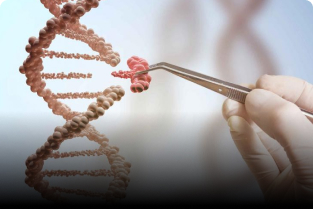
For decades, science fiction has tantalized us with visions of superhuman capabilities—faster reflexes, disease-proof bodies, and brains that rival computers. But as technologies like genetic engineering and nanotechnology begin to mature, these ideas are shifting from fantasy to real scientific inquiry. So the big question is: how far can we really go in enhancing adult humans using these tools?
Let’s dive into the current possibilities, the limitations, and what might lie ahead.
Genetic Engineering: Editing the Blueprint Mid-Life
Genetic engineering typically conjures images of designer babies or lab-edited embryos. But what about altering the genetics of fully grown adults?
CRISPR and gene therapy technologies are already being used in adults to treat inherited diseases like sickle cell anemia, blindness, and even certain cancers. These methods involve inserting, removing, or replacing DNA within cells—usually targeting somatic (non-reproductive) cells.
Potential enhancements in adults might include:
-
Muscle and endurance boosts via myostatin gene inhibition.
-
Improved cognitive function by tweaking genes related to memory and learning.
-
Longevity interventions through modifications to aging-related genes like FOXO3 or TERT.
-
Disease resistance (e.g., disabling the CCR5 gene to confer HIV resistance).
But there are limits: gene editing in adults is currently constrained by delivery challenges (getting the edits into the right cells safely) and by ethical boundaries. You can’t just overwrite the entire body’s DNA after development—most adult tissues are already formed.
Nanotechnology: Engineering from the Inside Out
If genes are the code, nanotech is the machinery that could upgrade the body in ways biology can’t. Nanotechnology operates at the atomic and molecular level, enabling tools small enough to enter individual cells or navigate the bloodstream.
Some promising nanotech enhancements include:
-
Targeted drug delivery to treat cancer or neurological diseases with minimal side effects.
-
Real-time health monitoring via nanosensors that detect disease markers before symptoms appear.
-
Enhanced physical performance by boosting oxygen delivery or clearing lactic acid faster.
-
Brain-machine interfaces, using nanoscale electrodes for memory enhancement or thought-based control of devices.
-
Self-repairing tissues through nanobots that stimulate cellular regeneration or remove damaged components.
In the future, we may see programmable nanomachines that can patrol the body, eliminate pathogens, and repair genetic mutations—essentially providing a form of internal preventive medicine or even enhancement-on-demand.
The Synergy: When Nanotech Meets Gene Editing
Now imagine combining both.
Nanobots could deliver CRISPR components to specific cells with unprecedented precision, overcoming one of gene therapy’s biggest challenges: targeted delivery. They could even perform cell-by-cell upgrades, turning on beneficial genes or silencing harmful ones only where needed.
In theory, this could allow:
-
In situ body upgrades (enhancing muscles, immunity, or metabolism on demand).
-
Reversible or tunable enhancements, turning genetic edits on/off like software.
-
Continuous disease monitoring and correction, preventing illnesses before they arise.
This synergy opens the door to a kind of biological “operating system”—a framework that could be maintained, upgraded, or customized over time.
But What Are the Limits?
We’re still a long way from science fiction’s enhanced superhumans. Some major hurdles include:
-
Ethical and legal boundaries: Enhancement raises thorny questions about fairness, identity, and consent.
-
Biological complexity: The human body is vastly interconnected; tweaking one gene or system often affects others unpredictably.
-
Access and inequality: Will these tools be widely available, or reserved for the wealthy few?
Perhaps most importantly, we need to consider what we want from enhancement. Is the goal to eliminate suffering, or to redefine what it means to be human?
Final Thoughts: The Enhancement Horizon
While we can’t (yet) create superhero-level adults through technology, combining genetic engineering and nanotech already gives us powerful tools to repair, improve, and optimize human biology.


