
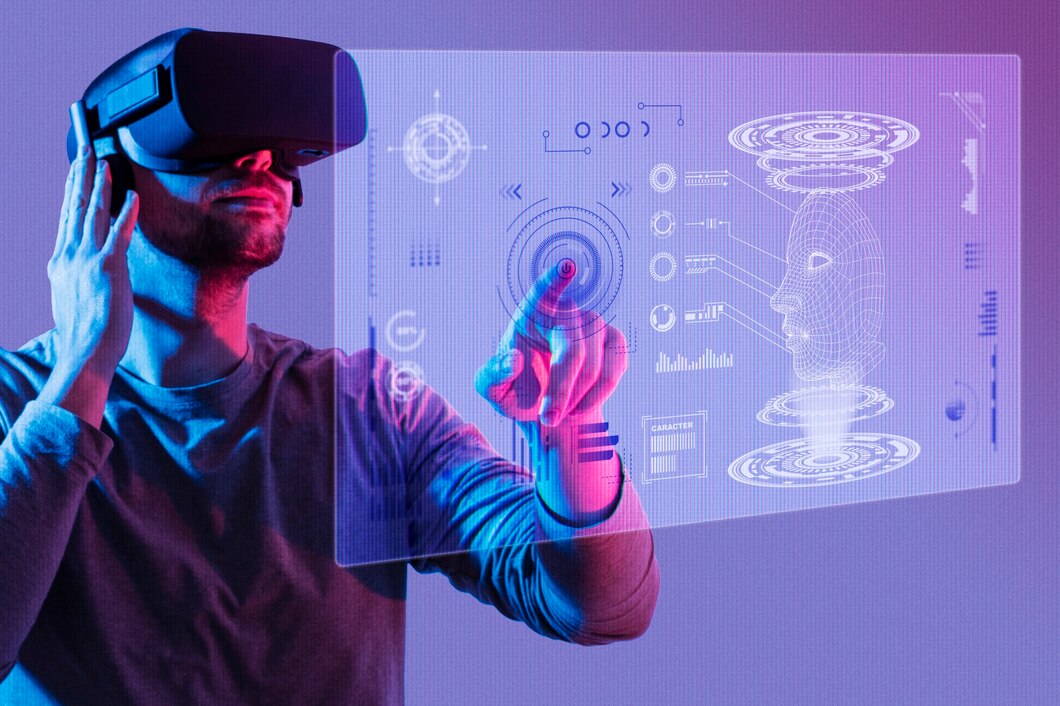
In recent years, technologies like Augmented Reality (AR) and Virtual Reality (VR) have gained significant attention. These technologies promise immersive digital experiences that blend the physical and virtual worlds. However, despite their potential, AR and VR have struggled to achieve widespread adoption. This is where the concept of the Metaverse comes into the picture. Many experts believe that the Metaverse could be the catalyst that finally pushes AR and VR into the mainstream. But is the Metaverse truly the savior of AR/VR? Let’s explore.
Understanding AR and VR
Before discussing the Metaverse, it’s important to understand AR and VR.
Augmented Reality (AR) enhances the real world by overlaying digital information such as images, text, or animations onto physical surroundings. Popular examples include AR filters on social media and mobile apps that display digital objects in real-world environments.
Virtual Reality (VR), on the other hand, creates a fully immersive digital environment. Using VR headsets, users can enter a simulated world where they can interact with virtual objects and spaces.
Both technologies have applications in gaming, education, healthcare, architecture, retail, and corporate training. Despite these possibilities, adoption has been slower than expected due to hardware limitations, high costs, and lack of compelling everyday use cases.
What Is the Metaverse?
The Metaverse is a shared virtual space where people can interact with each other and digital environments in real time. It combines elements of virtual reality, augmented reality, blockchain, digital economies, and social interaction.
In the Metaverse, users can create avatars, attend virtual events, work in digital offices, shop in virtual stores, and explore digital worlds. Major technology companies have invested heavily in developing Metaverse platforms because they believe it could become the next evolution of the internet.
How the Metaverse Supports AR/VR
The Metaverse could play a crucial role in accelerating AR and VR adoption. Here are some ways it could support these technologies:
1. Creating a Strong Use Case
One of the biggest challenges for AR and VR has been finding everyday applications. The Metaverse provides a unified ecosystem where these technologies can thrive. Virtual meetings, concerts, gaming worlds, and digital marketplaces give users clear reasons to use AR/VR devices regularly.
2. Driving Hardware Innovation
As interest in the Metaverse grows, companies are investing more in developing better AR glasses and VR headsets. Improved hardware could make devices lighter, more affordable, and more comfortable, making them accessible to a larger audience.
3. Expanding Social Interaction
Human interaction is a powerful driver of technology adoption. The Metaverse enables people to socialize, collaborate, and work together in immersive digital environments. This social dimension could encourage more people to adopt AR and VR tools.
4. Supporting Digital Economies
The Metaverse introduces virtual economies where users can buy, sell, and trade digital assets. Businesses may open virtual stores, host events, or create digital products. This economic ecosystem can further motivate the development of AR and VR platforms.
Challenges That Still Exist
Although the Metaverse offers many opportunities, several challenges remain.
High hardware costs still limit accessibility for many users.
Technical limitations, such as motion sickness, battery life, and graphics performance, need improvement.
Privacy and security concerns are also major issues when people spend large amounts of time in virtual environments.
Additionally, the Metaverse itself is still evolving, and there is no universally accepted platform or standard yet.
Is the Metaverse Really the Savior?
The Metaverse is not necessarily the sole savior of AR and VR, but it may act as a powerful accelerator. By providing meaningful applications, social engagement, and economic incentives, it can encourage both users and developers to embrace immersive technologies.
However, the success of AR and VR will also depend on advances in hardware, software, affordability, and user experience. Without these improvements, the Metaverse alone cannot guarantee mass adoption.
Conclusion
The Metaverse has the potential to play a major role in the growth of AR and VR technologies. By offering immersive environments for work, entertainment, and social interaction, it creates a compelling reason for people to adopt these technologies. While it may not be the ultimate savior, the Metaverse could become the driving force that finally brings AR and VR into everyday life.


