

Learning Data Structures and Algorithms (DSA) is one of the most important steps for anyone preparing for coding interviews or aiming to improve problem-solving skills. But one common confusion students face is:
Should I study DSA in C++ or DSA in Python?
Both languages are excellent, but the right choice depends on your goals, background, and the type of opportunities you are preparing for. Let’s break it down step by step.
Why DSA Matters
DSA helps you think logically, solve complex problems, and improve your coding efficiency. Companies like Google, Amazon, and Microsoft expect you to write optimized and error-free solutions—regardless of language.
DSA in C++
Pros of Using C++
-
Faster Execution Speed
C++ is extremely fast. When solving time-sensitive problems in coding interviews or competitive programming, this speed is a huge advantage. -
Powerful STL (Standard Template Library)
DSA becomes easier because STL provides ready-to-use structures like:-
vector -
map -
set -
priority_queue
-
-
Preferred for Competitive Programming
All top competitive coders typically use C++ due to performance and STL. -
Good for System-Level Understanding
It gives better control over memory, which helps you understand how data structures really work.
Cons of Using C++
-
Steeper learning curve
-
More verbose code
-
Requires strong understanding of pointers and memory
DSA in Python
Pros of Using Python
-
Beginner-Friendly & Clean Syntax
Python code is shorter and easier to understand. -
Faster to Write Solutions
In interviews, writing clean code quickly helps you focus on logic instead of syntax. -
Great Inbuilt Data Structures
Python provides:-
list -
dict -
set -
tuple
These make solving problems easier.
-
-
Good for AI/ML Aspirants
If you plan to work in machine learning, data science, or AI, Python gives you a head start.
Cons of Using Python
-
Slower execution compared to C++
-
Some advanced algorithms may hit time limits in competitive programming
-
High-level abstraction hides low-level details
C++ vs Python for DSA: Quick Comparison
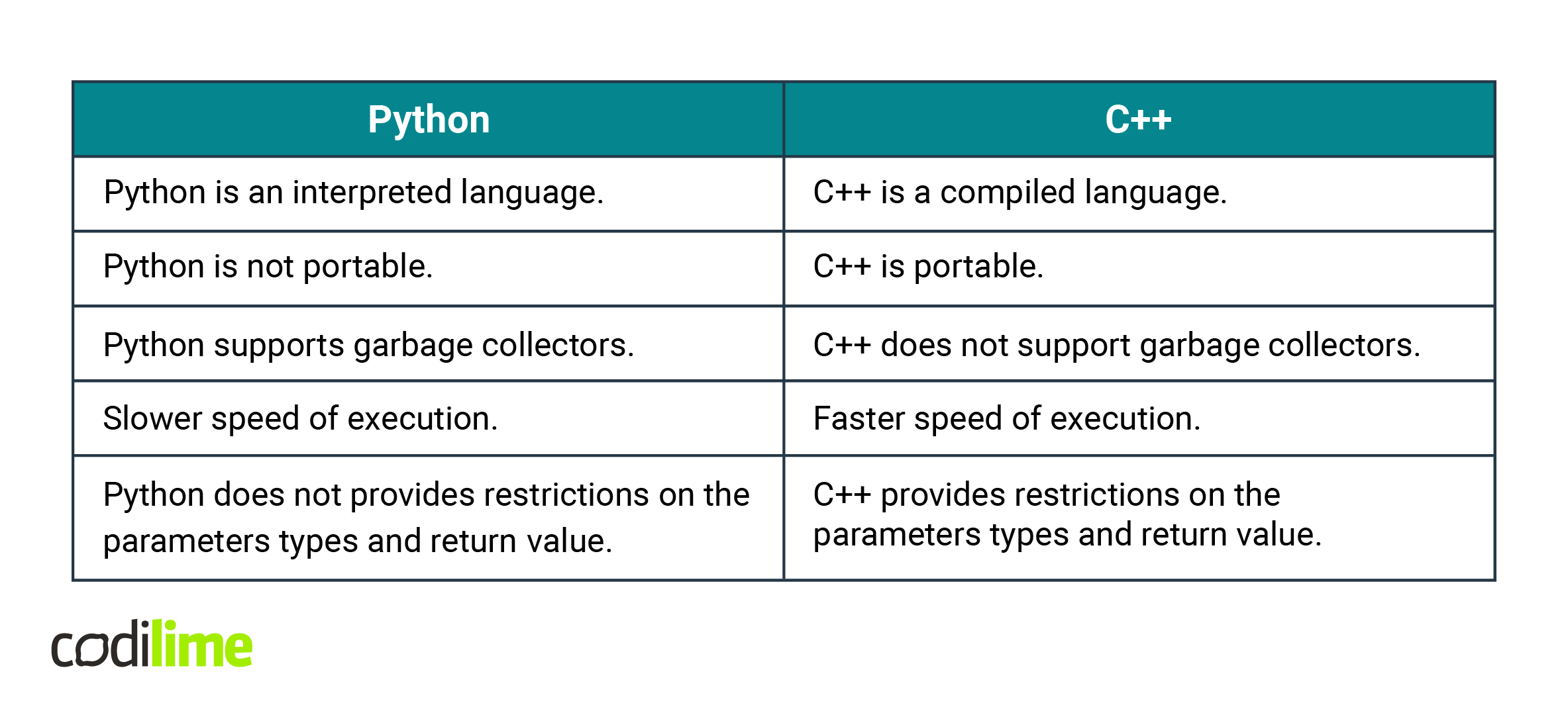
| Feature | C++ | Python |
|---|---|---|
| Speed | ⭐⭐⭐⭐⭐ (Very Fast) | ⭐⭐⭐ (Medium) |
| Syntax Simplicity | ⭐⭐⭐ | ⭐⭐⭐⭐⭐ |
| Competitive Programming | Best | Moderate |
| Learning Curve | Difficult | Easy |
| Library Support | Good (STL) | Excellent |
| Industry Usage | System programming, CP | AI/ML, web, scripting |
Which One Should YOU Choose?
Choose C++ if:
-
You want to crack competitive programming.
-
You want to target companies that focus on algorithmic rounds.
-
You are comfortable with complex syntax.
-
You want deeper understanding of memory and low-level concepts.
Choose Python if:
-
You are a beginner and want to focus on logic first.
-
You want to work in AI, ML, or data science.
-
You prefer clean and readable code.
-
You dislike writing long, complex syntax.
My Suggestion
If your goal is competitive programming → Choose C++
If your goal is interview preparation or tech career → Choose Python or C++ (both work)
If your goal is AI/ML → Python is the best choice
If you’re still confused, here’s the best approach:
Start DSA in Python (easy) → Later switch to C++ for speed (optional)
This gives you the best of both worlds.
Conclusion
Both languages are powerful for DSA, but the “best” one depends on your personal goals. C++ gives speed and depth, while Python offers simplicity and focus on core logic. Whichever you choose, remember that DSA concepts matter more than the language itself.


