
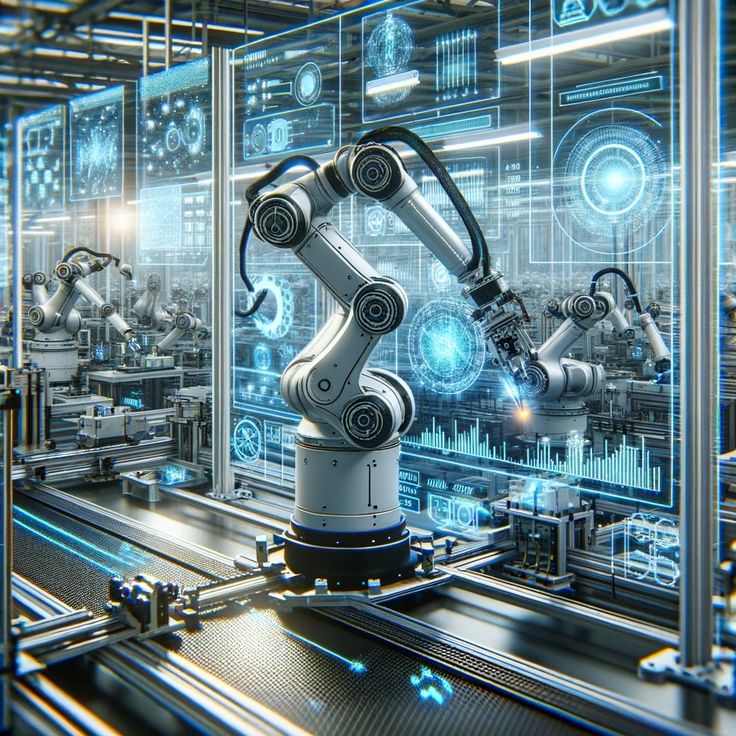
Robotics is one of the most exciting and fast-growing fields today, combining mechanical engineering, electronics, and computer science to build intelligent machines. But one of the most common questions students and beginners ask is:
“How much math do I need to know for robotics?”
The truth is that math is the backbone of robotics. Whether it’s controlling a robotic arm, programming sensors, or designing autonomous systems, math helps robots understand and interact with the world.
Here is a complete breakdown of the essential math prerequisites for anyone interested in robotics.
1. Algebra: The Foundation of Robotics Mathematics
Before diving into advanced concepts, you must be comfortable with basic algebra.
You should understand:
-
Variables and constants
-
Linear equations
-
Functions
-
Graphs
-
Inequalities
Why it matters:
Algebra is used everywhere in robotics—motion equations, sensor calculations, and control systems. Without strong algebra skills, advanced robotics concepts become much harder to understand.
2. Trigonometry: Understanding Angles and Motion
Robots rely heavily on angles to move and locate objects. That’s where trigonometry comes in.
Key topics to learn:
-
Sine, cosine, and tangent
-
Angle measurement (degrees and radians)
-
Triangles and vector components
Why it matters:
Trigonometry helps you calculate robot arm angles, path movements, distances, and sensor orientation. It is essential for robot kinematics and navigation.
3. Calculus: The Math Behind Motion and Change
Calculus is the language of motion—exactly what robotics deals with.
Important calculus concepts:
-
Derivatives
-
Integrals
-
Limits
-
Differential equations
Why it matters:
Robots are constantly moving. Calculus helps you:
-
Model velocity and acceleration
-
Understand dynamic systems
-
Design smooth movement paths
-
Develop motor control algorithms
Without calculus, advanced robot control becomes extremely difficult.
4. Linear Algebra: The Heart of Robotics Mathematics
If robotics had one most important math subject, it would be linear algebra.
Essential topics:
-
Vectors and matrices
-
Matrix multiplication
-
Transformations
-
Eigenvalues and eigenvectors
Why it matters:
Linear algebra is used in:
-
Computer vision
-
3D transformations
-
Robot kinematics
-
Mapping and localization
-
Machine learning for robots
Any time a robot calculates movement in 3D space, it’s using linear algebra.
5. Probability and Statistics: For Uncertainty and Decision-Making
Robots don’t always get perfect data. Sensors may give noisy or incomplete information. That’s where probability and statistics come in.
What you need to learn:
-
Probability distributions
-
Mean, median, variance
-
Bayesian inference
-
Random variables
-
Statistical estimation
Why it matters:
Robots use probability to make decisions when conditions are uncertain.
Applications include:
-
Object detection
-
SLAM (Simultaneous Localization and Mapping)
-
Sensor fusion
-
Machine learning
6. Discrete Mathematics: For Robotics Software and Logic
Not all robotics math is continuous; some of it is about logic and algorithms.
Important topics:
-
Logic statements
-
Graph theory
-
Combinatorics
-
Boolean algebra
Why it matters:
Discrete math helps in:
-
Writing robot algorithms
-
Path planning
-
Decision trees
-
Working with microcontrollers and embedded systems
7. Geometry: Essential for Robot Motion and Design
Robots operate in physical space, so geometry is essential.
Learn topics like:
-
Circles, polygons, and 3D shapes
-
Distances and angles
-
Coordinate geometry
Why it matters:
Geometry is used to calculate robot paths, manipulate objects, and understand spatial relationships.
Do You Need to Master All of This Before Starting Robotics?
Not necessarily! Many beginners start with:
-
Basic algebra
-
Basic trigonometry
-
Introduction to linear algebra
-
Programming (Python or C++)
As your projects get more advanced, you naturally learn the deeper mathematical concepts.
Robotics is practical—so learning math alongside real projects makes it easier and more fun.
Conclusion
Robotics is deeply rooted in mathematics because robots must understand motion, space, uncertainty, and control. The core math prerequisites include:
-
Algebra
-
Trigonometry
-
Calculus
-
Linear Algebra
-
Probability & Statistics
-
Discrete Mathematics
-
Geometry
You don’t need to become a math genius to start robotics, but a solid foundation in these subjects will help you grow, solve problems, and build intelligent robotic systems confidently.


