
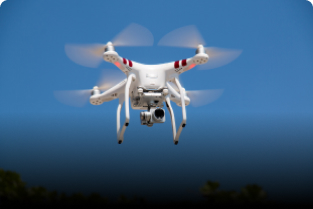
The drone industry in India is growing rapidly, driven by advancements in technology, increased demand across industries, and government initiatives supporting the development of unmanned aerial systems (UAS). As drones become essential tools in agriculture, logistics, defense, surveillance, mapping, and disaster management, the role of a drone engineer has become more important than ever.
If you’re considering a career in drone engineering or simply want to understand what the job involves, here’s a detailed look at the key responsibilities of a drone engineer in India.
1. Designing and Developing Drone Systems
One of the core responsibilities of a drone engineer is to design and build drone hardware. This includes:
-
Selecting and integrating components such as motors, propellers, GPS modules, batteries, sensors, and cameras
-
Creating 3D models and structural designs for drones
-
Ensuring airframe stability, durability, and aerodynamic performance
-
Prototyping and testing new drone models
Engineers work to develop drones for different purposes — delivery drones, agricultural drones, surveillance drones, or industrial inspection drones — each with its own technical requirements.
2. Developing Flight Control Software
Drone engineers also work on the software that controls flight behavior, including:
-
Writing or modifying firmware for flight controllers
-
Creating algorithms for navigation, stabilization, and obstacle avoidance
-
Integrating autopilot systems
-
Working with AI and machine learning models for advanced features like path optimization and real-time tracking
This requires knowledge of programming languages like Python, C, C++, and ROS (Robot Operating System).
3. Testing, Calibration, and Troubleshooting
Before any drone can be deployed, it must be thoroughly tested. Drone engineers are responsible for:
-
Conducting flight tests in controlled environments
-
Identifying issues with sensors, cameras, propellers, motors, and onboard systems
-
Making adjustments to improve performance, stability, and safety
-
Ensuring compliance with DGCA safety guidelines
Testing is a continuous process, especially when drones are used in demanding fields like defense or long-distance delivery.
4. Working With Sensors and Payload Integration
Different industries require different payloads. Drone engineers must:
-
Integrate crop-monitoring sensors for agriculture
-
Install LiDAR, thermal imaging cameras, and high-resolution sensors for mapping and surveillance
-
Ensure payloads don’t affect flight performance
-
Calibrate sensors to capture accurate data
Payload integration is a highly specialized responsibility, especially in industrial and defense-grade drones.
5. Ensuring DGCA Compliance and Safety Standards
Since India regulates drone usage under DGCA (Directorate General of Civil Aviation), drone engineers must:
-
Stay updated with the latest drone rules and certifications
-
Ensure drones meet all safety and technical standards
-
Implement geo-fencing, remote ID, and flight logging features
-
Generate compliance documentation for approvals
Compliance is critical — without adhering to regulations, drones cannot be legally deployed.
6. Maintenance and Repair
Drone engineers handle regular maintenance tasks such as:
-
Checking batteries and power systems
-
Replacing damaged components
-
Running diagnostics on sensors and flight controllers
-
Ensuring drones are ready for operation at all times
Organizations using drones (police, agriculture firms, mapping companies, logistics platforms) often rely heavily on engineers to ensure uninterrupted service.
7. Data Collection and Analysis Support
Many industries rely on drones for data — agriculture, construction, mining, and disaster management. Drone engineers help:
-
Optimize drones for specialized data capture
-
Process and analyze drone-captured images or video
-
Work with GIS tools for mapping and 3D modeling
-
Provide insights to clients or internal teams
This requires collaboration with data scientists, GIS analysts, and survey teams.
8. Research and Innovation
Drone technology is continuously evolving. Engineers in India contribute by:
-
Experimenting with new battery technologies, materials, and sensors
-
Enhancing drone endurance, payload capacity, and flight time
-
Working on swarming technology, autonomous navigation, and AI-based systems
-
Collaborating on R&D projects in defense and private drone manufacturing firms
Innovation is at the heart of drone engineering, especially as India pushes for Atmanirbhar Bharat in drone technology.
9. Collaboration With Multi-Disciplinary Teams
Drone engineers regularly work with:
-
Software developers
-
Mechanical and aeronautical engineers
-
Data analysts
-
Agriculture specialists
-
Defense professionals
-
Logistics and supply chain managers
Understanding industry-specific needs is essential for designing practical and efficient drones.
Final Thoughts
Drone engineers in India play a critical role in shaping the future of automation, aerial data collection, and intelligent transport. Their responsibilities span design, software development, testing, compliance, data analysis, and innovation, making it a dynamic and highly technical profession.


