
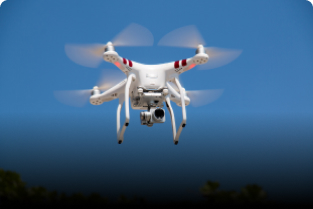
Drones have quickly evolved from being military tools to everyday gadgets used in photography, agriculture, logistics, and even disaster relief. But have you ever wondered what type of engineer is behind the design and development of drones? Building a drone requires expertise from multiple engineering disciplines, each contributing to different aspects of its creation.
1. Aerospace Engineers
Aerospace engineers play a central role in drone development. They focus on:
-
Aerodynamics: Designing the drone’s structure to ensure it can fly smoothly and efficiently.
-
Flight Systems: Working on navigation, stability, and flight mechanics.
-
Material Selection: Choosing lightweight yet durable materials for the drone’s body.
2. Mechanical Engineers
Mechanical engineers handle the mechanical design and moving parts of the drone. Their work includes:
-
Designing the propellers, motors, and gear systems.
-
Ensuring proper heat dissipation so the drone doesn’t overheat.
-
Working on durability to handle stress, vibrations, and crashes.
3. Electrical and Electronics Engineers
Every drone relies on electrical systems to function. These engineers are responsible for:
-
Designing power systems, including batteries and energy efficiency.
-
Creating control circuits that power motors and sensors.
-
Developing communication systems between the drone and its controller.
4. Computer and Software Engineers
Today’s drones are “smart,” thanks to their software. Computer engineers handle:
-
Autonomous Navigation: Programming drones to avoid obstacles and follow flight paths.
-
AI Integration: Enabling drones to recognize objects, track movements, and process real-time data.
-
Control Apps: Designing mobile and desktop software for pilots to control drones.
Drone Engineering
Since drones are essentially flying robots, robotics engineers contribute to:
-
Integrating sensors like GPS, cameras, and LiDAR.
-
Enhancing motion control for precise flying.
-
Developing algorithms for autonomous or semi-autonomous flight.
6. Systems Engineers
Systems engineers ensure that all the drone’s components — mechanical, electrical, and software — work seamlessly together. They coordinate different teams and oversee the full product lifecycle, from design to testing.
Final Thoughts
So, what type of engineer makes the drone? The answer is not just one, but a collaboration of aerospace, mechanical, electrical, computer, robotics, and systems engineers. Each brings specialized knowledge to create drones that are not only capable of flying but also smart, efficient, and reliable.


