
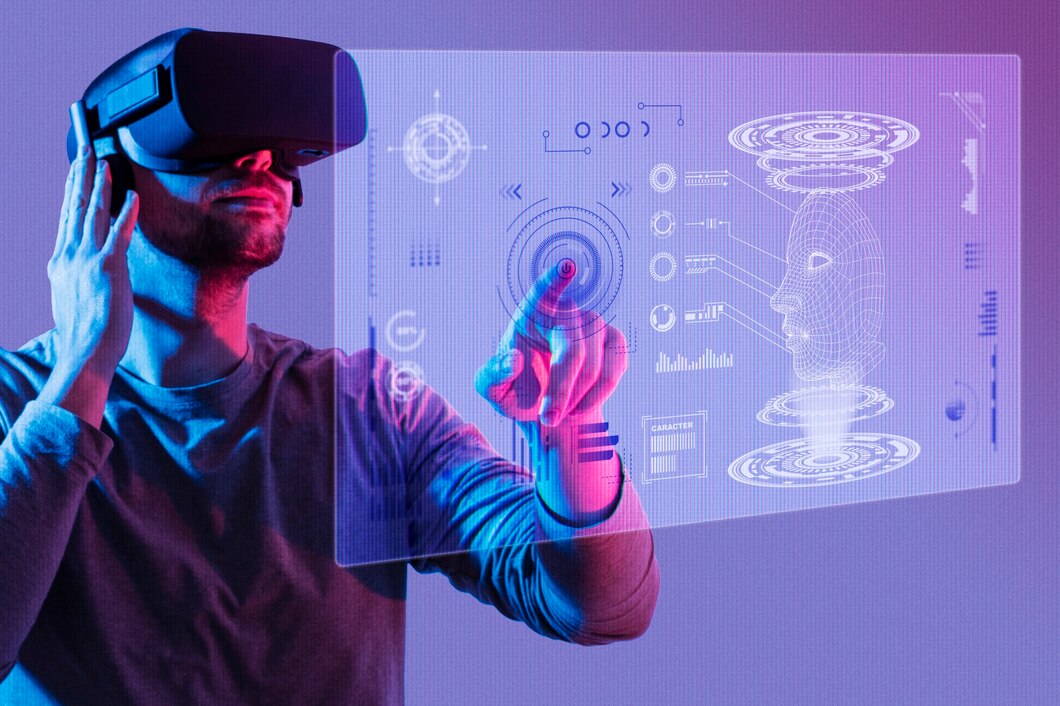
Technology is evolving faster than ever, and one of the biggest questions today is whether augmented reality (AR) and virtual reality (VR) will eventually replace the devices we use every day—smartphones and desktops. With Apple Vision Pro, Meta Quest, Microsoft HoloLens, and dozens of new AR glasses entering the market, it’s natural to wonder if the next major shift in computing is already here.
So, will AR/VR take over completely? Or will smartphones and desktops continue to dominate? Let’s explore.
What AR and VR Bring to the Table
1. A More Immersive Experience
AR blends the digital world with the real one, while VR creates a fully immersive virtual space.
These technologies offer experiences that smartphones or computers simply cannot match—whether it’s 3D gaming, virtual workspaces, or interactive learning environments.
2. Hands-Free Productivity
AR headsets and smart glasses allow users to interact with digital information without touching a screen.
This could revolutionize how we work—imagine editing documents, attending meetings, or designing 3D models entirely in your field of view.
3. Enhanced Personalization
AR can overlay navigation, notifications, or contextual data on your surroundings.
VR can adapt environments to suit your task—work, entertainment, or learning—giving users tailor-made digital spaces.
Why AR/VR Won’t Completely Replace Smartphones or Desktops (At Least Soon)
Even with incredible potential, there are several reasons why AR/VR will not fully replace traditional devices anytime soon.
1. High Cost and Limited Accessibility
Most advanced AR/VR devices today are expensive.
Smartphones, on the other hand, are affordable, available everywhere, and easy to use.
2. Comfort and Wearability Issues
Headsets can feel heavy, warm, or uncomfortable for long use.
People prefer lightweight, pocket-sized devices—and that’s where smartphones excel.
3. Battery Life Constraints
AR glasses and VR headsets consume massive amounts of power, leading to short battery life.
Modern users expect all-day battery performance, something AR/VR hasn’t achieved yet.
4. Lack of Universal Apps and Ecosystem
Smartphones and desktops have mature ecosystems with millions of apps.
AR/VR ecosystems are still developing, and developers haven’t fully shifted to immersive-native applications.
5. Social Acceptance and Privacy Concerns
Most people are not yet comfortable wearing headsets or smart glasses in public.
Cameras and sensors also raise privacy questions—similar to what happened with Google Glass.
How AR/VR Will Coexist with Smartphones and Desktops
Instead of replacement, the more realistic future is integration and coexistence.
1. AR as a Companion to Smartphones
AR glasses may connect wirelessly to your phone, serving as a lightweight display rather than a standalone device.
2. VR as a Supplement to Desktops
VR will be used for specialized tasks like:
-
Gaming
-
3D modelling
-
Virtual meetings
-
Remote training
But desktops will still be needed for heavy computing tasks.
3. Mixed Reality Work Environments
Global tech companies are building “virtual desktops,” allowing users to open multiple screens in VR or AR.
These experiences may complement rather than replace traditional computers.
Future Possibility: Could AR/VR Eventually Replace Smartphones?
In the far future, yes—it’s possible.
If AR glasses become:
-
lightweight
-
affordable
-
socially accepted
-
long-lasting
-
extremely powerful
…they could evolve into the next “universal device.”
But this might take 10–20 years or more.
Even then, desktops might remain for professional, high-performance tasks like development, editing, and scientific computing.
Conclusion
AR and VR represent the next frontier in digital interaction, offering immersive, powerful ways to experience the world. However, they are not yet ready to replace the devices we rely on today. Smartphones and desktops are deeply rooted in convenience, affordability, and practicality.
In the near future, AR and VR are more likely to enhance our digital experiences—not take over entirely. Over time, these technologies may evolve into mainstream computing platforms, but for now, they will coexist with the devices we use every day.


