
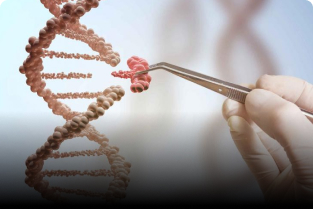
Human beings have always dreamed of surpassing natural limits—running faster, thinking sharper, living longer, or healing quicker. Today, this age-old desire is no longer confined to myth or science fiction. Thanks to breakthroughs in nanotechnology and genetic engineering, scientists are exploring ways to enhance human abilities beyond what traditional training or discipline can achieve.
But the big question remains: Will the future of superhuman abilities depend more on technology, or can exceptional training still unlock extraordinary performance?
Let’s break it down.
The Case for Technology: Nanotechnology and Genetic Engineering
1. Nanotechnology: Enhancing the Body at a Microscopic Level
Nanotechnology works at the scale of atoms and molecules. It has the potential to:
-
Repair tissues instantly using nanoscale robots
-
Boost muscle strength by manipulating muscle fibers
-
Enhance brain function, memory, and reflexes
-
Improve oxygen efficiency, allowing humans to run or swim longer
-
Deliver precise drugs that optimize cellular performance
Future nanobots could continuously monitor the body, clear toxins, repair damage, and optimize physical or mental performance beyond natural limits.
2. Genetic Engineering: Editing or Upgrading Our DNA
With technologies like CRISPR, genetic engineering can modify or enhance traits even before birth. Potential applications include:
-
Increasing muscle mass and bone density
-
Enhancing vision, including night or thermal vision
-
Strengthening immune systems
-
Boosting intelligence, memory, or learning abilities
-
Delaying aging or extending lifespan
While still in early stages, genetic engineering theoretically allows humans to design traits rather than train for them.
The Catch:
Ethical concerns, unequal access, and long-term safety risks make widespread use of these technologies complicated. But scientifically, the capability is growing rapidly.
The Case for Traditional Training: The Human Body’s Natural Potential
Even without technology, humans have reached astonishing physical and mental feats. Consider:
-
Marathon runners and ultra-athletes who push past normal endurance
-
Gymnasts and acrobats who achieve incredible strength and flexibility
-
Memory champions who can recall hundreds of items in minutes
-
Martial artists who break bricks, withstand pressure, or react with lightning speed
-
Monks who regulate heartbeat, body temperature, or stress levels through meditation
These achievements prove one thing: The human body can stretch far beyond what most people believe—through discipline, training, and mindset.
What Training Alone Can Realistically Achieve
-
Significant increases in strength, flexibility, and endurance
-
Enhanced cognitive abilities and memory
-
Improved emotional control and focus
-
Mastery of skills that seem “superhuman” but are naturally possible
However, there are boundaries. No amount of training will let a human:
-
Run 100 km/h
-
Lift a car with bare hands
-
See in the dark
-
Regenerate lost limbs
-
Avoid aging completely
Training maximizes your biology—but it cannot rewrite it.
So, Which Path Leads to “Superhuman” Abilities?
1. Training Can Make You Extraordinary, But Not Beyond Human Limits
With dedication, humans can achieve elite performance—sometimes appearing superhuman. But these abilities still fall within natural boundaries.
2. Technology Can Break Biological Limits
Nanotechnology and genetic engineering can potentially push humans into a new category—where our physical and cognitive abilities exceed anything nature allows.
3. The Future Is a Combination of Both
The most realistic scenario is a hybrid:
-
Training builds discipline, adaptability, and natural skill.
-
Technology enhances abilities, prevents limitations, and accelerates performance.
Just like athletes today use supplements, sensors, and biomechanics, future humans may use nanobots and gene edits as part of their training toolkit.
Conclusion: The Path to Superhuman Feats Is Evolving
Human potential is no longer limited to what we’re born with. While years of training can push us to incredible heights, nanotechnology and genetic engineering could one day open doors to abilities currently considered impossible.
In the future, achieving “superhuman” feats may not be a question of technology versus training, but technology enhancing what training begins.


