
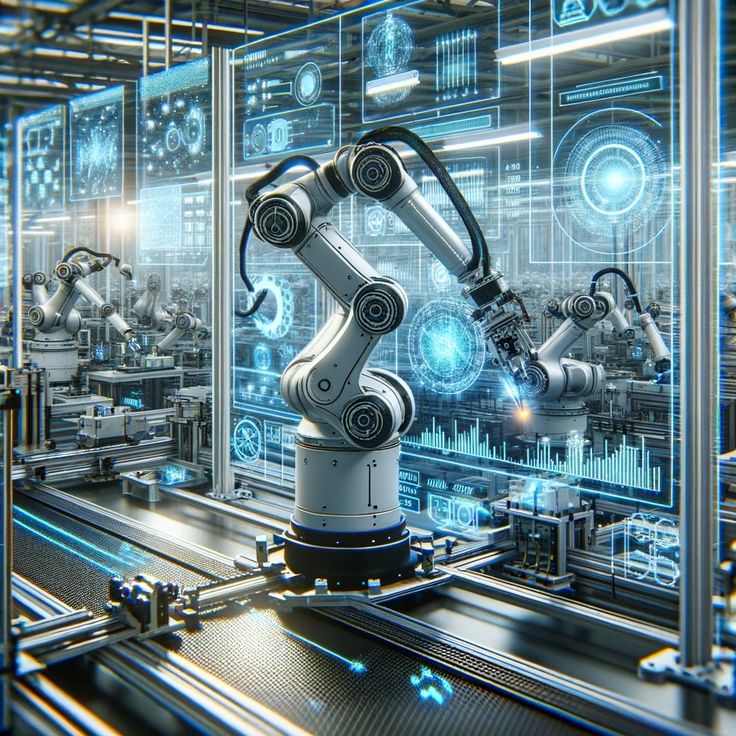
As technology continues to advance at an unprecedented pace, robotics is emerging as one of the most transformative fields of the 21st century. From automated factories to intelligent home assistants, self-driving cars, healthcare robots, and defense systems, robotics is becoming deeply embedded in almost every industry. This rapid integration has sparked a common question: Will robotics engineers be among the most in-demand professionals in the future?
The short answer — yes, absolutely. Robotics engineering is set to become one of the fastest-growing and most in-demand careers globally. Here’s a detailed breakdown of why.
1. Automation Is Becoming Inevitable
Industries are increasingly adopting automation to improve efficiency, reduce costs, and minimize human error. Robotics engineers will be essential in designing, building, and maintaining automated systems used in:
-
Manufacturing and assembly lines
-
Warehousing and logistics
-
Healthcare and pharmacy automation
-
Agriculture and food processing
-
Retail and service industries
As automation becomes mainstream, the need for robotics engineers will rise sharply.
2. Growth of AI and Intelligent Machines
AI-powered robotics is the next big leap. Robotics engineers who understand artificial intelligence, machine learning, and computer vision will play a major role in creating intelligent robots that can:
-
Make decisions
-
Learn from their environment
-
Interact naturally with humans
-
Perform complex tasks autonomously
This fusion of robotics and AI is already driving demand for highly skilled engineers.
3. Expansion of Industries Using Robots
Robotics is no longer limited to manufacturing. Many industries in India and worldwide are now heavily investing in robotics, including:
-
Healthcare – surgical robots, rehabilitation robots, eldercare robots
-
Agriculture – crop monitoring drones, robotic harvesters
-
Defense – unmanned ground vehicles, surveillance robots
-
Construction – bricklaying robots, inspection robots
-
Hospitality – service and delivery robots
-
Transportation – autonomous vehicles
Each of these sectors is creating new job roles for robotics engineers.
4. Rise of Industry 4.0 and Smart Factories
Industry 4.0 focuses on automation, smart sensors, IoT, and data-driven manufacturing. Robotics engineers are crucial for:
-
Developing robotic arms and AGVs
-
Integrating sensors and IoT devices
-
Ensuring seamless communication between machines
-
Implementing predictive maintenance systems
As more companies adopt Industry 4.0, robotics engineering will continue to be a core skill.
5. Demand for Human-Robot Collaboration (Cobots)
Collaborative robots — or cobots — are designed to work safely alongside humans. They are becoming increasingly popular due to their flexibility and cost-effectiveness.
Robotics engineers are responsible for:
-
Programming cobots
-
Integrating them into workflows
-
Ensuring safety protocols
-
Optimizing productivity
The rise of cobots directly increases the demand for skilled engineers.
6. Shortage of Skilled Robotics Professionals
Globally, there is a shortage of robotics engineers with expertise in:
-
Mechanical design
-
Embedded systems
-
AI and machine learning
-
Computer vision
-
Automation and control systems
-
Electronics and mechatronics
This skill gap ensures strong future demand and high salaries for qualified professionals.
7. Robotics in Everyday Life
Robots are quickly becoming part of daily life — from robot vacuums to smart assistants, home automation systems, and personal robots. As consumer robotics grows, so will opportunities in:
-
Product design
-
Software development
-
Hardware engineering
-
UX for robot-human interaction
-
Maintenance and customer support
This consumer wave will create millions of new jobs globally.
8. Government and Corporate Investments
Many countries, including India, China, the U.S., Japan, and South Korea, are heavily investing in robotics programs. India’s Production-Linked Incentive (PLI) schemes and startup ecosystem are accelerating growth in robotics startups and research labs.
More investment = more innovation = more jobs for robotics engineers.
9. Robotics Roles Will Evolve, Not Disappear
Even as robots automate routine tasks, new roles will emerge in:
-
Robot ethics and safety
-
Robotics data analysis
-
AI-robot integration
-
Robotic applications in education
-
Maintenance and field service engineering
This ensures long-term career stability.
Final Verdict: A Resounding YES
Robotics engineers will be among the most in-demand professionals of the future, driven by:
-
Widespread automation
-
AI integration
-
New industry adoption
-
Government and corporate investments
-
A global shortage of skilled talent


