
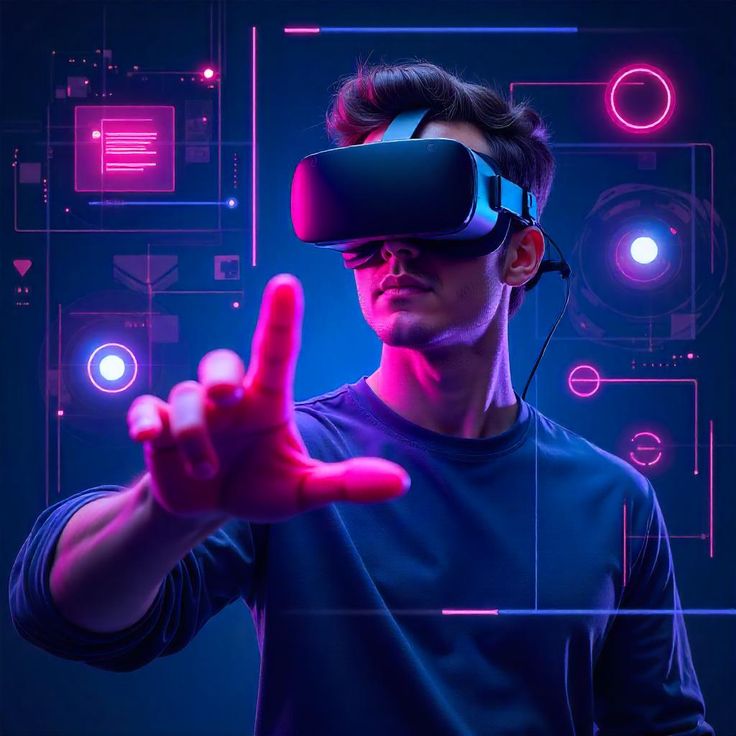
Augmented Reality (AR) and Virtual Reality (VR) are no longer futuristic buzzwords—they are powerful technologies reshaping how we play, learn, and conduct business. From immersive virtual worlds to interactive digital overlays, AR and VR are unlocking new possibilities across industries and redefining user experiences.
What Are AR and VR?
Augmented Reality (AR)
AR overlays digital elements—such as 3D objects, text, or animations—onto the real world. You still see your physical environment, but enhanced through your device’s camera or smart glasses.
Examples include:
- AR filters on social apps
- Navigation overlays
- Interactive product try-ons in shopping apps
Virtual Reality (VR)
VR immerses users in a fully digital environment using headsets and controllers. It replaces the real world with a simulated one, allowing for complete immersion.
Examples include:
- VR games
- Virtual travel experiences
- Simulated training environments
How AR and VR Are Transforming Gaming
The gaming industry has been one of the biggest beneficiaries of AR and VR, bringing players closer to the action than ever before.
1. Immersive Gameplay
VR headsets allow players to step inside virtual worlds, interact with objects naturally, and experience games from a first-person perspective unlike anything traditional consoles offer.
2. AR Mobile Gaming
AR has turned everyday environments into gaming arenas. Games that place virtual characters and objects in the real world create a unique, interactive experience.
3. Social & Multiplayer VR Worlds
Players can meet, compete, or collaborate in shared virtual spaces—building an entirely new category of social gaming.
AR and VR in Education: Learning Beyond the Classroom
Education systems around the world are adopting AR and VR to deliver more engaging, practical, and effective learning experiences.
1. Virtual Classrooms
VR allows students to attend immersive lessons—whether exploring ancient civilizations, walking through the human body, or participating in virtual labs.
2. AR-Enhanced Textbooks and Learning Materials
AR apps bring diagrams and concepts to life when scanned, making complex topics easier to understand.
3. Skill-Based Training
VR is especially powerful for practical training:
- Medical students can perform virtual surgeries.
- Engineers can run mechanical simulations.
- Pilots can practice in lifelike VR cockpits.
This reduces risk, cost, and logistical challenges.
The Business Impact: Efficiency, Innovation, and Engagement
Businesses are using AR and VR to improve processes, enhance customer experience, and boost productivity.
1. Virtual Collaboration & Remote Work
VR meeting rooms provide a more human connection than video calls, allowing teams to brainstorm in shared 3D spaces.
2. AR for Product Visualization
Companies use AR to let customers:
- View furniture in their homes
- Try on accessories virtually
- Explore 3D product demos
This drives better buyer confidence and reduces return rates.
3. Training & Simulations
Risk-heavy industries such as manufacturing, defense, and construction use VR simulations to train workers safely and efficiently.
4. Marketing & Customer Engagement
AR-powered ads and VR brand experiences create memorable interactions that go far beyond traditional marketing.
Why AR and VR Are Here to Stay
AR and VR are rapidly evolving, supported by advancements in hardware, artificial intelligence, and 5G connectivity. Their real-world applications are expanding, and businesses are investing heavily in immersive technologies to stay competitive.
Key advantages include:
- Increased engagement
- Better retention in learning
- Enhanced customer experience
- Realistic simulations
- Improved decision-making
Conclusion
AR and VR are no longer experimental tech—they are revolutionizing gaming, education, and business by creating immersive, interactive experiences. As these technologies become more accessible, they will continue to transform how we work, learn, shop, and play.


