
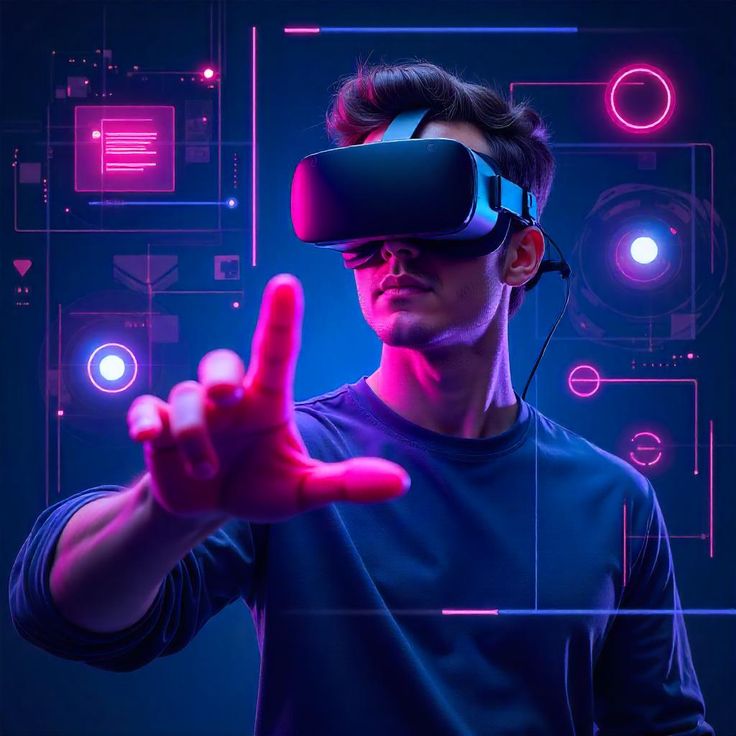
Technology is evolving at an unprecedented pace, and two of the most transformative innovations driving this change are Augmented Reality (AR) and Virtual Reality (VR). Once associated primarily with gaming and entertainment, AR and VR have expanded into healthcare, education, manufacturing, retail, real estate, engineering, and many other industries. These immersive technologies are changing how people learn, work, communicate, and interact with digital information.
As hardware becomes more affordable and software more advanced, AR and VR are becoming essential tools for businesses seeking innovation and competitive advantage. This article explores how these technologies are shaping the next generation of technology, their benefits, applications, challenges, and future potential.
What Is Augmented Reality (AR)?
Augmented Reality overlays digital content—such as images, animations, text, or 3D objects—onto the real world through smartphones, tablets, smart glasses, or AR headsets. Instead of replacing reality, AR enhances it by adding interactive digital elements.
Examples of AR Applications
- Interactive navigation
- Virtual furniture placement
- Retail product visualization
- Industrial maintenance support
- Medical training simulations
- Educational learning experiences
What Is Virtual Reality (VR)?
Virtual Reality creates a fully immersive digital environment that users experience through VR headsets and motion controllers. Users can interact with simulated environments that replicate real-world or fictional scenarios.
Common Uses of VR
- Gaming
- Professional training
- Flight simulation
- Virtual classrooms
- Medical procedures
- Architectural walkthroughs
- Remote collaboration
Why AR and VR Matter
AR and VR are transforming technology by creating more natural and engaging ways for people to interact with digital systems. Instead of relying solely on screens, keyboards, and touch interfaces, users can experience information in three-dimensional environments.
These technologies improve:
- User engagement
- Productivity
- Learning outcomes
- Customer experiences
- Design accuracy
- Remote collaboration
- Operational efficiency
Major Industries Being Transformed by AR and VR
1. Healthcare
Healthcare professionals increasingly use AR and VR for education, planning, and patient care.
Applications include:
- Surgical planning
- Anatomy visualization
- Medical education
- Pain management therapy
- Mental health treatment
- Physical rehabilitation
Medical students can safely practice procedures in virtual environments before treating real patients.
2. Education
Education is becoming more interactive with immersive learning experiences.
Students can:
- Visit historical landmarks virtually
- Explore the solar system
- Perform science experiments safely
- Learn anatomy using 3D models
- Participate in virtual laboratories
These experiences improve understanding and retention by making complex concepts easier to visualize.
3. Manufacturing
Manufacturers use AR and VR to improve productivity and reduce errors.
Common applications include:
- Equipment maintenance
- Employee training
- Factory planning
- Assembly guidance
- Product prototyping
Workers receive real-time instructions through AR devices, helping them complete tasks more efficiently.
4. Retail and E-commerce
Shopping experiences have become more personalized through AR.
Customers can:
- Try on clothes virtually
- Preview furniture in their homes
- Test cosmetics digitally
- Explore virtual showrooms
This reduces product returns and increases customer confidence before making purchases.
5. Real Estate
Property buyers no longer need to visit every location physically.
VR enables:
- Virtual property tours
- Interior design visualization
- Architectural presentations
- Construction planning
This saves both time and travel costs.
6. Gaming and Entertainment
Gaming remains one of the biggest drivers of AR and VR innovation.
Players can enjoy:
- Fully immersive gameplay
- Interactive storytelling
- Motion-controlled experiences
- Multiplayer virtual worlds
- Enhanced realism
Entertainment companies also use VR for concerts, museums, and live events.
7. Engineering and Design
Engineers and designers use immersive visualization to improve product development.
Benefits include:
- Faster prototyping
- Design collaboration
- Error detection
- Better visualization
- Reduced development costs
Complex engineering projects become easier to understand in virtual environments.
8. Corporate Training
Companies increasingly replace traditional training methods with immersive simulations.
Employees can safely practice:
- Safety procedures
- Customer interactions
- Equipment operation
- Emergency response
- Leadership scenarios
This approach improves learning while reducing risks and training expenses.
Benefits of AR and VR Technology
Enhanced Learning
Immersive environments improve knowledge retention through hands-on experiences.
Improved Productivity
Workers complete tasks faster using real-time digital guidance.
Better Customer Engagement
Interactive experiences increase customer satisfaction and purchasing confidence.
Cost Savings
Virtual simulations reduce travel, material waste, and training costs.
Increased Safety
Employees can practice hazardous tasks in virtual environments without real-world risks.
Faster Product Development
Design teams can identify issues earlier, reducing costly revisions.
Better Collaboration
Teams in different locations can work together in shared virtual spaces.
Emerging Technologies Driving AR and VR
Several innovations are accelerating the growth of immersive technologies.
Artificial Intelligence
AI enables:
- Intelligent virtual assistants
- Object recognition
- Personalized experiences
- Gesture recognition
- Voice interaction
5G Networks
High-speed connectivity allows:
- Lower latency
- Cloud rendering
- Real-time collaboration
- High-quality streaming
Cloud Computing
Cloud platforms reduce hardware limitations by processing complex graphics remotely.
Internet of Things (IoT)
AR devices can display real-time information from connected sensors and smart devices.
Challenges Facing AR and VR
Despite rapid progress, some obstacles remain.
High Hardware Costs
Premium headsets and accessories can still be expensive for many users and organizations.
Content Development
Creating high-quality immersive experiences requires specialized skills and significant investment.
Privacy Concerns
AR devices often collect visual and environmental data, raising questions about data security and user privacy.
Motion Sickness
Some VR users experience discomfort during prolonged sessions, although newer devices continue to improve comfort.
Battery Life
Portable AR and VR devices still face limitations in battery performance.
Career Opportunities in AR and VR
Demand for professionals with AR and VR expertise continues to grow.
Popular career paths include:
- AR Developer
- VR Developer
- Unity Developer
- Unreal Engine Developer
- 3D Artist
- UI/UX Designer
- XR Engineer
- Simulation Developer
- Technical Artist
- Product Designer
- Game Developer
- Digital Experience Designer
Professionals with skills in programming, 3D modeling, computer graphics, and user experience are especially well-positioned in this field.
The Future of AR and VR
The future of immersive technology looks exceptionally promising.
In the coming years, we can expect:
- More lightweight smart glasses
- AI-powered virtual assistants
- Advanced holographic displays
- Immersive remote workspaces
- Smarter healthcare solutions
- Enhanced educational platforms
- Digital twins for industries
- Wider adoption in everyday consumer applications
As computing power, connectivity, and display technology continue to improve, AR and VR will become increasingly integrated into daily life.
Conclusion
Augmented Reality and Virtual Reality are redefining how people interact with technology. Their applications extend far beyond gaming, enabling innovation in healthcare, education, manufacturing, retail, engineering, and countless other industries. By improving learning, collaboration, productivity, and customer experiences, AR and VR are laying the foundation for the next generation of digital transformation.


