
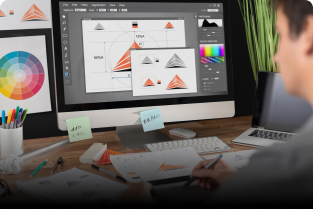
In today’s visually driven digital world, graphic design plays an important role in how businesses, brands, and individuals communicate with their audiences. From logos and social media graphics to websites, advertisements, packaging, and mobile applications, graphic design combines creativity and technology to deliver meaningful visual communication.
As businesses increasingly compete for attention online, skilled graphic designers are becoming valuable professionals who can transform ideas and messages into attractive, memorable, and effective visual experiences.
What Is Graphic Design?
Graphic design is the process of creating visual content to communicate information, ideas, or messages. It combines elements such as typography, color, images, shapes, layouts, and illustrations to create designs that are both visually appealing and purposeful.
Graphic design is not simply about making something look attractive. Effective design helps people understand information, recognize a brand, navigate a digital product, and take action.
Why Is Graphic Design Important?
Graphic design has become essential for modern businesses because visual communication can strongly influence how people perceive a brand.
Some major benefits include:
- Building brand identity: Logos, colors, fonts, and visual styles help establish a recognizable brand.
- Improving communication: Well-designed visuals can make complex information easier to understand.
- Increasing engagement: Attractive content can capture attention on websites and social media.
- Creating professionalism: Consistent design can make a business appear more credible and trustworthy.
- Supporting marketing: Advertisements, brochures, banners, presentations, and digital campaigns all depend on effective visual communication.
Major Areas of Graphic Design
Graphic design offers opportunities across numerous specializations.
1. Branding and Identity Design
Brand designers create visual identities that represent businesses and organizations. This can include logos, typography, color systems, brand guidelines, business cards, and marketing materials.
2. UI and Digital Design
Digital designers create visual interfaces for websites, applications, dashboards, and other digital platforms. Their work focuses on usability, visual hierarchy, consistency, and user interaction.
3. Social Media Design
Businesses need engaging visuals for platforms such as Instagram, LinkedIn, Facebook, YouTube, and other digital channels. Social media designers create posts, advertisements, banners, thumbnails, and campaign graphics.
4. Advertising Design
Advertising designers develop visuals for online and offline marketing campaigns. Their goal is to communicate a promotional message quickly while attracting the target audience.
5. Packaging Design
Packaging designers create the visual appearance of products, including boxes, bottles, labels, and containers. Effective packaging can influence purchasing decisions and strengthen brand recognition.
6. Publication Design
Publication designers work on magazines, books, brochures, reports, catalogs, newsletters, and other printed or digital publications. They focus heavily on typography, layout, readability, and visual consistency.
7. Motion Graphics
Motion graphic designers combine graphic design with animation, video, and visual effects. Their work is commonly used in advertisements, social media videos, presentations, films, and digital campaigns.
Essential Skills for a Graphic Designer
A successful graphic designer needs more than creativity. A combination of technical, artistic, and communication skills is important.
Creativity
Designers need to generate original ideas and find interesting visual solutions to communication problems.
Typography
Understanding fonts, spacing, hierarchy, alignment, and readability is essential for creating professional designs.
Color Theory
Knowledge of color psychology, contrast, harmony, and color combinations helps designers create effective visual experiences.
Layout and Composition
Designers must understand how to organize text, images, shapes, and other elements so that viewers can easily understand the message.
Software Skills
Professional designers should become comfortable with commonly used design tools for illustration, photo editing, layout, interface design, and motion graphics.
Communication
Designers often work with clients, marketers, developers, content writers, and other professionals. Strong communication skills help them understand requirements and explain design decisions.
Problem-Solving
Graphic design is fundamentally a communication problem-solving discipline. A designer must determine how visual elements can best communicate a specific message to a specific audience.
Popular Tools Used in Graphic Design
Technology has transformed the graphic design industry. Designers can use a wide range of software depending on their specialization.
Common categories of tools include:
- Vector design software
- Photo-editing software
- Layout and publishing software
- UI/UX design platforms
- Video and motion graphics software
- Illustration applications
- Online design and collaboration tools
Learning several tools can increase a designer’s flexibility, but understanding design principles is more important than simply knowing how to operate software.
Graphic Design and Artificial Intelligence
Artificial intelligence is becoming an important part of the creative industry. AI-powered tools can help designers generate ideas, explore concepts, remove backgrounds, create variations, automate repetitive tasks, and accelerate parts of the creative workflow.
However, successful design still requires human judgment. Understanding the target audience, brand strategy, storytelling, composition, usability, and communication remains essential.
Rather than viewing AI only as a replacement for designers, professionals can learn to use it as a productivity and ideation tool while developing strong creative and strategic skills.
Career Opportunities in Graphic Design
Graphic design can lead to a variety of career paths, including:
- Graphic Designer
- Brand Identity Designer
- Visual Designer
- UI Designer
- Digital Designer
- Social Media Designer
- Packaging Designer
- Publication Designer
- Motion Graphics Designer
- Art Director
- Creative Director
- Freelance Designer
Designers can work in advertising agencies, technology companies, publishing organizations, e-commerce businesses, media companies, startups, marketing departments, or as independent freelancers.
How to Start a Career in Graphic Design
If you want to become a graphic designer, you can follow a structured learning path.
Step 1: Learn the Fundamentals
Start with typography, color theory, composition, visual hierarchy, grids, branding, and basic design principles.
Step 2: Learn Design Software
Choose tools relevant to your career goals and practice using them regularly.
Step 3: Recreate Existing Designs
Recreating professional designs for practice can help you understand layout, typography, spacing, and visual hierarchy. Use these exercises for learning rather than presenting them as original client work.
Step 4: Create Original Projects
Develop posters, logos, social media campaigns, landing pages, brand identities, packaging concepts, or other projects that demonstrate your abilities.
Step 5: Build a Strong Portfolio
A portfolio is one of the most important assets for a designer. Instead of showing every project you have created, focus on your strongest work and explain the design problem, your process, and the final solution.
Step 6: Gain Real-World Experience
Internships, freelance projects, personal projects, collaborations, and entry-level positions can help you develop practical experience.
The Future of Graphic Design
The future of graphic design is closely connected to digital technology, branding, artificial intelligence, immersive experiences, and interactive media.
Designers are increasingly expected to work across multiple platforms rather than focusing only on traditional print materials. Businesses need visual content for websites, applications, social media, video, e-commerce, digital advertising, and emerging technologies.
This means designers who combine creative thinking, technology, branding knowledge, communication skills, and adaptability can remain competitive in a changing industry.
Final Thoughts
Graphic design is much more than creating attractive images. It is a powerful form of communication that helps brands tell stories, businesses connect with customers, and audiences understand information.


