
As robotics, automation, and unmanned aerial vehicles (UAVs) continue to revolutionize industries, many engineering students and professionals wonder: Can a mechanical engineer build robots and drones?
The short answer is yes—absolutely! In fact, mechanical engineers play a critical role in designing and building robotic systems and drones. Their skill set forms the foundation of how these machines move, function, and survive in real-world environments.
1. Mechanical Engineers Understand the Core of Robotics
Robots are complex systems that combine mechanics, electronics, and software. Mechanical engineers are responsible for the physical structure and movement mechanisms of robots. They design:
- Frames and bodies
- Joints and actuators
- Gear systems
- Moving arms and end-effectors
- Wheels, tracks, or legs
Without solid mechanical design, a robot simply cannot function effectively.
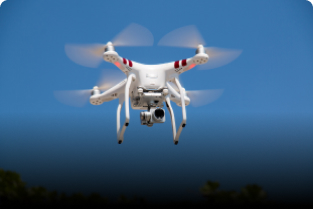
2. Drone Development Relies Heavily on Mechanical Engineering
Drones require precise engineering to maintain balance, lift, and stability. Mechanical engineers contribute by designing:
- Aerodynamic frames
- Rotor mechanisms
- Lightweight structures
- Vibration control systems
- Heat management solutions
The efficiency and performance of a drone largely depend on its mechanical design.
3. Skills Mechanical Engineers Bring to Robotics and Drones
Mechanical engineers come equipped with essential skills that are directly applicable to robotics and UAVs:
- CAD modeling (SolidWorks, AutoCAD, CATIA)
- Mechanics of materials and structures
- Dynamics and vibration analysis
- Thermodynamics
- Fluid mechanics (for aerodynamics in drones)
- Manufacturing processes
These skills help them build robots and drones that are efficient, durable, and optimized for performance.
4. Learning Electronics and Programming Complements Their Expertise
While mechanical engineering forms the backbone, robotics and drones also require:
- Basic electronics
- Embedded systems
- Sensor integration
- Control systems
- Programming (Python, C++, ROS)
Mechanical engineers who add these skills become fully capable of building complete robotic systems from scratch.
5. The Role of Interdisciplinary Collaboration
Modern robotics teams include mechanical engineers, electrical engineers, computer scientists, and AI specialists. Mechanical engineers often work closely with these professionals to develop:
- Autonomous robots
- AI-powered drones
- Industrial robots
- Medical robots
- Humanoid systems
This collaborative environment allows mechanical engineers to actively shape innovative robotic solutions.
6. Real-World Examples of Mechanical Engineers in Robotics
Mechanical engineers work in companies and sectors such as:
- Robotics manufacturing
- Aerospace and drone companies
- Automotive automation
- Defense robotics
- Biomechanics and medical robotics
Their role is indispensable in turning ideas into working machines.
Conclusion
Mechanical engineers absolutely can—and do—build robots and drones. Their deep understanding of mechanics, structure, and motion gives them the perfect foundation for robotics and UAV development. By combining their mechanical skills with knowledge of electronics and programming, they can become key contributors to some of the most exciting technological advancements of our time.


