Are Hybrid & Electric Vehicles Really Better for the Environment?

As the world shifts toward cleaner and smarter mobility, hybrid and electric vehicles (EVs) have become the symbols of an eco-friendly future. Governments promote them, companies invest heavily in them, and consumers are increasingly preferring them over traditional gasoline-powered cars.
But an important question remains: Are hybrid and electric vehicles really better for the environment?

To answer this, we must look beyond advertisements and understand how these vehicles impact the environment throughout their entire lifecycle.


1. Zero Tailpipe Emissions: A Big Win for EVs

The most significant environmental advantage of electric vehicles is that they produce no tailpipe emissions.
This means:

  • No carbon dioxide (CO₂) released during driving
  • No nitrogen oxides (NOx)
  • No particulate matter

In congested cities, this drastically improves air quality, reducing health issues related to air pollution.

Hybrids, while not fully emission-free, still offer:

  • Lower emissions
  • Better fuel efficiency
  • Reduced dependence on fossil fuels

This makes both options far cleaner than conventional petrol or diesel cars.


2. But What About Electricity Generation?

The environmental friendliness of EVs depends largely on the source of the electricity used to charge them.

If electricity comes from renewable sources:

  • Solar
  • Wind
  • Hydropower

EVs become almost carbon-neutral during use.

If electricity comes from fossil fuels:

  • Coal
  • Natural gas

The emissions are not eliminated—they’re simply moved from the car’s tailpipe to the power plant.

However, studies show that even when charged using coal-based electricity, EVs still produce lower total emissions than petrol vehicles due to higher efficiency.


3. Battery Production Has an Environmental Cost

One of the biggest concerns is the environmental impact of lithium-ion battery production, which requires:

  • Lithium
  • Cobalt
  • Nickel
  • Rare earth metals

Mining these materials leads to:

  • Soil and water pollution
  • High carbon emissions
  • Habitat destruction

But the good news is:

  • Battery technology is becoming more sustainable
  • Recycling programs are expanding
  • New chemistries like LFP (Lithium Iron Phosphate) reduce dependence on rare metals

Still, battery manufacturing remains a challenge we must acknowledge.


4. Longer Lifespan Means Lower Overall Emissions

When comparing environmental impacts, it’s important to look at a vehicle’s entire lifecycle—manufacturing, usage, and disposal.

Over a typical lifespan:

  • EVs emit significantly less CO₂
  • Hybrids also outperform petrol cars in total emissions
  • Improved battery durability reduces waste

Even if producing an EV initially generates more pollution, its long-term savings outweigh that cost.


5. Lower Noise Pollution

Hybrid and electric vehicles contribute to a cleaner environment not just through reduced emissions but also through reduced noise levels.

Quiet roads lead to:

  • Healthier communities
  • Lower stress levels
  • Better urban living conditions

This is an often overlooked but valuable environmental benefit.


6. Recycling & Reuse Are Improving Rapidly

Battery recycling is still developing, but progress is steady.
Modern recycling technologies can recover:

  • Lithium
  • Cobalt
  • Nickel
  • Other metals

This reduces mining needs and cuts environmental harm. Many manufacturers now design batteries that are easier to recycle or repurpose for energy storage systems.


7. What About Hybrid Vehicles?

Hybrids act as a bridge between traditional and fully electric vehicles. Their benefits include:

  • Better fuel efficiency
  • Lower emissions
  • Reduced fuel consumption

However, they still rely partly on fossil fuels. While hybrids are greener than petrol cars, EVs remain the cleaner long-term choice.


Final Verdict: Yes—But With Conditions

So, are hybrid and electric vehicles really better for the environment?

✔ Yes, they are—overall.

EVs offer the lowest emissions, especially when powered by clean energy.
Hybrids reduce fuel consumption and pollution, making them a solid eco-friendly choice.

How DSA Can Transform Your Problem-Solving Skills

In the fast-growing world of technology, problem-solving is one of the most valuable skills a programmer can possess. Whether you’re preparing for coding interviews, building real-world applications, or optimizing software performance, the foundation of strong problem-solving lies in Data Structures and Algorithms (DSA).

But how exactly does learning DSA transform your ability to think, analyze, and solve problems? Let’s break it down.


1. DSA Helps You Think Logically

Data Structures and Algorithms train your mind to break down big problems into smaller, manageable parts.
You begin to see patterns, understand constraints, and identify relationships between different parts of the problem.

For example:

  • When handling multiple tasks, you naturally think of queues.
  • When navigating choices, trees and graphs come to mind.
  • When organizing or searching data, sorting and search algorithms become your instinct.

Over time, this structured thinking becomes second nature.


2. You Learn to Choose the Best Approach

Ever solved a problem but later realized it took too long or used too much memory?
DSA helps you compare solutions and choose the most efficient one.

You begin to ask:

  • Can I optimize this?
  • Does this approach scale?
  • Can another data structure perform better?

This leads to performance-focused thinking—an essential skill for real-world programming.


3. DSA Improves Speed and Accuracy

With practice, you learn standard patterns like:

  • Two-pointer technique
  • Sliding window
  • Dynamic programming
  • Binary search applications

These techniques allow you to quickly identify the type of problem and apply a powerful, proven solution.

This saves time during:

  • Coding interviews
  • Competitive programming
  • Software development

Your accuracy improves because DSA gives you the tools to solve problems systematically.


4. Makes You a Better Debugger

Understanding how data flows through algorithms helps you find and fix bugs faster.

For example:

  • Knowing how recursion works improves debugging in tree or backtracking problems.
  • Understanding memory usage helps catch errors in dynamic arrays or pointers.

With DSA, debugging becomes more logical and less of a guessing game.


5. Enhances Creativity in Problem-Solving

It may sound surprising, but DSA doesn’t limit creativity—it enhances it.

Once you know how different algorithms work, you start combining concepts:

  • Using a heap with a hash map to design an efficient scheduler
  • Applying graphs to model social networks
  • Mixing greedy algorithms with dynamic programming for optimal solutions

Your mind starts exploring multiple ways to approach the same problem.


6. Prepares You for Technical Interviews

Most tech companies evaluate your ability to solve problems using DSA.
By learning DSA deeply, you build:

  • Confidence
  • Speed
  • Strategy

You not only understand how to code but also how to think like a computer scientist.


7. Helps in Writing Clean, Optimized Code

DSA teaches you:

  • How to handle large datasets
  • How to reduce time complexity
  • How to improve performance

This makes your code more efficient, professional, and maintainable—an essential skill for any developer.


Final Thoughts

DSA is more than a subject—it’s a mindset.
It sharpens your logic, strengthens your reasoning, and helps you tackle problems with confidence and creativity.

Everything You Need to Know About Embedded Systems Architecture

Embedded systems are everywhere—from smartphones and cars to medical devices and home appliances. Yet, most users never notice their presence. These tiny, intelligent systems silently power the modern digital world. At the heart of every embedded solution lies a well-designed embedded systems architecture.

In this blog, we’ll break down what embedded systems architecture is, how it works, its main components, and why it matters today.


What Is Embedded Systems Architecture?

Embedded systems architecture refers to the structure and design of a system that integrates hardware and software to perform a dedicated function.
Unlike general-purpose computers, embedded systems are task-specific, efficient, and optimized for real-time performance.

In simple terms:
It’s the blueprint that defines how hardware and software interact inside an embedded device.


Core Components of Embedded Systems Architecture

An embedded system is built around four fundamental components:

1. Microcontroller or Microprocessor

This is the “brain” of the system.

  • Microcontrollers (MCUs) combine processor, memory, and I/O on a single chip.
  • Microprocessors (MPUs) require external components but offer higher performance.

2. Memory

Embedded systems use two types of memory:

  • ROM – Stores firmware and system instructions
  • RAM – Stores temporary data during execution

3. Input/Output Interfaces

These allow the system to communicate with the external world through:

  • Sensors
  • Switches
  • Displays
  • Communication modules (UART, SPI, I2C, etc.)

4. Embedded Software

Also known as firmware, it controls the hardware and defines system behavior.


Types of Embedded Systems Architectures

Depending on complexity, embedded architecture can be categorized as:

1. Simple Control Loop Architecture

  • Used in low-cost, single-function devices
  • Executes one task repeatedly
  • Ideal for basic systems like timers or LED controllers

2. Interrupt-Driven Architecture

  • Responds to real-world events using interrupts
  • More efficient and reactive
  • Common in motor control and medical devices

3. Real-Time Operating System (RTOS) Architecture

  • Manages multiple tasks with strict timing deadlines
  • Provides task scheduling, inter-task communication, and synchronization
  • Ideal for robotics, automotive systems, and aerospace applications

4. Layered Architecture

  • Software is divided into layers: hardware layer, HAL, OS, applications
  • Improves scalability and code reusability

How Embedded Systems Architecture Works

Embedded architecture ensures that hardware and software work together seamlessly through:

✔ Hardware Abstraction

A Hardware Abstraction Layer (HAL) hides hardware complexity from software developers.

✔ Task Management

Tasks are scheduled based on priority, deadlines, or interrupts.

✔ Real-Time Processing

Systems must respond to inputs within strict timing constraints.

✔ Power Efficiency

Architectures are optimized to minimize energy consumption—crucial for battery-powered devices.

✔ Communication

Protocols like SPI, I2C, CAN, and UART enable data transfer within the system.


Applications of Embedded Systems Architecture

Embedded systems architecture powers dozens of industries, including:

1. Automotive

  • Engine Control Units (ECUs)
  • Parking sensors
  • Airbag deployment systems

2. Consumer Electronics

  • Smart TVs
  • Washing machines
  • Cameras and wearables

3. Healthcare

  • Heart monitors
  • Infusion pumps
  • Diagnostic machines

4. Industrial Automation

  • PLCs
  • Robotics
  • Machine controllers

5. Telecommunications

  • Routers
  • Network switches
  • Signal processors

Why Embedded Systems Architecture Matters

✔ Reliability

A well-designed architecture ensures stable operation for years.

✔ Performance

Optimized systems deliver fast, predictable performance.

✔ Safety

Critical industries like healthcare and automotive depend on fail-safe architecture.

✔ Scalability

Modular designs make future upgrades easier.

✔ Cost Efficiency

Efficient architectures reduce hardware requirements and development costs.


Final Thoughts

Embedded systems are at the core of modern technology, and their architecture determines how efficient, reliable, and intelligent these devices can be. Whether you’re a student, an engineer, or a tech enthusiast, understanding embedded systems architecture is essential for exploring the world of electronics, IoT, robotics, and automation.

Cloud Computing Demystified: How It Works & Why It Matters

Cloud computing has become one of the most transformative technologies of the digital age. From streaming movies and backing up photos to powering global businesses, the cloud is everywhere. But what exactly is cloud computing—and why does it matter so much today?

This blog breaks down cloud computing in simple terms, explains how it works, and highlights why organizations and individuals rely on it more than ever.


What Is Cloud Computing?

Cloud computing refers to delivering computing services—such as storage, servers, databases, software, networking, and analytics—over the internet (“the cloud”) instead of relying on local hardware.

In simpler words:
You use powerful computing resources remotely, without owning or managing them yourself.


How Cloud Computing Works

At its core, cloud computing is powered by a network of remote servers hosted in large data centers around the world. These servers store data, run applications, and manage workloads.

Here’s how the process works:

1. Remote Servers Handle the Work

Instead of your computer handling everything, cloud servers perform tasks like processing data, storing files, or running software.

2. Internet Connects You to the Cloud

You access cloud services through a web browser, mobile app, or API. This makes resources available anytime, from anywhere.

3. On-Demand Resources

Cloud platforms provide scalable resources—meaning you can increase or decrease computing power based on your needs.

4. Pay-As-You-Go Model

You only pay for what you use, similar to electricity or water. This makes the cloud cost-efficient for both individuals and businesses.


Types of Cloud Computing Services

Cloud computing is usually divided into three main service models:

1. Infrastructure as a Service (IaaS)

Provides virtualized computing infrastructure such as servers, networks, and storage.

2. Platform as a Service (PaaS)

Offers a ready-made environment for developers to build and deploy apps without managing hardware.

3. Software as a Service (SaaS)

Delivers ready-to-use software accessible via the internet—like email services or CRM tools.


Cloud Deployment Models

Cloud computing isn’t “one size fits all.” Organizations choose from:

  • Public Cloud – Shared infrastructure managed by cloud providers.
  • Private Cloud – Dedicated infrastructure for a single organization.
  • Hybrid Cloud – A mix of public and private cloud environments.
  • Multi-Cloud – Using multiple cloud providers for flexibility.

Why Cloud Computing Matters Today

Cloud computing is essential because it brings speed, flexibility, and innovation.

1. Cost Efficiency

No need to invest in expensive hardware or maintenance—cloud providers handle it.

2. Scalability

Businesses can scale up during peak times and scale down when not needed.

3. Better Collaboration

Teams in different locations can access the same data and tools instantly.

4. Disaster Recovery & Backup

The cloud automatically protects data, ensuring quick recovery in emergencies.

5. High Performance

Cloud data centers use the latest hardware, offering better speed and reliability.

6. Security Enhancements

Modern cloud platforms invest heavily in encryption, identity management, and threat detection.


Real-World Applications of Cloud Computing

Cloud computing is integrated into countless real-world scenarios:

  • Streaming services
  • Social media platforms
  • E-commerce websites
  • Health monitoring systems
  • Remote learning tools
  • Gaming platforms
  • Business analytics and AI models

Whether you’re uploading photos or running enterprise-level applications, cloud computing is working behind the scenes.


The Future of Cloud Computing

Emerging technologies like AI, IoT, blockchain, and edge computing are making the cloud even more powerful. As digital transformation accelerates, cloud computing will continue to be the foundation of innovation across industries.


Final Thoughts

Cloud computing is no longer optional—it’s essential. It simplifies business operations, drives innovation, reduces costs, and enables seamless digital experiences. By understanding how it works and why it matters, individuals and organizations can fully unlock the power of the cloud.

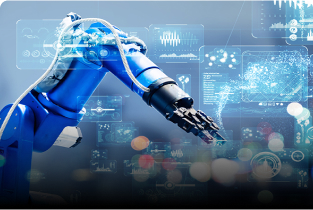
IoT + Robotics: The Next Wave of Intelligent Innovation

In a world driven by rapid technological advancements, two transformative technologies—the Internet of Things (IoT) and robotics—are coming together to create smarter, more autonomous, and deeply connected systems. This fusion is unlocking new possibilities across industries, from manufacturing and healthcare to agriculture and smart homes.

IoT provides the connectivity, while robotics provides the action. Combined, they form the backbone of the next generation of intelligent automation.


Understanding the Power of IoT in Robotics

At its core, IoT connects devices over the internet to collect, share, and analyze data. When applied to robotics, IoT enables:

  • Real-time communication between robots and cloud platforms
  • Remote monitoring and control
  • Predictive maintenance to reduce downtime
  • Enhanced situational awareness through sensors

Essentially, IoT transforms traditional robots into smart, autonomous robots capable of learning, adapting, and making data-driven decisions.


How Robotics Enhances IoT Systems

If IoT gives machines the ability to communicate, robotics gives them the ability to act.

Robots equipped with IoT capabilities can:

  • Perform tasks based on sensor-driven data
  • Make real-time adjustments
  • Collaborate with other connected devices
  • Interact with physical environments efficiently

This synergy makes IoT-enabled robots ideal for dynamic and unpredictable environments.


Real-World Applications of IoT + Robotics

1. Smart Manufacturing (Industry 4.0)

Factories now use connected robotic arms, AGVs (Automated Guided Vehicles), and assembly robots that communicate with sensors and control systems.
This leads to:

  • Higher precision
  • Lower error rates
  • Fully automated production lines

2. Healthcare Robotics

Robots connected through IoT networks assist in:

  • Remote surgeries
  • Patient monitoring
  • Medicine delivery
  • Disinfection using smart navigation

3. Agriculture Automation

IoT-powered agricultural robots perform:

  • Crop monitoring
  • Soil analysis
  • Precision spraying
  • Autonomous harvesting

This improves yields while reducing labor pressure.

4. Smart Homes & Service Robots

Robots like smart vacuum cleaners, lawnmowers, and delivery bots use IoT data to navigate efficiently and perform tasks with minimal human involvement.

5. Logistics & Warehousing

Connected robots automate inventory checks, packaging, and movement of goods, optimizing supply chains.


Benefits of Combining IoT with Robotics

✔ Greater Efficiency

Robots make informed decisions faster with real-time IoT data.

✔ Higher Accuracy

Sensors reduce errors and improve precision.

✔ Predictive Maintenance

IoT detects mechanical issues before they impact performance.

✔ Improved Safety

Robots can handle hazardous environments while humans monitor remotely.

✔ Scalability

Cloud-connected robots can learn, update, and scale across global operations.


Future Possibilities: Where This Innovation Is Heading

The next decade will see even deeper integration with technologies such as:

  • AI & Machine Learning
    Robots will learn from IoT-collected data and continuously improve.
  • 5G Connectivity
    Ultra-low latency communication will allow real-time robotic operations at scale.
  • Digital Twins
    Virtual robot replicas will help predict performance and prevent failures.
  • Swarm Robotics
    Groups of robots communicating via IoT will collaborate like intelligent colonies.

These advancements will push industries towards full autonomy, where machines operate seamlessly with minimal human intervention.


Conclusion

IoT and robotics are no longer separate fields—they are merging to create a new era of intelligent, connected, and autonomous systems. This powerful combination is driving innovation across industries and setting the stage for the future of automation.

The Rise of Machine Learning: Transforming Industries Worldwide

Machine Learning (ML) has rapidly evolved from a niche scientific concept to one of the most influential technologies shaping the modern world. It powers everything—from recommendation systems and fraud detection to self-driving cars and medical diagnostics. Tech leaders like Google, Microsoft, and OpenAI continue pushing the boundaries of what ML can achieve.

The rise of Machine Learning has ushered in a new era of automation, intelligence, and innovation across global industries.


What Is Fueling the Rise of Machine Learning?

Machine Learning’s growth is driven by multiple technological and societal advancements:

1. Explosion of Big Data

Companies now collect massive amounts of data, giving ML systems the fuel they need to learn and improve.

2. Powerful Algorithms & Deep Learning

Neural networks help machines recognize patterns in images, speech, and text with remarkable accuracy.

3. Cloud Computing Expansion

Platforms like Amazon Web Services and Microsoft Azure make ML scalable and accessible.

4. Widespread Digital Transformation

Businesses across sectors are embracing ML to stay competitive, optimize operations, and deliver personalized experiences.


How Machine Learning Is Transforming Major Industries

1. Healthcare

Machine Learning helps detect diseases early, predict patient risks, personalize treatments, and analyze medical images faster than traditional methods.

2. Finance

Banks use ML for fraud detection, automated trading, credit scoring, and customer support through chatbots.

3. E-commerce

Companies like Amazon use ML to offer product recommendations, optimize logistics, and enhance customer experience.

4. Transportation

Self-driving car technology—led by organizations such as Tesla—relies heavily on ML to interpret camera data, navigate roads, and ensure safety.

5. Manufacturing

ML improves supply chain management, predictive maintenance, and quality control through intelligent automation.

6. Entertainment & Media

Streaming services use ML to recommend movies, optimize content, and predict viewer trends.

7. Cybersecurity

Machine Learning identifies anomalies, detects intrusions, and predicts potential cyber threats more efficiently than traditional security systems.


Benefits of Machine Learning

✔ Improved Decision-Making

ML systems generate insights that help businesses make smarter and faster decisions.

✔ Automation of Repetitive Tasks

ML reduces human workload and minimizes the risk of errors.

✔ Hyper-Personalization

From personalized shopping to curated playlists, ML enhances user experience.

✔ Cost Reduction

Predictive analytics help companies reduce waste, improve efficiency, and save resources.


Challenges in Machine Learning

While ML brings enormous potential, it also faces challenges:

  • Data privacy and security concerns
  • Bias in algorithms due to poor-quality data
  • Shortage of skilled ML professionals
  • High computing costs for large models

Overcoming these challenges is essential to fully unlock ML’s potential.


The Future of Machine Learning

Machine Learning is poised to become even more integrated into daily life as innovations such as:

  • Generative AI
  • Explainable AI (XAI)
  • Autonomous robotics
  • Quantum machine learning
  • Real-time AI decision systems

continue advancing.

The industries of tomorrow will be smarter, more connected, and more efficient—all thanks to the unstoppable rise of Machine Learning.

Data Science: The Engine Driving Modern Innovation

In today’s digital era, Data Science has emerged as the driving force behind breakthrough innovations. Every click, purchase, search, and interaction generates data—and organizations like Google, Microsoft, and OpenAI leverage this data to build smarter systems, predictive models, and personalized experiences.

Data Science has become the foundation of decision-making, automation, and digital transformation. In this blog, we explore how it became the engine powering modern innovation.


The Rise of Data Science

The explosion of big data, cloud computing, and machine learning has transformed Data Science from a niche skill into a global necessity. Companies now rely on data-driven strategies to compete and thrive.

Key Factors Behind the Growth

  • Availability of Massive Data
  • Affordable Storage & Cloud Platforms
  • Advanced AI & ML Algorithms
  • High-Performance Computing
  • Increased Digitization of Industries

Data Science has evolved from simple analytics to sophisticated intelligence systems capable of forecasting trends and powering automation.


How Data Science Drives Modern Innovation

1. Artificial Intelligence & Machine Learning

Data Science fuels AI models used in virtual assistants, image recognition, NLP, and autonomous systems. Organizations like IBM lead in integrating AI with industry solutions.

2. Healthcare Breakthroughs

Predictive analytics helps detect diseases early, personalize treatments, and streamline medical research.

3. Business Optimization

Companies use data to analyze consumer behavior, predict demand, and enhance product recommendations. For example, Amazon uses Data Science extensively to improve customer experience.

4. Financial Market Insights

Banks and fintech firms perform risk assessment, fraud detection, and algorithmic trading using advanced data systems.

5. Smart Cities & IoT

From traffic optimization to energy management, Data Science creates urban solutions that make cities smarter and more efficient.

6. Manufacturing Excellence

Predictive maintenance, supply chain optimization, and automation boost productivity while reducing costs.


Benefits of Data Science

✔ Better Decision-Making

Companies shift from intuition-based to data-driven decisions.

✔ Increased Efficiency

Automation reduces manual workload and errors.

✔ Personalized User Experience

Recommendation systems, targeted ads, and tailored content improve customer satisfaction.

✔ Innovation & Competitive Advantage

Data Science helps businesses innovate faster and stay ahead.


Challenges in Data Science

Despite its success, Data Science faces hurdles:

  • Data Privacy & Security
  • Shortage of Skilled Professionals
  • High-Quality Data Requirements
  • Complexity of Implementing AI Systems

Solving these challenges will define the next stage of global technological growth.


The Road Ahead

The future of Data Science is exciting. With advancements in automation, deep learning, quantum computing, and AI, the field will only expand. As companies continue to depend on data for innovation, Data Science will remain at the core of technological progress.


Conclusion

Data Science truly is the engine driving modern innovation. It empowers businesses, improves lives, and opens doors to smarter, more efficient systems. Whether you’re a beginner or a tech professional, understanding Data Science is no longer optional—it’s essential.

Artificial Intelligence: Revolution, Impact, and the Road Ahead

Artificial Intelligence (AI) is no longer a futuristic vision—it’s a powerful force actively reshaping how we live, work, communicate, and innovate. From smart assistants to predictive algorithms and autonomous systems, AI has become the backbone of modern technological progress. As organizations like OpenAI, Google, and IBM continue driving breakthroughs, the influence of AI across industries has never been more profound.

In this blog, we’ll explore the revolution, impact, and future potential of AI.


The AI Revolution: A Turning Point in Technology

AI has sparked a technological revolution comparable to the invention of electricity or the internet. It has moved beyond rule-based systems to learning systems capable of adapting and improving on their own.

Key Drivers of the AI Revolution

  • Machine Learning (ML): Systems that learn from data without being explicitly programmed.
  • Deep Learning: Neural networks inspired by the human brain.
  • Big Data: Fueling AI models with massive datasets.
  • Cloud Computing: Platforms like Microsoft Azure and Amazon Web Services make AI accessible.
  • Advanced Hardware: GPUs and TPUs accelerate complex AI computations.

This revolution is not slowing down; it’s accelerating.


The Impact of AI Across Industries

AI’s influence is visible across nearly every sector.

1. Healthcare

AI-powered tools assist in diagnosing diseases, analyzing medical scans, predicting outbreaks, and personalizing treatment plans.

2. Finance

Banks and fintech companies use AI for fraud detection, automated trading, credit scoring, and customer service through chatbots.

3. Retail & E-commerce

Platforms such as Amazon leverage AI for personalized recommendations, dynamic pricing, and supply chain optimization.

4. Manufacturing

AI-driven robots and predictive maintenance systems increase productivity and reduce downtime.

5. Transportation

Self-driving efforts by companies like Tesla show the transformative potential of AI in mobility.

6. Education

AI helps personalize learning experiences, automate grading, and analyze student performance for better outcomes.


Benefits of Artificial Intelligence

✔ Efficiency and Automation

AI reduces repetitive tasks, enabling humans to focus on creativity and strategy.

✔ Accuracy and Precision

AI systems outperform humans in areas requiring large-scale data analysis.

✔ Cost Reduction

Automation and predictive analytics save businesses millions.

✔ Personalization

From Netflix recommendations to targeted ads, AI tailors digital experiences to individual users.


Challenges and Ethical Concerns

While powerful, AI also presents serious challenges.

  • Bias in AI Models: AI can inherit biases from training data.
  • Job Displacement: Automation may replace certain human roles.
  • Privacy Risks: AI-powered surveillance raises concerns.
  • Lack of Transparency: Some AI systems operate as “black boxes.”
  • Security Threats: AI can be misused for cyberattacks or misinformation.

Addressing these issues requires collaboration across governments, industries, and researchers.


The Road Ahead: What the Future Holds

The future of AI promises innovations beyond imagination.

1. General Artificial Intelligence (AGI)

Research organizations like DeepMind are pushing boundaries toward AGI—machines capable of human-like intelligence.

2. AI-Augmented Workforce

Rather than replacing humans, AI will increasingly collaborate with them, boosting productivity.

3. Smarter Cities

AI will power traffic systems, energy grids, public safety, and waste management.

4. Hyper-Personalized Experiences

AI will tailor products, services, education, and healthcare to individual needs.

5. Ethical & Responsible AI

Stronger global frameworks will ensure AI safety, fairness, and transparency.


Conclusion

Artificial Intelligence is not just another technology trend—it’s a historic revolution redefining society. Its impact stretches across industries, transforming how we interact with digital systems and opening new possibilities for innovation.

Common Cyber Attacks and How to Prevent Them

Cyber attacks are increasing every year as hackers develop more advanced techniques to steal data, disrupt systems, and exploit vulnerabilities. From individuals to large organizations, everyone is at risk.
Understanding these attacks—and knowing how to prevent them—is the first step toward staying protected.

Below are the most common cyber attacks and practical steps to defend against each one.


1. Phishing Attacks

Phishing is one of the most widespread cyber threats. Attackers trick users into clicking malicious links or sharing personal information by pretending to be trusted organizations.

How to Identify Phishing

  • Unexpected emails asking for verification
  • Suspicious links or attachments
  • Poor grammar or unfamiliar sender addresses
  • Fake login pages

How to Prevent It

  • Never click unknown links
  • Enable two-factor authentication (2FA)
  • Verify the sender’s email before responding
  • Use spam filters and email security tools

2. Malware Attacks

Malware includes viruses, worms, trojans, spyware, and adware. It can steal data, damage systems, or give attackers remote access to devices.

Common Symptoms of Malware

  • Slow performance
  • Frequent pop-ups
  • Unknown apps installed
  • System crashes

How to Prevent It

  • Install reputable antivirus software
  • Keep your operating system updated
  • Avoid downloading files from untrusted sources
  • Use a secure firewall

3. Ransomware Attacks

Ransomware locks or encrypts your files and demands payment for access. This attack has become increasingly common against businesses, hospitals, and individuals.

How to Prevent It

  • Back up important files regularly
  • Avoid opening unknown email attachments
  • Use strong security software
  • Keep your apps and OS updated

4. DDoS (Distributed Denial of Service) Attacks

A DDoS attack floods a website or server with excessive traffic, making it unavailable to real users. Although more common for businesses, individuals can also be affected indirectly.

How to Prevent It

  • Use DDoS protection services
  • Implement rate limiting
  • Monitor network traffic regularly
  • Use content delivery networks (CDNs)

5. Man-in-the-Middle (MITM) Attacks

In MITM attacks, hackers intercept communication between two parties—often on public Wi-Fi networks—to steal data like passwords or banking details.

How to Prevent It

  • Avoid using public Wi-Fi without a VPN
  • Enable HTTPS-only websites
  • Use secured, encrypted networks
  • Enable 2FA wherever possible

6. SQL Injection

https://images.openai.com/static-rsc-4/cpoXLFjJWLZOi9pdBm4V5ItXbbagEbTq1NCRyfziVZIx0mBafbh54yD3pZLrXRkl5qItXFb6tBsi6JxsHRDSf4qP5pA6Jik4ek5cyP4HaIbC_Xf4uDqhrZ3WkKIjl2TWiFVOCqPlwIQIx3iRFyVajb1PkWqM9b2opbe6YOrp2V2j46MHzziJy3WVxCQOeziB?purpose=fullsize
5

SQL injection happens when attackers manipulate database queries through insecure web forms or URLs, often gaining access to sensitive data.

How to Prevent It

  • Use parameterized queries
  • Validate all user inputs
  • Keep database systems updated
  • Use strong backend security practices

Final Thoughts

Cyber attacks are becoming more common, but they are also preventable with the right awareness and security habits. Whether you’re an everyday internet user, a student, or a business owner, understanding these threats helps you keep your data and devices safe.

Essential Tools Every Android Developer Should Know

Android development has grown rapidly, and the ecosystem around it continues to evolve. Whether you’re a beginner or an experienced developer, using the right tools can drastically improve your speed, productivity, and the overall quality of your apps.

Below, we explore the must-have tools every Android developer should know and why they matter.


1. Android Studio – The Official IDEAndroid Development

Android Studio, backed by Google and built in collaboration with JetBrains, is the primary Integrated Development Environment (IDE) for Android app development.

Key Features

  • Powerful code editor
  • Built-in Android Emulator
  • Real-time previews with XML
  • Layout Inspector & Profiler
  • Advanced debugging tools

It’s the single most important tool for any Android project.


2. Git & GitHub – Version Control Essential

Version control is mandatory for modern development, especially when working in teams.

Why Git & GitHub Matter

  • Track code changes easily
  • Collaborate with multiple developers
  • Manage branches and pull requests
  • Host your repositories securely

GitHub is the most popular cloud platform for storing and managing project repositories.


3. Firebase – Backend & App Services

Firebase, powered by Google, provides cloud-based tools that help developers build robust features quickly.

Popular Firebase Tools

  • Realtime Database
  • Cloud Firestore
  • Firebase Authentication
  • Cloud Messaging (FCM)
  • Crashlytics

Great for rapid development without managing a custom backend.


4. Postman – API Testing Made Easy

Postman helps developers test APIs that their app communicates with.

Best Uses

  • Testing GET, POST, PUT, DELETE requests
  • Managing API collections
  • Automating tests
  • Debugging backend issues

When building apps that rely on APIs, Postman becomes indispensable.


5. Gradle – Build Automation Tool

Gradle handles app packaging, dependency management, and build automation.
Every Android project uses it under the hood.

Why It’s Important

  • Manages dependencies
  • Supports modularization
  • Enables faster builds with caching
  • Works seamlessly with Android Studio

6. ADB (Android Debug Bridge)

ADB enables communication between your computer and Android device.

Top Uses

  • Running and debugging apps
  • Accessing device logs
  • Installing APKs
  • Performing device-level operations

It’s a powerful command-line tool every Android developer should master.


7. UI/UX Design Tools: Figma & Adobe XD

UI/UX is a crucial part of Android development. Design tools help developers visualize app flow and create pixel-perfect interfaces.

Popular Tools

  • Figma – Great for collaboration
  • Adobe XD – Clean and intuitive interface

Prototyping tools help streamline design-to-development workflows.


8. Emulator & Real Device Testing

Testing your app is just as important as building it.

Recommended Testing Approaches

  • Use the built-in Android Emulator
  • Test on multiple physical devices
  • Try different screen sizes & OS versions
  • Perform stress and performance testing

The more testing you perform, the smoother your final product becomes.


Final Thoughts

The Android ecosystem is huge, but with the right set of tools, developers can build faster, more efficiently, and with better results. Whether you’re developing your first app or managing production-level software, mastering these essential tools will make you a stronger and more confident Android developer.

✔
Form submitted! Our team will reach out to you soon.
✔
Form submitted! Our team will reach out to you soon.
0
0
Your Cart
Your cart is emptyReturn to Course