
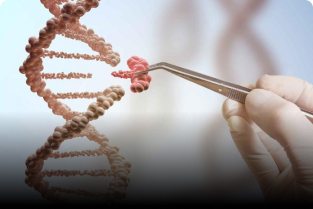
Science and technology are continuously transforming the way we live, work, and understand the world. Among the most promising fields driving this transformation are genetic engineering and nanotechnology. Both have opened new possibilities in healthcare, agriculture, environmental protection, and industrial development.
Genetic engineering involves modifying an organism’s DNA to introduce desired characteristics or change existing ones. Nanotechnology focuses on manipulating and designing materials at an extremely small scale, typically between 1 and 100 nanometers, where materials can exhibit unique properties.
Although these technologies offer significant benefits, they also present challenges related to safety, ethics, environmental impact, and regulation. Understanding their advantages and limitations is essential for using them responsibly and effectively.
What Is Genetic Engineering?
Genetic engineering is a branch of biotechnology that involves modifying an organism’s genetic material using specialized scientific techniques. Researchers can add, remove, or alter specific DNA sequences to study genes or develop desired characteristics.
One well-known example is the development of genetically modified crops that can resist certain pests or tolerate specific environmental conditions. Genetic engineering is also used to produce medicines, investigate genetic diseases, and develop innovative treatments.
Applications of Genetic Engineering
- Healthcare: Genetic engineering helps researchers develop therapeutic proteins, investigate inherited disorders, and advance certain gene therapies.
- Agriculture: Genetically modified crops can offer improved pest resistance, disease resistance, or other useful traits.
- Industrial biotechnology: Engineered microorganisms can produce enzymes, chemicals, and other valuable materials.
- Scientific research: Researchers modify genes to understand biological processes and investigate the causes of diseases.
These applications demonstrate how genetic engineering can support scientific progress and address important challenges in society.
What Is Nanotechnology?
Nanotechnology is the science and engineering of materials and devices at the nanoscale. At this scale, materials may display distinctive optical, electrical, chemical, or mechanical properties compared with their larger-scale forms.
Scientists use nanotechnology to develop advanced materials, improve medical treatments, create more efficient electronic components, and design innovative environmental solutions.
Applications of Nanotechnology
- Medicine: Nanoparticles and nanoscale delivery systems can help transport therapeutic substances to particular tissues or cells.
- Electronics: Nanomaterials contribute to the development of smaller, more efficient, and increasingly sophisticated electronic components.
- Environmental protection: Certain nanomaterials are being investigated for water purification, pollutant detection, and environmental remediation.
- Energy: Nanotechnology can support research into improved batteries, solar cells, and energy-storage systems.
- Manufacturing: Nanomaterials can improve properties such as strength, durability, and resistance to wear in selected applications.
As research advances, nanotechnology continues to create opportunities across multiple industries.
Benefits of Genetic Engineering
Genetic engineering has the potential to improve human health, increase agricultural productivity, and support more sustainable industrial processes.
1. Advances in Healthcare
Genetic engineering has enabled the production of important medicines, including recombinant insulin and certain therapeutic proteins. It also supports research into gene therapies that aim to treat diseases by addressing their underlying genetic causes.
These developments can provide new treatment options for conditions that may be difficult to manage using conventional approaches.
2. Improved Agricultural Productivity
Genetic engineering can help develop crops with specific beneficial traits, including resistance to certain insects or diseases. Some genetically modified crops may also reduce crop losses and support more reliable food production.
The actual benefits depend on the crop, its environment, farming practices, and the characteristics introduced.
3. Better Understanding of Diseases
Scientists can use genetic engineering to investigate how genes influence biological functions and disease development. This research contributes to a better understanding of genetic disorders and may support the development of targeted treatments.
4. Industrial and Environmental Benefits
Engineered microorganisms can be used to manufacture useful substances, including enzymes and bio-based chemicals. Researchers are also investigating biological systems that may help convert renewable resources into valuable products.
These approaches can support more efficient production processes, although their overall environmental benefits must be evaluated in each application.
Challenges of Genetic Engineering
Despite its potential, genetic engineering raises important scientific, ethical, and regulatory concerns.
1. Ethical Considerations
Modifying genetic material raises questions about how biotechnology should be used and who should make decisions about its applications. Genetic modifications involving human embryos or changes that could be inherited by future generations are particularly controversial.
Responsible research requires careful consideration of human rights, informed consent, fairness, and long-term consequences.
2. Potential Health Risks
Genetic modifications may produce unintended effects, depending on the organism and the technique used. In agricultural applications, scientists assess factors such as potential allergenicity, nutritional changes, and other relevant safety concerns.
Medical applications also require rigorous testing to evaluate safety, effectiveness, and possible unintended genetic changes.
3. Environmental Impact
Some genetically modified organisms may affect ecosystems if they interact with wild populations or other organisms. Potential concerns include gene flow, changes in pest populations, and effects on biodiversity.
Risk assessments and appropriate monitoring help determine whether a particular application is suitable for its intended environment.
4. Regulatory and Economic Barriers
Developing and evaluating genetic technologies can require substantial investment, specialized equipment, and extensive testing. Regulatory requirements vary by country and application.
Patents, licensing arrangements, and unequal access to biotechnology may also create challenges for farmers, researchers, healthcare providers, and patients.
Benefits of Nanotechnology
Nanotechnology offers new ways to design materials and systems with properties that can improve performance across different fields.
1. More Advanced Medical Treatments
Nanotechnology is being explored for targeted drug delivery, medical imaging, diagnostics, and selected therapeutic applications. Some nanoscale systems can help protect medicines, improve their delivery, or influence how they are released in the body.
These technologies may improve certain treatments, but their effectiveness and safety depend on the specific material and medical application.
2. Stronger and Lighter Materials
Some nanomaterials offer useful combinations of strength, low weight, electrical conductivity, or thermal stability. These characteristics can support the development of advanced coatings, composites, and specialized industrial materials.
Such materials may improve the performance of products used in transportation, construction, electronics, and manufacturing.
3. Improved Environmental Solutions
Researchers are studying nanomaterials that can detect pollutants, remove contaminants from water, and support environmental monitoring. Certain nanoscale materials may also improve the efficiency of filtration and treatment processes.
However, the environmental effects of the nanomaterials themselves must be considered alongside their intended benefits.
4. Progress in Electronics and Renewable Energy
Nanotechnology contributes to research on miniaturized electronic components, advanced sensors, solar cells, and energy-storage devices.
Improving the performance of these technologies may help support more efficient digital systems and energy solutions.
Challenges of Nanotechnology
The benefits of nanotechnology must be balanced against potential risks and practical limitations.
1. Health and Safety Concerns
Some engineered nanomaterials can interact with biological systems differently from larger particles of the same substance. Depending on their size, shape, composition, and exposure route, certain materials may present inhalation, skin-contact, or other health risks.
Comprehensive testing is important to understand how materials behave during production, use, and disposal.
2. Environmental Risks
Nanomaterials may enter air, soil, or water during manufacturing, product use, or waste disposal. Their effects on organisms and ecosystems can vary widely.
Scientists need to investigate their persistence, mobility, toxicity, and potential accumulation in the environment to support responsible use.
3. High Research and Development Costs
Developing nanotechnology products often requires specialized facilities, advanced instruments, skilled professionals, and extensive testing. These costs can make research and commercialization difficult, especially for smaller organizations.
Manufacturing at large scale while maintaining consistent quality can also be challenging.
4. Regulation and Public Awareness
Nanotechnology is used in a wide range of products, and safety requirements can differ across sectors and countries. Assessing emerging materials requires appropriate testing methods and reliable information about exposure.
Clear communication, suitable regulation, and responsible product labeling where required can help build public confidence.
Genetic Engineering vs. Nanotechnology
Although genetic engineering and nanotechnology are different fields, both use advanced scientific techniques to solve complex problems.
| Feature | Genetic Engineering | Nanotechnology |
|---|---|---|
| Main focus | Modifying genetic material | Designing and manipulating materials at the nanoscale |
| Primary scale | DNA, genes, cells, and organisms | Typically 1–100 nanometers |
| Major applications | Medicine, agriculture, biotechnology | Medicine, electronics, energy, and materials |
| Key benefits | Desired genetic traits and biological products | Specialized material properties and nanoscale systems |
| Major challenges | Genetic safety, ethics, and ecological effects | Material toxicity, exposure, and environmental effects |
The two fields can also complement each other. For example, nanotechnology-based delivery systems are being investigated for delivering genetic material into cells. Such approaches may support research and the development of certain therapies, although their safety and effectiveness require application-specific evaluation.
The Future of Genetic Engineering and Nanotechnology
The future of both fields will depend on continued research, responsible innovation, and effective oversight.
In genetic engineering, researchers are exploring more precise gene-editing methods, improved crop characteristics, and new approaches to treating genetic diseases. Advances in gene editing may make some interventions more targeted, but questions about unintended effects, accessibility, and ethical boundaries remain important.
In nanotechnology, ongoing research focuses on improved drug-delivery systems, advanced sensors, efficient energy technologies, and materials designed for specialized functions. Researchers are also developing methods to better evaluate the safety and environmental effects of nanomaterials.
The combination of these technologies may lead to further advances in diagnostics, personalized medicine, biotechnology, and materials science. Achieving these benefits will require collaboration among scientists, healthcare professionals, engineers, policymakers, and the wider public.
How Can Students Build a Career in These Fields?
Students interested in genetic engineering or nanotechnology can begin by developing a strong foundation in science and mathematics.
For genetic engineering, useful subjects include genetics, molecular biology, biotechnology, biochemistry, and bioinformatics. Relevant degrees may include biotechnology, genetics, life sciences, or related disciplines.
For nanotechnology, useful subjects include physics, chemistry, materials science, engineering, and nanoscience. Students may explore degrees in nanotechnology, materials engineering, chemical engineering, or related fields.
Practical laboratory experience, research projects, data analysis, scientific communication, and safety training can strengthen career prospects. Depending on the role, advanced education or specialized training may be required.
Potential career areas include biotechnology research, pharmaceutical development, materials science, nanomaterials research, quality assurance, regulatory affairs, and scientific analysis.
Conclusion
Genetic engineering and nanotechnology are important areas of modern science with the potential to transform healthcare, agriculture, electronics, energy, and environmental management. Genetic engineering allows scientists to study and modify genetic material, while nanotechnology makes it possible to design materials and systems with distinctive nanoscale properties.


