
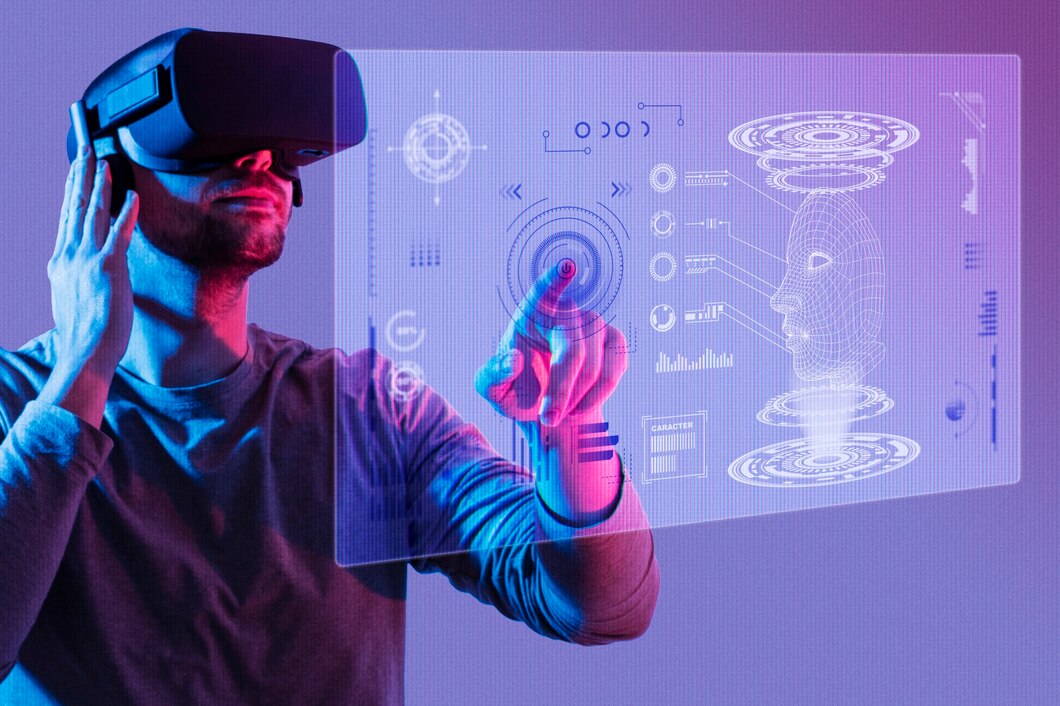
Augmented Reality (AR) and Virtual Reality (VR) have moved far beyond gaming and entertainment. Once considered futuristic, these technologies are now powering innovations in healthcare, education, retail, manufacturing, and many more sectors. What makes AR and VR truly remarkable is their ability to blend the digital and physical worlds—changing how we learn, work, shop, heal, and experience life.
Let’s explore how AR and VR are creating incredible impact across industries.
1. Gaming: The Origin of Immersive Tech
Gaming was the first industry to fully embrace AR and VR. With VR headsets and AR-powered mobile games, players can step into digital worlds, interact with their surroundings, and experience games in ways traditional screens could never offer.
Key Benefits
- Fully immersive gameplay
- Enhanced user engagement
- Realistic 3D interaction
- New storytelling possibilities
Gaming also paved the way for widespread adoption, lowering hardware costs and increasing development.
2. Healthcare: Training, Treatment, and Beyond
Healthcare is one of the biggest beneficiaries of AR and VR advancements.
How AR and VR Are Used in Healthcare
• Surgical Training and Simulation
VR allows medical students to practice surgeries in a zero-risk environment. They can repeat complex procedures until they master them—without the need for a physical body.
• AR-Guided Surgeries
Surgeons use AR overlays to view 3D anatomical structures during real surgeries, improving precision and reducing risks.
• Pain Management and Therapy
VR environments distract patients during painful procedures, helping reduce anxiety and discomfort.
• Mental Health Treatment
VR therapy is used for treating PTSD, phobias, and anxiety disorders through controlled simulations.
Impact: Enhanced accuracy, improved patient outcomes, and revolutionized medical training.
3. Education: Learning in 3D
AR and VR are making learning more interactive and engaging. Students can explore the oceans, walk with dinosaurs, or travel through the human bloodstream.
Benefits of Immersive Learning
- Boosts memory retention
- Helps students visualize complex concepts
- Increases curiosity and motivation
- Makes remote learning more interactive
These technologies personalize education and make it accessible from anywhere.
4. Retail: Try Before You Buy
Retailers now use AR to allow customers to “try” products virtually.
Examples
- Trying clothes, makeup, or glasses without physically wearing them
- Previewing how furniture looks in your home
- Using AR maps for in-store navigation
AR shopping bridges the gap between online and offline experiences, increasing customer satisfaction and reducing product returns.
5. Real Estate: Virtual Property Tours
VR allows potential buyers to take virtual property tours from anywhere in the world. This is especially helpful for:
- Overseas buyers
- Investors
- Remote clients
- Under-construction properties
It saves time, reduces costs, and helps buyers make faster decisions.
6. Manufacturing & Engineering: Precision and Safety
AR and VR are transforming production floors through:
• VR Training
Workers can learn to operate heavy machinery in a safe VR environment.
• AR Maintenance Assistance
Technicians use AR glasses that display step-by-step repair instructions, reducing errors.
• Product Design and Prototyping
VR allows designers to visualize 3D models before creating physical prototypes—saving time and money.
7. Tourism: Travel Without Traveling
VR experiences allow users to explore famous destinations, museums, and landmarks without leaving home. AR enhances real-world tours by overlaying historical facts, directions, or interactive objects.
Result: A richer, more informative travel experience.
Conclusion
From entertainment to essential services, AR and VR are reshaping how we interact with the world. Their expansion into healthcare, education, and business proves that immersive technology isn’t just futuristic—it’s practical, powerful, and already part of our everyday lives.


