
Science and technology are advancing at an extraordinary pace, opening new possibilities in healthcare, agriculture, environmental protection, manufacturing, and many other fields. Two areas at the forefront of this transformation are genetic engineering and nanotechnology.
Genetic engineering focuses on modifying or manipulating genetic material to develop useful traits, products, or treatments. Nanotechnology works with materials and structures at an extremely small scale, typically involving dimensions measured in nanometers. Although these disciplines are different, both are helping scientists solve complex problems and develop innovative technologies.
For students and aspiring professionals, these fields offer exciting opportunities to work at the intersection of biology, chemistry, physics, engineering, medicine, and advanced technology.
What Is Genetic Engineering?
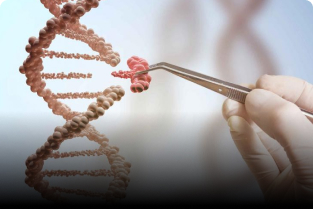
Genetic engineering is a biotechnology field involving the deliberate modification of an organism’s genetic material. Scientists can add, remove, modify, or regulate specific genetic sequences to achieve desired characteristics or study biological processes.
Modern genetic engineering can support applications such as developing medicines, improving crops, producing industrial enzymes, and researching genetic diseases.
One of the most important developments in modern biotechnology is gene editing, which allows scientists to make targeted changes to DNA. Technologies such as CRISPR have significantly expanded research possibilities.
What Is Nanotechnology?
Nanotechnology involves designing, producing, and applying materials and devices at the nanoscale. At this tiny scale, materials can exhibit physical, chemical, electrical, or optical properties that differ from their larger-scale forms.
Nanotechnology has applications across numerous industries, including:
- Healthcare and medicine
- Electronics
- Energy
- Environmental science
- Materials engineering
- Food technology
- Manufacturing
- Biotechnology
Researchers use nanomaterials and nanoscale structures to develop products with improved strength, conductivity, sensitivity, efficiency, or other useful characteristics.
Applications of Genetic Engineering
1. Healthcare and Medicine
Genetic engineering plays an important role in modern biomedical research. It can contribute to the development of therapeutic proteins, vaccines, diagnostic technologies, and potential treatments for certain genetic disorders.
Researchers are also investigating gene-based approaches for diseases that were previously difficult to treat.
2. Agriculture
Genetic engineering can help researchers develop crops with desirable characteristics, such as improved resistance to pests, diseases, or environmental stresses.
Biotechnology can also contribute to improving nutritional characteristics and agricultural productivity.
3. Industrial Biotechnology
Genetically engineered microorganisms can be used to produce enzymes, chemicals, medicines, and other valuable biological products.
4. Scientific Research
Genetic engineering provides researchers with tools for studying gene function, disease mechanisms, cellular processes, and biological pathways.
Applications of Nanotechnology
1. Nanomedicine
Nanotechnology is being investigated for applications such as targeted drug delivery, medical imaging, diagnostics, and advanced biomaterials.
Nanostructures can be designed to interact with biological systems in specific ways, potentially improving how certain medical technologies work.
2. Electronics
The electronics industry uses nanoscale technologies to develop increasingly smaller and more sophisticated components.
Nanotechnology can contribute to improvements in sensors, semiconductor devices, displays, and other electronic technologies.
3. Renewable Energy
Nanomaterials are being researched for applications in solar cells, batteries, fuel cells, and energy-storage technologies.
4. Environmental Protection
Nanotechnology can support the development of advanced filtration systems, sensors, catalysts, and materials designed to help detect or remove pollutants.
5. Advanced Materials
Nanotechnology can help create materials with specialized properties, including improved strength, lightweight construction, conductivity, durability, or resistance to environmental conditions.
How Genetic Engineering and Nanotechnology Complement Each Other
Although genetic engineering and nanotechnology are separate disciplines, they can work together in interdisciplinary research.
For example, nanotechnology can provide specialized materials or delivery systems for biological applications, while genetic engineering can provide biological components designed for specific functions.
This intersection is particularly promising in areas such as:
- Drug delivery
- Biosensors
- Tissue engineering
- Diagnostics
- Regenerative medicine
- Biotechnology research
The combination of biology and nanoscale engineering demonstrates how interdisciplinary science can create solutions that would be difficult to achieve through a single field.
Skills Required for a Career in These Fields
Students interested in genetic engineering or nanotechnology should develop a combination of scientific, technical, and analytical skills.
Strong Foundation in Science
Knowledge of biology, chemistry, physics, and mathematics provides an important foundation.
Laboratory Skills
Practical laboratory experience is valuable for understanding experimental techniques, data collection, analysis, and scientific procedures.
Data Analysis
Modern biological and nanotechnology research generates large amounts of data. Knowledge of statistics, computational tools, and data analysis can therefore be highly beneficial.
Research and Problem-Solving
Scientists and engineers frequently encounter unexpected results. Strong research and problem-solving abilities are essential for designing experiments and developing solutions.
Interdisciplinary Knowledge
The most exciting developments often occur at the intersection of multiple disciplines. Combining biology with engineering, computer science, chemistry, or physics can expand career opportunities.
Career Opportunities
Genetic engineering and nanotechnology can lead to careers in research, healthcare, biotechnology, agriculture, manufacturing, and advanced technology.
Potential career paths include:
- Genetic Engineer
- Molecular Biologist
- Biotechnology Researcher
- Genetic Research Scientist
- Nanotechnology Engineer
- Nanomaterials Scientist
- Biomedical Engineer
- Research Scientist
- Bioinformatics Specialist
- Laboratory Scientist
- Pharmaceutical Researcher
- Quality Control Specialist
- Scientific Consultant
Professionals may work in universities, research laboratories, biotechnology companies, pharmaceutical organizations, healthcare institutions, manufacturing companies, or government research organizations.
Educational Pathways
Students interested in these fields can consider undergraduate and postgraduate programs related to:
- Biotechnology
- Genetic Engineering
- Molecular Biology
- Microbiology
- Biochemistry
- Biomedical Engineering
- Nanotechnology
- Materials Science
- Chemical Engineering
- Bioinformatics
Advanced research positions often require postgraduate education and specialized research experience.
Future Scope of Genetic Engineering and Nanotechnology
The future of both fields is closely connected to advances in medicine, biotechnology, artificial intelligence, materials science, and engineering.
Genetic engineering may contribute to increasingly precise approaches to understanding and treating disease, improving agricultural systems, and producing biological products.
Nanotechnology may continue to influence healthcare, electronics, energy storage, advanced materials, environmental technologies, and manufacturing.
At the same time, responsible innovation will remain important. Genetic technologies and nanoscale materials can raise questions involving safety, ethics, regulation, environmental impact, and responsible use. Scientific progress therefore needs to be supported by careful testing, appropriate oversight, and ethical decision-making.
Why Choose a Career in Genetic Engineering or Nanotechnology?
These fields are particularly attractive to students who enjoy science, experimentation, technology, and innovation. They provide opportunities to work on real-world challenges while contributing to developments that could influence future healthcare, agriculture, energy, and manufacturing.
Another major advantage is their interdisciplinary nature. Professionals can combine scientific knowledge with engineering, computing, data analysis, and research skills to build specialized career paths.
Conclusion
Genetic engineering and nanotechnology are two important fields shaping the future of science and technology. Genetic engineering enables scientists to work directly with genetic material, while nanotechnology allows researchers and engineers to manipulate materials and structures at an extremely small scale.


