
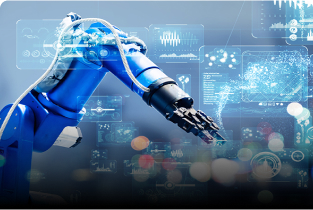
The world of robotics is evolving faster than ever—and a major driving force behind this transformation is the Internet of Things (IoT). By connecting robots to sensors, networks, cloud platforms, and other devices, IoT allows robots to collect, analyze, and respond to data in real time. This connection is pushing robotics beyond simple automation, enabling machines that think, learn, and act autonomously.
Let’s explore how IoT is making robots smarter, faster, and more independent across industries.
1. Real-Time Data Makes Robots Smarter
IoT-enabled robots are equipped with multiple sensors—temperature, proximity, vibration, GPS, and more. These sensors continually send data to cloud or edge computing systems.
Why this matters:
- Robots can make decisions instantly using live data
- Systems can predict failures before they happen
- Robots learn from data patterns, improving performance over time
Example:
A warehouse robot uses IoT sensors to detect obstacles, scan inventory, and decide the best route—all without human intervention.
2. Faster Performance Through Edge Computing
Traditional robots depend heavily on preprogrammed instructions. However, IoT allows robots to offload complex computations to edge devices—local systems that process data close to where it is generated.
Benefits:
- Reduced latency (decisions happen in milliseconds)
- Smoother movement and operation
- Better coordination with other machines
This is essential in fields like manufacturing, where robots need split-second responses to avoid collisions or defects.
3. Higher Autonomy With Cloud Connectivity
Cloud-connected robots aren’t limited by onboard memory or processing power. They can access massive cloud databases and AI models to perform complex tasks autonomously.
This enables robots to:
- Update their own algorithms
- Improve through continuous learning
- Operate independently for long durations
Example:
Autonomous delivery robots rely on cloud maps, traffic data, and weather updates to plan routes on their own.
4. Collaboration Between Robots (Robo-to-Robo Communication)
IoT allows robots to communicate with each other seamlessly in what’s called Machine-to-Machine (M2M) communication.
Why it matters:
- Robots coordinate tasks without supervision
- Multi-robot systems complete jobs faster
- Overall efficiency improves dramatically
You’ll find this in smart factories where robotic arms, conveyor belts, and sensors work together as an intelligent ecosystem.
5. Predictive Maintenance Makes Robots More Reliable
IoT allows real-time monitoring of robot parts—motors, joints, circuits, and batteries.
What predictive maintenance offers:
- Detects issues early
- Reduces downtime
- Increases robot lifespan
- Lowers maintenance costs
A robot that predicts its own breakdowns and schedules repairs is essentially becoming more “self-aware.”
6. Smarter Robots in Everyday Life
IoT integration isn’t just for industries. We see it daily in:
- Robot vacuum cleaners that map your home
- IoT-enabled drones for surveillance
- Healthcare robots monitoring patient vitals in real time
Each of these uses IoT data to make more informed decisions and operate more autonomously.
Conclusion
IoT is unlocking the true potential of robotics by connecting them to an extensive digital ecosystem. With continuous data flow, improved processing, and cloud-based intelligence, robots are now becoming more intelligent, faster in operation, and capable of autonomous decision-making.


