
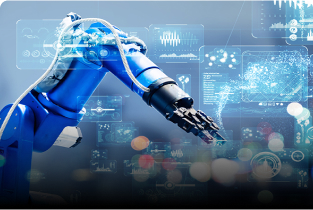
The rapid advancement of technology has ushered in an era where machines are becoming smarter, more connected, and increasingly autonomous. Two of the most transformative technologies driving this change are the Internet of Things (IoT) and robotics. Individually, these technologies have revolutionised industries, but together they are creating intelligent systems capable of automating tasks, improving efficiency, and enhancing decision-making like never before.
From smart factories and autonomous vehicles to precision agriculture and robotic surgery, the combination of IoT and robotics is redefining how people live and work. As artificial intelligence (AI), cloud computing, and edge computing continue to evolve, the future of IoT and robotics promises even greater innovation.
What Are IoT and Robotics?
Internet of Things (IoT)
The Internet of Things refers to a network of physical devices connected to the internet that collect, share, and analyse data. These devices use sensors, software, and communication technologies to interact with each other and with users.
Examples of IoT devices include:
- Smart home appliances
- Wearable fitness trackers
- Connected vehicles
- Smart energy meters
- Industrial sensors
- Smart security systems
Robotics
Robotics is the branch of engineering and computer science focused on designing, building, and programming robots. Modern robots can perform repetitive, hazardous, or highly precise tasks with speed and accuracy.
Examples include:
- Industrial robotic arms
- Medical robots
- Warehouse automation robots
- Agricultural robots
- Service robots
- Autonomous delivery robots
How IoT and Robotics Work Together
IoT enables robots to collect real-time information from their environment through connected sensors. This data is transmitted to cloud platforms or edge devices, where it is analysed to support intelligent decision-making.
For example:
- A warehouse robot can receive inventory updates instantly through IoT sensors.
- Agricultural robots can analyse soil moisture and weather conditions before watering crops.
- Autonomous vehicles use connected sensors to monitor traffic, road conditions, and nearby objects.
- Manufacturing robots can predict equipment failures using IoT-based predictive maintenance systems.
The integration of IoT, robotics, and AI enables machines to communicate, learn, and adapt with minimal human intervention.
Innovations Shaping the Future of IoT and Robotics
1. AI-Powered Intelligent Robots
Artificial intelligence allows robots to recognise objects, understand speech, learn from experience, and make decisions. Future robots will become increasingly adaptive and capable of working safely alongside humans.
2. Smart Manufacturing and Industry 4.0
Factories are becoming more intelligent through connected robots, automated production lines, and IoT-enabled equipment.
Benefits include:
- Reduced downtime
- Predictive maintenance
- Higher productivity
- Improved quality control
- Real-time production monitoring
3. Autonomous Vehicles
Self-driving cars, delivery robots, and autonomous drones rely on IoT sensors, GPS, cameras, radar, and AI algorithms to navigate safely.
Future developments may include:
- Driverless public transport
- Autonomous logistics fleets
- Smart traffic management
- Drone-based package delivery
4. Smart Healthcare
Healthcare is benefiting from connected robotic systems that improve patient care and operational efficiency.
Applications include:
- Robotic-assisted surgery
- Remote patient monitoring
- Smart hospital equipment
- Automated medicine dispensing
- Elderly care robots
5. Precision Agriculture
IoT sensors and agricultural robots help farmers optimise crop production by monitoring soil conditions, weather, irrigation, and plant health.
Benefits include:
- Higher crop yields
- Reduced water consumption
- Lower labour costs
- Early pest detection
- Sustainable farming practices
6. Smart Cities
IoT-connected robots are helping cities become safer and more efficient.
Examples include:
- Intelligent traffic control
- Automated waste collection
- Public safety monitoring
- Infrastructure inspection
- Environmental monitoring
7. Warehouse and Logistics Automation
Modern warehouses increasingly use autonomous mobile robots to transport goods, organise inventory, and fulfil customer orders.
Advantages include:
- Faster order processing
- Reduced operational costs
- Greater inventory accuracy
- Improved workplace safety
8. Home Automation and Personal Robotics
Household robots continue to become more capable with IoT connectivity.
Examples include:
- Robot vacuum cleaners
- Smart lawn mowers
- Home security robots
- Personal assistant robots
- Elderly assistance devices
Key Technologies Driving Innovation
Several technologies are accelerating the growth of IoT and robotics:
- Artificial Intelligence (AI)
- Machine Learning
- Edge Computing
- Cloud Computing
- 5G Connectivity
- Computer Vision
- Digital Twins
- Big Data Analytics
- Advanced Sensors
- Cybersecurity Technologies
Together, these technologies enable faster communication, real-time analytics, and more intelligent automation.
Benefits of IoT and Robotics
Increased Productivity
Automated systems can perform repetitive tasks around the clock with minimal downtime.
Improved Accuracy
Robots reduce human error in manufacturing, healthcare, and quality inspection.
Enhanced Safety
Robots can safely perform dangerous tasks in hazardous environments such as mining, chemical plants, and disaster response.
Better Decision-Making
IoT devices continuously collect data that organisations can use to improve operations and make informed decisions.
Cost Savings
Automation helps reduce labour costs, minimise waste, and improve resource utilisation.
Sustainability
Smart monitoring systems optimise energy use, water consumption, and waste management, supporting environmentally responsible operations.
Challenges Facing IoT and Robotics
Despite rapid progress, several challenges remain:
- Cybersecurity threats
- Data privacy concerns
- High implementation costs
- Complex system integration
- Lack of standardisation
- Dependence on reliable internet connectivity
- Ethical concerns regarding automation
- Workforce reskilling requirements
Addressing these challenges will be essential for the responsible adoption of connected robotic systems.
Career Opportunities in IoT and Robotics
As adoption grows, demand for skilled professionals continues to increase.
Popular career paths include:
- IoT Developer
- Robotics Engineer
- Automation Engineer
- Embedded Systems Engineer
- AI Engineer
- Machine Learning Engineer
- Data Scientist
- Control Systems Engineer
- Computer Vision Engineer
- Industrial Automation Specialist
- Mechatronics Engineer
- Cybersecurity Specialist for IoT
Professionals in these roles work across industries such as manufacturing, healthcare, transportation, agriculture, defence, retail, and smart infrastructure.
Skills Required to Build a Career
To succeed in IoT and robotics, aspiring professionals should develop skills in:
- Programming (Python, C++, Java)
- Embedded systems
- Electronics and microcontrollers
- Networking fundamentals
- Artificial Intelligence
- Machine Learning
- Cloud computing
- Robotics programming
- Sensor integration
- Data analysis
- Computer vision
- Cybersecurity
- Problem-solving and critical thinking
Practical experience through projects, internships, and certifications can further strengthen career prospects.
The Future Outlook
The future of IoT and robotics is closely linked with advances in AI, edge computing, and next-generation connectivity. Robots are expected to become more collaborative, autonomous, and intelligent, while IoT devices will continue to generate valuable real-time data that supports smarter decisions.
Emerging trends likely to shape the coming years include:
- Human-robot collaboration in workplaces
- AI-powered autonomous systems
- Swarm robotics
- Digital twin technology for simulation and optimisation
- Sustainable smart factories
- Connected healthcare ecosystems
- Intelligent transportation networks
- Fully automated logistics centres
As these innovations mature, they will transform industries, improve quality of life, and create new opportunities for businesses and professionals alike.
Conclusion
The combination of IoT and robotics is paving the way for a future defined by intelligent automation, connected devices, and data-driven innovation. From improving industrial productivity and healthcare to advancing agriculture and building smart cities, these technologies are reshaping nearly every aspect of modern life.


