
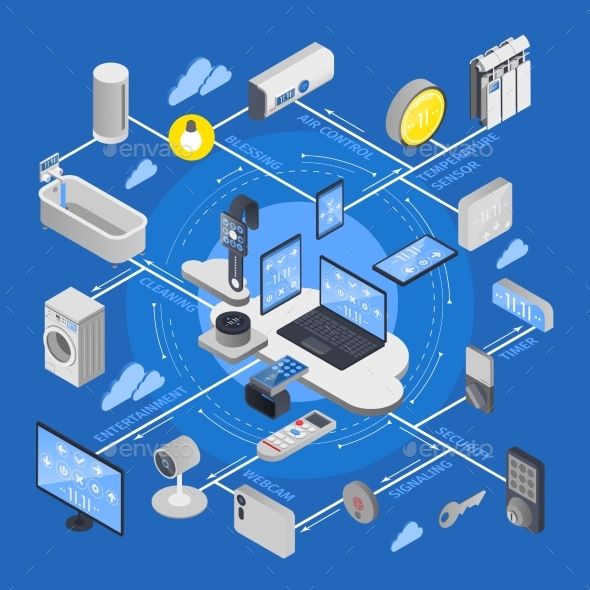
The Internet of Things (IoT) and robotics are two rapidly growing technologies transforming the modern world. From smart homes and industrial automation to autonomous vehicles and healthcare equipment, these technologies are making everyday activities more intelligent, efficient, and automated.
One of the most important components that makes IoT and robotic systems work effectively is sensors. Sensors allow machines and connected devices to collect information from their surroundings, detect changes, and respond accordingly. They act as the bridge between the physical world and digital systems.
Whether it is a temperature sensor monitoring environmental conditions, a motion sensor detecting movement, or a proximity sensor helping a robot avoid obstacles, sensors play a vital role in enabling intelligent operations.
Let’s explore the importance of sensors in IoT and robotic systems, their different types, real-world applications, and future developments.
What Are Sensors in IoT and Robotics?
A sensor is an electronic device that detects physical changes or environmental conditions and converts them into signals that can be measured and processed by electronic systems.
In IoT, sensors collect real-time information and send it to connected devices, gateways, or cloud platforms for monitoring and analysis.
In robotics, sensors help robots understand their surroundings, detect objects, measure distances, and perform tasks with greater accuracy.
For example:
- A temperature sensor measures changes in temperature.
- A motion sensor detects movement in a specific area.
- An ultrasonic sensor measures the distance between objects.
- A humidity sensor monitors moisture levels in the air.
- A pressure sensor measures applied force or pressure.
Without sensors, IoT devices would have limited awareness of their surroundings, and robots would struggle to interact intelligently with the physical world.
Why Are Sensors Important in IoT and Robotic Systems?
Sensors are essential because they provide the data required for monitoring, automation, communication, and decision-making.
Here are some major reasons why sensors are important in these technologies.
1. Real-Time Data Collection
One of the biggest advantages of sensors is their ability to collect real-time information from the surrounding environment.
IoT devices use sensors to continuously monitor temperature, humidity, air quality, movement, and other environmental conditions.
Similarly, robots use sensors to detect objects, identify obstacles, and understand changes in their surroundings.
Real-time data helps systems respond quickly and perform tasks more effectively.
2. Improved Automation
Sensors make automation possible by allowing machines and devices to respond automatically to specific conditions.
For example, smart lighting systems use motion sensors to switch lights on when someone enters a room.
In manufacturing, sensors help robotic arms detect objects and perform assembly tasks with greater precision.
This reduces the need for constant human intervention and improves operational efficiency.
3. Enhanced Accuracy and Precision
Accuracy is extremely important in robotics, especially when robots perform delicate or repetitive tasks.
Sensors provide precise measurements that help robots control their movements, identify object positions, and maintain stability.
For example, proximity sensors help robotic systems determine the distance between objects, while force sensors allow robotic arms to control the pressure applied when handling delicate materials.
4. Better Safety and Security
Sensors improve safety in both IoT and robotic environments.
In smart homes, motion sensors and smoke detectors help identify potential security or fire-related risks.
In industrial environments, proximity sensors and safety sensors help detect the presence of workers near automated machinery.
Robots can also use obstacle detection sensors to avoid collisions and operate more safely.
5. Intelligent Decision-Making
Sensors provide the information that IoT and robotic systems need to make informed decisions.
When sensor data is combined with artificial intelligence and machine learning, systems can identify patterns, predict potential problems, and respond to changing conditions.
For example, an agricultural IoT system can analyze soil moisture data and automatically activate irrigation when necessary.
Different Types of Sensors Used in IoT and Robotics
There are several types of sensors used in IoT and robotic applications. Each sensor performs a specific function depending on the requirements of the system.
1. Temperature Sensors
<image-placeholder />
Temperature sensors measure the temperature of objects, machines, or surrounding environments.
They are widely used in smart homes, industrial automation, healthcare equipment, and environmental monitoring systems.
Applications:
- Monitoring room temperature in smart homes.
- Controlling heating and cooling systems.
- Monitoring industrial equipment.
- Maintaining temperature conditions in healthcare facilities.
2. Proximity Sensors
Proximity sensors detect the presence or absence of objects without requiring physical contact.
They are especially important in robotics because they help robots identify nearby objects and avoid obstacles.
Applications:
- Obstacle detection in autonomous robots.
- Object detection in manufacturing systems.
- Automatic doors and smart devices.
- Collision prevention in robotic systems.
3. Ultrasonic Sensors
Ultrasonic sensors use high-frequency sound waves to measure the distance between objects.
They calculate distance by measuring the time taken for sound waves to travel to an object and return.
Applications:
- Distance measurement in mobile robots.
- Parking assistance systems.
- Obstacle detection.
- Liquid-level monitoring.
4. Motion Sensors
Motion sensors detect movement within a particular area. They are commonly used in security systems, smart buildings, and automated devices.
Applications:
- Smart lighting systems.
- Security and surveillance.
- Human movement detection.
- Automated robotic operations.
5. Humidity Sensors
Humidity sensors measure the amount of moisture present in the air.
They are important in agriculture, weather monitoring, smart homes, and industrial environments.
Applications:
- Monitoring greenhouse conditions.
- Controlling humidity in smart buildings.
- Agricultural monitoring systems.
- Industrial environmental control.
6. Pressure Sensors
Pressure sensors measure the force applied by gases or liquids over a specific area.
In robotics, they can also help systems measure contact forces and control gripping pressure.
Applications:
- Industrial equipment monitoring.
- Robotic gripping systems.
- Healthcare monitoring devices.
- Smart automotive systems.
7. Accelerometers and Gyroscope Sensors
Accelerometers measure acceleration and changes in movement, while gyroscopes measure angular velocity and rotational movement.
Together, they help robotic systems understand orientation, balance, and motion.
Applications:
- Self-balancing robots.
- Drone stabilization.
- Autonomous navigation.
- Motion tracking systems.
Real-World Applications of Sensors in IoT and Robotics
Sensors are used in various industries to improve productivity, safety, and automation.
1. Smart Homes
Smart home systems use sensors to automate everyday activities and improve convenience.
Motion sensors detect movement, temperature sensors regulate indoor conditions, and smoke sensors identify potential fire hazards.
These devices communicate with connected systems to provide automated control and monitoring.
2. Industrial Automation
In manufacturing, sensors help machines monitor production processes and maintain product quality.
Robotic systems use proximity, pressure, temperature, and vision sensors to perform repetitive tasks, identify defects, and handle materials.
This improves production efficiency and reduces operational errors.
3. Healthcare and Medical Robotics
Sensors play an important role in modern healthcare technologies.
Wearable devices use sensors to monitor physical activity, heart rate, and other measurements.
Medical robots use specialized sensors to support precise movements, assist healthcare professionals, and interact with medical instruments.
4. Agriculture and Smart Farming
IoT-based agricultural systems use soil moisture, temperature, humidity, and light sensors to monitor crop conditions.
Robotic agricultural equipment can also use cameras and other sensors to identify weeds, monitor crops, and support precision farming.
These technologies help farmers use water and other resources more efficiently.
5. Autonomous Vehicles
Autonomous vehicles depend on multiple sensor technologies to understand their surroundings and support navigation.
Cameras, radar, ultrasonic sensors, and LiDAR help detect nearby vehicles, pedestrians, road conditions, and obstacles.
These technologies provide essential information for automated driving systems.
6. Environmental Monitoring
Sensors help monitor environmental conditions such as air quality, water quality, temperature, and humidity.
IoT-based monitoring systems collect and transmit this information to help researchers and organizations identify environmental changes and potential risks.
How Sensors Work with IoT and Robotic Systems
Sensors work as part of a larger system that collects, processes, and responds to information.
A typical sensor-based IoT or robotic system follows these steps:
- Sensing: Sensors detect physical changes or environmental conditions.
- Data Collection: The detected information is converted into electrical signals and collected by a microcontroller or processing unit.
- Data Processing: The system processes sensor information to identify relevant conditions.
- Communication: IoT devices may transmit the collected information through communication technologies such as Wi-Fi, Bluetooth, Zigbee, or cellular networks.
- Decision-Making: Software or intelligent algorithms analyze the information and determine the appropriate response.
- Action: The system performs an operation, such as activating a motor, adjusting temperature, sending an alert, or changing a robot’s movement.
For example, an autonomous robot can use an ultrasonic sensor to detect an obstacle. The controller processes the distance measurement and instructs the robot to stop or change direction.
Challenges of Using Sensors in IoT and Robotics
Although sensors offer several advantages, their implementation also involves certain challenges.
1. Sensor Accuracy: Incorrect measurements can affect the performance of connected devices and robotic systems.
2. High Implementation Costs: Advanced sensors and specialized equipment can increase the cost of developing IoT and robotic solutions.
3. Data Security: Connected sensors may collect sensitive information, making data protection and secure communication important.
4. Power Consumption: Battery-powered IoT devices require energy-efficient sensors to operate for longer periods.
5. Environmental Conditions: Dust, moisture, extreme temperatures, and vibrations can affect sensor performance.
6. Maintenance and Calibration: Sensors require regular testing and calibration to maintain reliable measurements.
Organizations must address these challenges to develop dependable and efficient sensor-based systems.
Future Trends in Sensor Technology for IoT and Robotics
The future of sensors is closely connected with developments in artificial intelligence, machine learning, automation, and smart connected devices.
Some important trends include:
- AI-Powered Sensors: Intelligent systems will increasingly use sensor data to identify patterns and support automated decision-making.
- Advanced Robotics: Improved sensors will help robots perform complex tasks with greater precision and environmental awareness.
- Smart Wearable Devices: Advanced sensors will support continuous monitoring of physical activity and health-related measurements.
- Edge Computing: Processing sensor data closer to connected devices will help reduce latency and improve response times.
- Smart Agriculture: Advanced sensing technologies will support precision irrigation, crop monitoring, and automated farming.
- Industrial IoT: Connected sensors will improve predictive maintenance, production monitoring, and industrial automation.
These developments will make IoT and robotic systems more intelligent, efficient, and adaptable.
Conclusion
Sensors are the foundation of modern IoT and robotic systems. They allow connected devices and robots to collect real-time information, understand their surroundings, and respond to changing conditions.


