
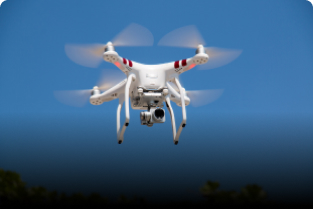
Drone engineering has evolved significantly with the integration of robotics, artificial intelligence, and automation technologies. Modern drones are no longer limited to basic remote-controlled flying machines. They have become intelligent systems capable of performing complex tasks with minimal human intervention. Robotics plays an important role in enhancing drone capabilities, improving flight accuracy, and enabling autonomous operations across various industries.
From agriculture and healthcare to defense, construction, and disaster management, robotic technologies are transforming how drones are designed, developed, and operated. Understanding the role of robotics in advanced drone engineering helps us explore the future of autonomous aerial systems and their growing applications.
1. Improving Drone Automation
One of the most important contributions of robotics to drone engineering is automation. Robotic systems allow drones to perform predefined tasks without requiring continuous human control.
Advanced drones use sensors, processors, and intelligent algorithms to understand their surroundings and make decisions. These technologies help drones follow specific routes, maintain stable flight, avoid obstacles, and complete missions efficiently.
Automation is particularly useful in industrial inspections, agricultural monitoring, and warehouse operations, where drones need to perform repetitive tasks accurately.
2. Enhancing Navigation and Obstacle Avoidance
Navigation is a critical aspect of drone engineering. Robotics helps improve navigation by combining GPS, cameras, LiDAR, ultrasonic sensors, and computer vision technologies.
These components allow drones to detect nearby objects, understand their environment, and adjust their flight paths accordingly.
For example, an autonomous drone inspecting a building can identify obstacles such as trees, walls, and electrical wires. It can then calculate a safer route to complete its inspection.
Robotic navigation systems make drones more reliable, especially in environments where manual control is difficult.
3. The Role of Artificial Intelligence and Machine Learning
Artificial intelligence and machine learning are important technologies in modern robotic drone systems. They allow drones to analyze data, recognize objects, and improve their performance through intelligent algorithms.
AI-powered drones can identify agricultural diseases, recognize vehicles, monitor wildlife, and analyze environmental conditions.
Machine learning algorithms also help drones process large amounts of information collected during flights. This improves their ability to perform complex operations and make informed decisions.
By combining robotics with AI, engineers can develop smarter drones capable of handling increasingly sophisticated applications.
4. Improving Stability and Flight Control
Flight stability is essential for the safe and accurate operation of drones. Robotics contributes to improved flight control through advanced sensors, control systems, and feedback mechanisms.
Components such as gyroscopes, accelerometers, and inertial measurement units (IMUs) help drones understand their position, orientation, and movement.
Robotic control algorithms process this information and automatically adjust motor speeds to maintain balance.
These technologies are particularly important for drones used in aerial photography, surveying, industrial inspections, and precision agriculture.
5. Enabling Autonomous Drone Operations
Autonomous operations are among the most exciting developments in advanced drone engineering.
Robotics allows drones to complete missions with limited human involvement. They can take off, navigate designated routes, collect information, and return to their starting locations using programmed instructions and onboard intelligence.
For example, delivery drones can use autonomous navigation systems to transport packages to designated locations. Similarly, agricultural drones can automatically cover specific fields to monitor crops or distribute fertilizers.
Autonomous capabilities reduce manual effort and improve operational efficiency.
6. Applications of Robotics in Industrial Drone Engineering
Robotics has expanded the use of drones across several industrial sectors.
Some important applications include:
- Agriculture: Robotic drones monitor crop health, identify pest infestations, and support precision spraying.
- Construction: Drones inspect buildings, monitor construction progress, and create aerial maps.
- Healthcare: Specialized drones transport medical supplies, emergency equipment, and essential medicines.
- Defense: Robotic drone systems support surveillance, reconnaissance, and other specialized operations.
- Environmental Monitoring: Drones collect information about forests, wildlife, air quality, and natural disasters.
These applications demonstrate how robotics makes drones more versatile and valuable across different industries.
7. The Importance of Sensors in Robotic Drones
Sensors are essential components of robotic drone systems. They collect environmental and flight-related information that helps drones operate safely and accurately.
Some commonly used sensors include:
- GPS Sensors: Help determine the drone’s geographical position.
- LiDAR Sensors: Support distance measurement and three-dimensional mapping.
- Ultrasonic Sensors: Detect nearby objects and measure short distances.
- Camera Sensors: Capture images and support object recognition.
- Gyroscopes: Measure rotational movement and help maintain stability.
- Accelerometers: Measure changes in velocity and movement.
The integration of these sensors with robotic control systems enables drones to respond intelligently to changing environmental conditions.
8. Challenges in Integrating Robotics into Drone Engineering
Although robotics offers several advantages, integrating robotic systems into drone engineering involves certain challenges.
Battery Limitations: Advanced sensors, processors, and robotic components consume energy, which can reduce flight time.
High Development Costs: Designing intelligent robotic drones requires specialized hardware, software, testing, and engineering expertise.
Safety and Reliability: Autonomous drones must be capable of responding to unexpected situations without creating risks for people or property.
Communication Problems: Signal interruptions and connectivity issues can affect drone performance, particularly in remote locations.
Data Security: Drones that collect and transmit sensitive information require strong cybersecurity measures to protect their systems and data.
Addressing these challenges is essential for developing reliable and efficient robotic drone technologies.
9. Future Trends in Robotics and Drone Engineering
The future of drone engineering will involve greater integration of robotics, AI, automation, and advanced sensing technologies.
Some emerging trends include:
- Swarm Robotics: Multiple drones working together to complete complex missions.
- AI-Powered Navigation: Intelligent systems that improve autonomous flight and decision-making.
- Advanced Computer Vision: Better object detection, tracking, and environmental understanding.
- Human-Robot Collaboration: Drones working alongside humans in industrial and emergency applications.
- Improved Battery Technologies: Energy-efficient systems that support longer flight durations.
- Robotic Manipulation: Specialized drones equipped with robotic arms or grippers to perform tasks such as picking up and moving lightweight objects.
These developments are expected to expand the capabilities of drones and create new opportunities in engineering, research, and industrial automation.
10. Skills Required to Work in Robotic Drone Engineering
Students and aspiring engineers interested in robotic drone development need a combination of technical and practical skills.
Some important skills include:
- Programming languages such as Python and C++.
- Knowledge of robotics and automation.
- Understanding of electronics and embedded systems.
- Familiarity with sensors and microcontrollers.
- Knowledge of aerodynamics and flight control systems.
- Understanding of artificial intelligence and machine learning.
- Experience with drone simulation and robotics development tools.
Learning these skills can help individuals explore career opportunities in drone engineering, robotics development, autonomous systems, and aerospace technology.
Conclusion
Robotics has become an important part of advanced drone engineering. It improves automation, navigation, flight stability, obstacle detection, and autonomous decision-making. By combining robotics with artificial intelligence, sensors, and machine learning, engineers can develop intelligent drones capable of performing complex tasks across multiple industries.


