
In today’s rapidly evolving technological landscape, Robotics and the Internet of Things (IoT) are two of the most transformative innovations. While both play a major role in automation and smart systems, they are often confused with each other. Understanding their differences is essential for students, professionals, and businesses looking to build a future-ready career or strategy.
What Is Robotics?
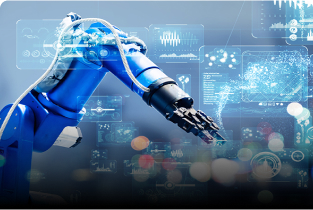
Robotics is a field of technology focused on designing, building, and operating robots—machines capable of carrying out tasks automatically or semi-automatically. These robots can perform physical actions and are often used to replace or assist humans in repetitive, dangerous, or complex tasks.
Key Features of Robotics:
- Involves physical machines (robots)
- Uses sensors, actuators, and control systems
- Can operate autonomously or with human guidance
- Focuses on task execution in the real world
Examples of Robotics:
- Industrial robots in manufacturing
- Surgical robots in healthcare
- Autonomous drones and delivery robots
What Is IoT (Internet of Things)?
IoT refers to a network of connected devices that communicate and share data over the internet. These devices collect and exchange data to make systems smarter and more efficient without necessarily performing physical tasks.
Key Features of IoT:
- Involves smart devices and sensors
- Relies on internet connectivity
- Focuses on data collection and communication
- Enables real-time monitoring and decision-making
Examples of IoT:
- Smart home devices (smart lights, thermostats)
- Wearable fitness trackers
- Smart city systems (traffic monitoring, waste management)
Key Differences Between Robotics and IoT
| Aspect | Robotics | IoT |
|---|---|---|
| Definition | Machines that perform physical tasks | Network of connected smart devices |
| Focus | Action and task execution | Data collection and communication |
| Components | Sensors, actuators, controllers | Sensors, cloud, connectivity |
| Physical Presence | Requires physical robots | May or may not involve physical action |
| Dependency | Can work independently | Requires internet connectivity |
| Goal | Automation of tasks | Smart decision-making through data |
How Robotics and IoT Work Together
Although different, Robotics and IoT often complement each other. When combined, they create smart robotic systems capable of real-time decision-making.
Example:
A warehouse robot connected to an IoT system can:
- Receive instructions via the internet
- Analyze data in real time
- Optimize routes and tasks automatically
This integration is often referred to as IoT-enabled robotics or smart automation.
Which One Should You Learn?
Choosing between Robotics and IoT depends on your interests:
- If you enjoy building machines and working with hardware, robotics is a better fit.
- If you are interested in data, networking, and smart systems, IoT is the right choice.
- For future-ready skills, learning both together can give you a competitive advantage.
Conclusion
Robotics and IoT are both powerful technologies shaping the future, but they serve different purposes. Robotics focuses on physical automation, while IoT emphasizes connectivity and data intelligence. Together, they are driving innovation across industries like healthcare, manufacturing, and smart cities.


