
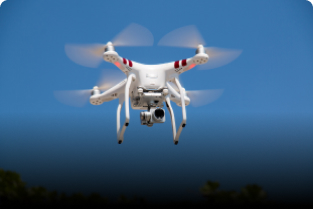
The drone industry is expanding rapidly, creating exciting opportunities for engineers—especially those with an electronics engineering background. Drones rely heavily on electronic systems for navigation, power, communication, and control, making electronics engineers naturally suited for this field.
But what exactly does an electronics engineer need to learn to become a successful drone engineer?
Let’s break down the essential skills.
1. Strong Understanding of Electronic Components and Circuits
Drones are built around complex electronic systems. Electronics engineers must have a solid understanding of:
-
Microcontrollers and processors
-
Sensors (gyroscope, accelerometer, barometer, GPS modules)
-
Motor drivers and ESCs (Electronic Speed Controllers)
-
Power distribution boards
-
Communication modules (RF, Wi-Fi, Bluetooth, LoRa)
This foundational knowledge helps in designing reliable and energy-efficient drone systems.
2. Embedded Systems and Programming Skills
Most drones run on embedded systems, so an engineer must know how to program microcontrollers and work with real-time operating systems (RTOS).
Key Skills Include:
-
C/C++ programming
-
Python for automation and data processing
-
Arduino and STM32 microcontroller programming
-
Understanding of sensor integration
-
Firmware development
This expertise allows engineers to develop flight control algorithms and manage sensor data.
3. Knowledge of Aerodynamics and Flight Mechanics
Although electronics is your core field, understanding the basic principles of flight is essential for drone engineering.
Important Concepts:
-
Lift, thrust, drag, and weight
-
Drone stability
-
Center of gravity
-
Propeller dynamics
-
Multirotor vs fixed-wing drone design
This helps in optimizing drone performance and ensuring safe operation.
4. Expertise in PCB Design and Hardware Prototyping
Drone engineers often need to design custom circuits or integrate multiple electronic components into a compact system.
Essential Tools and Skills:
-
PCB design using Altium, Eagle, or KiCad
-
Soldering and hardware debugging
-
Prototyping and testing electronic boards
-
EMI/EMC considerations for drone electronics
This ensures drones are lightweight, efficient, and resilient.
5. Control Systems and PID Tuning
Every drone relies on control algorithms to maintain stability and respond to user commands.
Electronics engineers should understand:
-
Control theory
-
PID controllers
-
Sensor fusion techniques (IMU + GPS + magnetometer)
-
Kalman filtering
These skills are critical for building or improving flight controllers.
6. Communication Systems and Wireless Technologies
A drone is only useful if it can communicate effectively with the ground station or remote controller.
Skills required include:
-
Radio frequency (RF) communication
-
Transmission protocols
-
Telemetry systems
-
GPS and navigation technologies
-
Antenna design basics
This helps in ensuring long-range and interference-free drone communication.
7. Battery Management and Power Electronics
Power management is a major part of drone design since drones must stay lightweight and efficient.
Electronics engineers should know:
-
Lithium battery characteristics (LiPo, Li-ion)
-
Battery safety and storage
-
Power converters (DC-DC)
-
Charging circuits
-
Energy efficiency optimization
This ensures longer flight times and safer drone operation.
8. Skills in CAD and 3D Design (Optional but Valuable)
While mechanical engineers usually handle drone frames, electronics engineers benefit from knowing basic 3D modeling.
Tools like:
-
SolidWorks
-
Fusion 360
-
AutoCAD
This knowledge helps in designing compact enclosures for electronic components and improving the drone’s overall structure.
9. Problem-Solving and Testing Skills
Drone engineering involves constant testing, troubleshooting, and fine-tuning.
An engineer must be skilled in:
-
Hardware debugging
-
Firmware troubleshooting
-
Sensor calibration
-
Analyzing test flight data
This improves drone performance and helps prevent failures.
10. Understanding of Drone Regulations and Safety Standards
Every drone engineer must know:
-
Local drone laws
-
Safety protocols
-
Flight restrictions
-
Drone certification requirements
This ensures legal and safe drone development.
Conclusion
Electronics engineers have a strong foundation to become drone engineers. With additional skills in embedded systems, communication technologies, control theory, and flight mechanics, they can build innovative and high-performance drones.


