
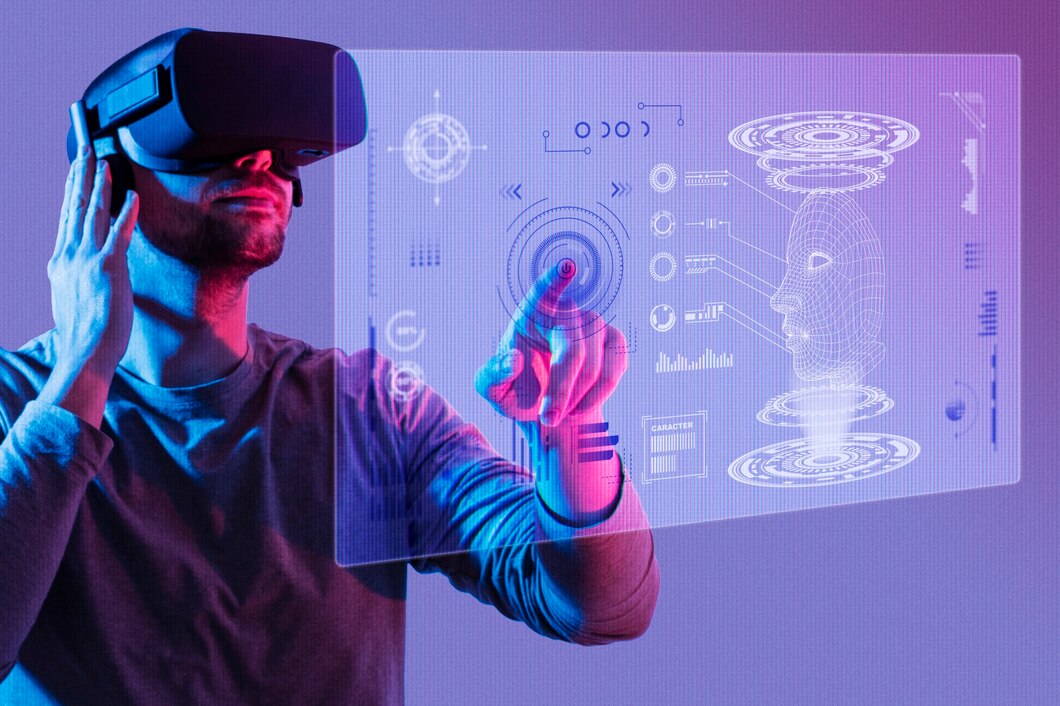
In today’s fast-evolving digital landscape, businesses are constantly seeking new ways to stay ahead of the competition. Among the most revolutionary technologies driving this transformation are Augmented Reality (AR) and Virtual Reality (VR). Once seen as futuristic concepts, AR and VR have now become practical tools that companies across industries are adopting to improve productivity, enhance customer engagement, and unlock new opportunities.
1. Enhanced Customer Experience
AR and VR allow businesses to create immersive and interactive customer experiences.
- Retailers use AR apps to let customers try on clothes, view furniture in their homes, or visualize products before purchasing.
- VR is being used to offer virtual store tours, real estate walkthroughs, and product demos, helping customers make informed decisions.
These experiences build trust, increase engagement, and boost conversion rates.
2. Training and Skill Development Made Smarter
Companies are increasingly turning to VR simulations for employee training.
- VR enables realistic practice without real-world risks, making it ideal for industries like healthcare, aviation, and manufacturing.
- AR overlays instructions in real time, helping workers learn faster and perform tasks with greater accuracy.
This reduces training costs and improves workforce efficiency.
3. Improving Business Operations and Productivity
AR/VR technologies streamline operations by offering innovative ways to visualize and process information.
- Engineers and designers use AR to visualize prototypes without building physical models.
- VR helps teams collaborate in virtual workspaces, improving communication and reducing travel costs.
- Maintenance staff can access AR-guided repair instructions, which reduces downtime.
Such tools lead to faster workflows and more informed decision-making.
4. Revolutionizing Marketing and Brand Engagement
Modern consumers prefer interactive, engaging content—and AR/VR offers exactly that.
Brands can use AR filters, VR tours, and immersive ads to:
- Capture attention
- Increase brand recall
- Provide unforgettable experiences
This form of marketing sets companies apart from competitors and strengthens customer loyalty.
5. Unlocking New Revenue Streams
Businesses are leveraging AR/VR to create entirely new products and services.
- Virtual events, exhibitions, and conferences
- Paid VR experiences like virtual tourism
- AR-based mobile apps and digital products
These innovations allow companies to diversify and grow in new markets.
6. Staying Competitive in a Tech-Driven World
As more businesses adopt AR/VR, staying competitive means keeping up with technological advancements. Companies that implement immersive technology early are better positioned to innovate, adapt, and scale.
Conclusion
AR and VR are no longer just emerging technologies—they’re becoming essential components of modern business strategies. From enhancing customer experiences to improving training and operations, AR/VR technologies offer powerful solutions that boost efficiency, creativity, and growth.


