
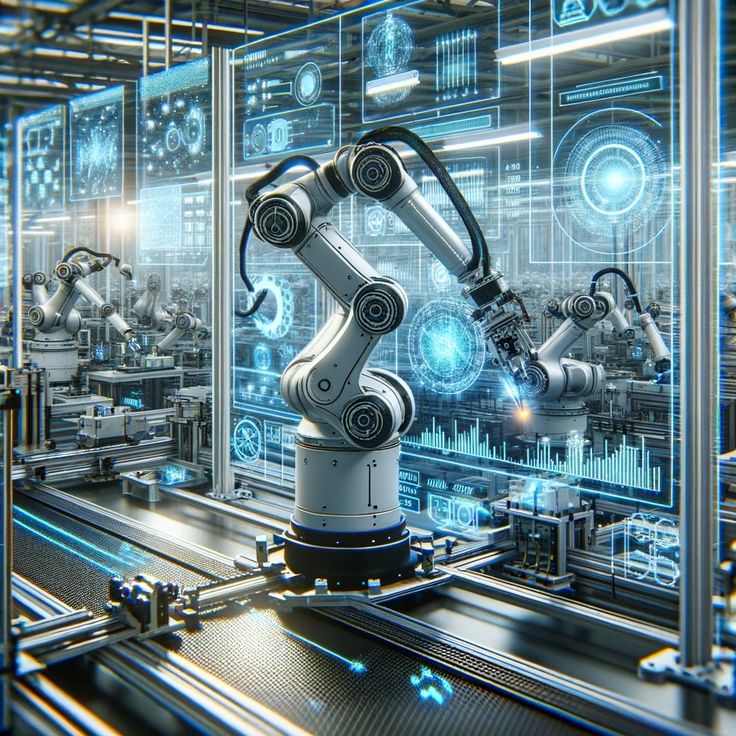
Robots are no longer just futuristic machines seen in sci-fi movies—they are now a vital part of our daily lives. From automated manufacturing and intelligent home assistants to surgical robots and self-driving vehicles, robotics is shaping the modern world in extraordinary ways.
Behind all of these innovations stands robot engineering, a dynamic field that blends mechanical engineering, electronics, computer science, and artificial intelligence. This blog takes you through the journey of robot engineering—from the initial concept to the creation of fully functional robots.
What Is Robot Engineering?
Robot engineering is the science and practice of designing, building, programming, and testing robots. It involves:
- Mechanical design
- Electronic circuitry
- Sensor integration
- Software programming
- AI-based automation
- Testing and optimization
Robot engineers work on everything from simple automated machines to advanced humanoid robots and autonomous systems.
The Journey: From Concept to Creation
1. Identifying the Purpose
The process begins with defining what the robot will do.
- Will it lift objects?
- Assist in surgeries?
- Explore underwater or perform repetitive factory tasks?
Understanding the problem ensures the robot is designed with the right capabilities.
2. Designing the Robot
This stage involves creating the blueprint of the robot. Engineers decide:
- The frame and structure
- Materials (aluminum, composites, plastic, etc.)
- Actuators and motors
- Sensors (camera, infrared, LiDAR, ultrasonic)
- Power systems (battery, solar)
Software tools like CAD (Computer-Aided Design) help visualize and refine the design before construction.
3. Building the Hardware
Once the design is ready, it’s time to build the physical robot. This includes:
- Assembling mechanical components
- Wiring circuits and microcontrollers
- Installing motors and actuators
- Integrating sensors and communication modules
Precision and craftsmanship are crucial in this phase.
4. Programming the Robot
Programming gives the robot its intelligence and behavior. Engineers use languages like:
- Python
- C/C++
- ROS (Robot Operating System)
- MATLAB
Tasks include:
- Path planning
- Navigation
- Decision-making algorithms
- Movement coordination
- AI and machine learning integration
This is where the robot learns to think and act.
5. Testing and Iteration
Before deployment, robots undergo rigorous testing to ensure safety and performance.
Engineers analyze:
- Hardware stability
- Software accuracy
- Movement precision
- Environmental compatibility
If a flaw is detected, the robot is modified until it performs flawlessly.
6. Real-World Deployment
Once approved, the robot is finally ready for real-world use—whether in factories, hospitals, homes, or research missions.
Key Skills Required in Robot Engineering
1. Mechanical Engineering
Designing frames, joints, and movement systems.
2. Electronics & Circuitry
Understanding microcontrollers, sensors, motors, and power systems.
3. Programming & AI
Writing algorithms that control how robots behave and adapt.
4. Mathematics & Physics
Essential for kinematics, dynamics, and movement precision.
5. Problem-Solving & Creativity
Building robots involves constant innovation and troubleshooting.
Applications of Robot Engineering
1. Manufacturing Automation
Robots assemble products, weld, paint, and perform repetitive tasks with speed and accuracy.
2. Healthcare & Surgery
Robotic arms assist in delicate surgeries with precision beyond human capability.
3. Defense & Security
Used for bomb disposal, surveillance, and autonomous patrolling.
4. Agriculture
Robots help with crop monitoring, harvesting, and soil analysis.
5. Space & Research
Robots explore planets, handle hazardous materials, and conduct scientific experiments.
6. Home & Personal Use
Robotic vacuum cleaners, assistants, and service robots are becoming common.
Career Opportunities in Robot Engineering
Robot engineering offers diverse and high-demand roles, including:
- Robotics Engineer
- Automation Engineer
- AI & Machine Learning Engineer
- Mechatronics Engineer
- Robotics Technician
- Research Scientist
- Autonomous Vehicle Designer
- Industrial Automation Specialist
The demand for robotics professionals is growing rapidly with advancements in AI, automation, and Industry 4.0.
Conclusion
Robot engineering is one of the most exciting technological fields of the 21st century. It combines creativity, engineering, and innovation to build machines that can transform industries and improve human life. From the initial concept to the final creation, every step in robot engineering requires precision, imagination, and passion.


