
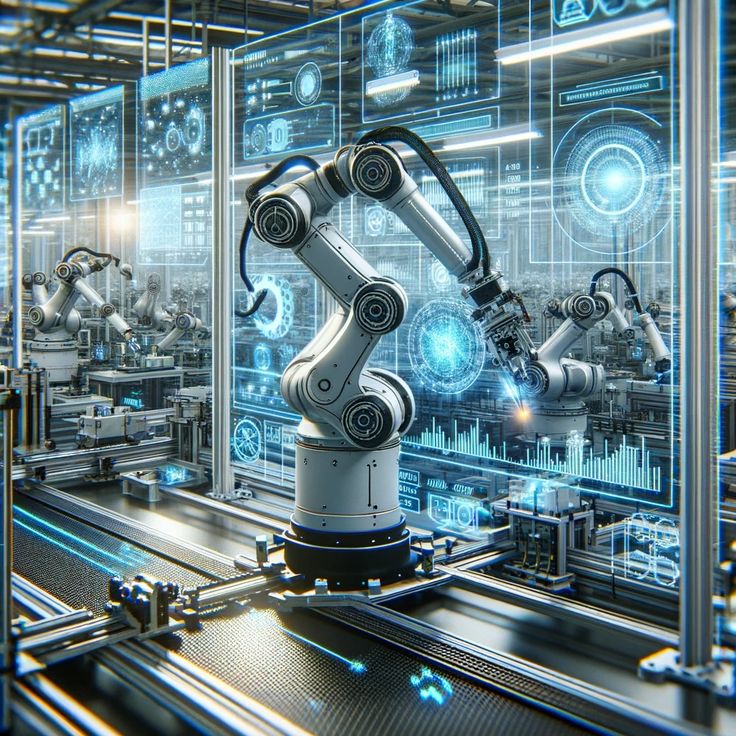
Technology is transforming the modern workplace, and robotics is playing an increasingly important role in this transformation. From manufacturing and healthcare to agriculture, logistics, and education, robots are changing how businesses operate and how employees perform their daily tasks. With advancements in artificial intelligence (AI), machine learning, and automation, robots are becoming more intelligent, efficient, and capable of performing complex activities.
The growing adoption of robotics has created both opportunities and challenges for the global workforce. While automation can reduce the need for certain repetitive and physically demanding jobs, it also creates new career opportunities in robotics engineering, programming, maintenance, and technology management.
Understanding the impact of robotics on the future of employment is important for students, professionals, and businesses preparing for a technology-driven future. In this blog, we will explore how robotics is transforming employment, which industries are experiencing the biggest changes, and what skills workers need to remain competitive.
1. How Robotics Is Transforming the Modern Workplace
Robotics is changing traditional working environments by introducing automated systems that can perform tasks with greater speed, accuracy, and consistency.
In industries such as manufacturing, robots are widely used for welding, assembling products, packaging, and quality inspection. Similarly, warehouses use automated robots to transport goods, organize inventory, and support order fulfillment.
Some major changes introduced by robotics include:
- Task Automation: Robots can perform repetitive activities with minimal human intervention.
- Improved Productivity: Automated systems can operate continuously and increase production efficiency.
- Better Accuracy: Robots can perform precise tasks while reducing certain types of human error.
- Workplace Safety: Robots can handle hazardous materials and perform dangerous activities.
- Faster Operations: Automated processes help businesses complete tasks in less time.
These developments are encouraging organizations to adopt robotics to improve productivity and remain competitive.
2. Will Robotics Replace Human Jobs?
One of the biggest concerns surrounding robotics is whether robots will replace human employees. As automation becomes more advanced, certain jobs involving repetitive, predictable, and routine activities may experience significant changes.
For example, manufacturing robots can perform assembly-line operations, while automated warehouse systems can handle product sorting and transportation.
However, this does not necessarily mean that robots will replace the entire human workforce.
Many professional roles require creativity, emotional intelligence, critical thinking, communication, and complex decision-making. These abilities remain important in workplaces where human judgment and interaction are essential.
Rather than simply eliminating jobs, robotics is expected to transform many existing occupations and change the skills required to perform them.
3. Industries Where Robotics Is Creating New Employment Opportunities
Robotics is influencing several industries and creating demand for professionals with technical and problem-solving skills.
A. Manufacturing Industry
Manufacturing is one of the biggest users of industrial robotics. Robots are used for assembling products, welding, painting, packaging, and quality control.
As factories adopt smart manufacturing systems, they require professionals who can design, program, operate, and maintain robotic equipment.
Some emerging job opportunities include:
- Robotics Engineer
- Industrial Automation Engineer
- Robot Maintenance Technician
- Robotics Programmer
- Manufacturing Systems Engineer
B. Healthcare Industry
Robotics is transforming healthcare by supporting surgeons, medical professionals, and hospital staff.
Robotic-assisted surgical systems help doctors perform certain procedures with precision. Rehabilitation robots support patients recovering from injuries, while hospital robots can assist with medicine delivery and transportation.
The growing use of medical robotics is creating opportunities in:
- Medical Robotics Engineering
- Biomedical Engineering
- Healthcare Automation
- Robotics Research and Development
- Medical Equipment Maintenance
C. Agriculture Industry
Agriculture is increasingly adopting robotics to improve productivity and reduce manual workload.
Agricultural robots can assist with planting, harvesting, spraying, crop monitoring, and weed detection. Autonomous tractors and AI-powered agricultural systems are also improving farming operations.
This technological development is creating demand for agricultural robotics engineers, automation specialists, and professionals who understand both farming and robotics technologies.
D. Logistics and Transportation
The logistics industry is using robots to improve warehouse management, inventory handling, and product transportation.
Autonomous mobile robots can move goods across warehouses, while robotic sorting systems help businesses process large numbers of orders.
As these technologies develop, companies will need robotics technicians, automation engineers, warehouse robotics specialists, and system integration professionals.
E. Education Industry
Robotics is also changing the education sector. Educational robots help students understand programming, engineering, automation, and artificial intelligence through practical learning.
Schools, colleges, and training institutions are increasingly incorporating robotics into technical education.
This creates opportunities for robotics educators, STEM instructors, robotics trainers, and educational technology developers.
4. New Career Opportunities in Robotics Engineering
As businesses invest in automation, the demand for professionals with robotics-related expertise is increasing.
Here are some promising career options for individuals interested in this field.
1. Robotics Engineer: Designs, develops, tests, and maintains robotic systems used in different industries.
2. Robotics Software Developer: Creates software and algorithms that control robot movements, navigation, and decision-making.
3. Automation Engineer: Develops automated systems to improve industrial processes and business operations.
4. Artificial Intelligence Engineer: Develops intelligent systems that allow robots to recognize objects, analyze information, and make decisions.
5. Robotics Technician: Installs, tests, repairs, and maintains robotic equipment.
6. Computer Vision Engineer: Develops technologies that enable robots to interpret and understand visual information.
7. Robotics Research Scientist: Studies advanced robotic technologies and develops innovative solutions for real-world applications.
These careers offer opportunities across manufacturing, healthcare, automotive engineering, aerospace, agriculture, and technology companies.
5. Essential Skills Employees Need in the Age of Robotics
As robotics and automation become more common, employees need to develop new skills to remain competitive in the job market.
Technical knowledge is important, but combining technical expertise with human skills can provide a significant career advantage.
Some essential skills include:
Programming Skills
Knowledge of programming languages such as Python, C++, and Java can help professionals develop and control robotic systems.
Artificial Intelligence and Machine Learning
Understanding AI and machine learning helps professionals work with intelligent robots that can analyze data, recognize patterns, and perform complex tasks.
Problem-Solving Skills
Robotics systems can experience technical issues. Employees must be able to identify problems, analyze their causes, and develop effective solutions.
Mechanical and Electrical Knowledge
Understanding mechanical components, electronics, sensors, motors, and actuators is essential for designing and maintaining robots.
Adaptability and Continuous Learning
Technology continues to evolve. Professionals must be willing to learn new tools, technologies, and working methods throughout their careers.
Communication and Teamwork
Robotics projects often involve engineers, programmers, designers, and business professionals. Effective communication and collaboration are essential for successful project development.
6. Advantages of Robotics in Employment and Business Operations
Although robotics raises concerns about job displacement, it also provides several advantages for employees and organizations.
Increased Productivity: Robots can perform repetitive tasks quickly, allowing employees to focus on more complex responsibilities.
Improved Workplace Safety: Robots can handle dangerous operations, reducing employees’ exposure to hazardous environments.
Creation of Skilled Jobs: The growing robotics industry creates opportunities for engineers, programmers, technicians, and automation specialists.
Better Work Efficiency: Automated systems can reduce production delays and improve operational performance.
Opportunities for Innovation: Robotics encourages businesses to develop new products, services, and technologies, creating demand for specialized professionals.
7. Challenges of Robotics and Automation in the Job Market
Despite its advantages, the increasing adoption of robotics also creates several challenges for workers and businesses.
Job Displacement
Employees working in repetitive and routine occupations may face a higher risk of automation. Businesses may replace certain manual processes with automated systems to improve efficiency and reduce operational costs.
Skill Gaps
Many employees may not have the technical knowledge required to work alongside advanced robotic systems. This creates a gap between available jobs and workforce skills.
High Implementation Costs
Installing and maintaining advanced robotic systems can be expensive, particularly for small and medium-sized businesses.
Employee Training
Organizations need to invest in employee training and reskilling programs to help workers adapt to changing job requirements.
Economic Inequality
Workers with advanced technical skills may benefit more from automation, while individuals in occupations involving routine tasks may face greater employment challenges.
Addressing these challenges requires cooperation between educational institutions, businesses, governments, and employees.
8. How Students Can Prepare for a Robotics-Driven Future
Students interested in building successful careers in a technology-driven economy should start developing relevant technical and professional skills.
Here are some practical steps to prepare for future employment opportunities:
- Learn Programming: Start with Python or C++ to understand the fundamentals of software development and robotics programming.
- Understand Robotics Fundamentals: Study mechanical systems, electronics, sensors, actuators, and control systems.
- Explore Artificial Intelligence: Learn how AI and machine learning are used in modern robotic applications.
- Work on Practical Projects: Build simple robots, automated systems, and sensor-based applications to gain hands-on experience.
- Learn Robotics Software: Explore tools such as ROS (Robot Operating System), Gazebo, and simulation platforms.
- Develop Problem-Solving Skills: Participate in robotics competitions, technical workshops, and collaborative engineering projects.
- Stay Updated: Follow emerging developments in robotics, automation, and artificial intelligence.
Students who combine theoretical knowledge with practical experience can improve their chances of entering the robotics and automation industry.
9. The Future of Employment: Humans and Robots Working Together
The future workplace will increasingly involve collaboration between humans and robotic systems.
Collaborative robots, commonly known as cobots, are designed to work alongside human employees. Unlike traditional industrial robots that often operate in separate work areas, cobots can support workers with assembly, material handling, inspection, and other activities.
This human-robot collaboration can help organizations combine the efficiency and precision of machines with human creativity, judgment, and problem-solving abilities.
For example, in manufacturing, robots can handle repetitive assembly tasks while human employees supervise production quality and solve unexpected problems. In healthcare, robotic systems can assist medical professionals while doctors continue to make important clinical decisions.
This approach highlights an important aspect of the future of employment: success will depend not only on developing advanced robotic technologies but also on preparing people to work effectively alongside them.


